How Do You Pronounce Water Chestnut (Bí Qi)? A Detailed Explanation of the Correct Pronunciation of Water Chestnut
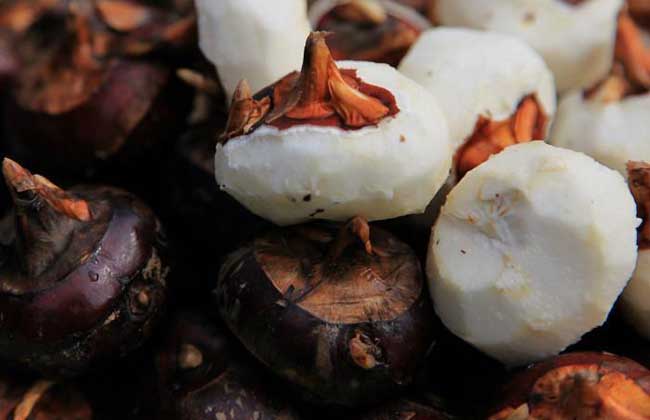
Water chestnut is a popular seasonal delicacy, also known as horse hoof, water chestnut, fu ci, wu yu, pu ji, di li, horse hoof er, qian cong, tu li, and more. It is a perennial herbaceous plant with persistent roots belonging to the genus Eleocharis in the sedge family (Cyperaceae). It enjoys the reputation of being the "underground snow pear," and people in the north call it "Jiangnan ginseng." It can be eaten raw as a fruit or cooked as a vegetable. Let's take a look below at how water chestnut is pronounced!
What is the pronunciation of water chestnut (bí qi)?
The pronunciation of water chestnut is [bí qi]. It is flat and round, pointed at the top, with a smooth and glossy surface, purplish-red or dark brown in color. It grows in ponds and marshes. The dark green stems above ground grow in clusters, and the corms underground are edible. Because its shape resembles a horse's hoof, people also call it "horse hoof." Its appearance resembles a chestnut, and not only in shape but also in nature, composition, and function it is similar to the chestnut. Since it fruits in the mud, it is also called "earth chestnut."
Where is water chestnut produced?
Water chestnut originated in India, with about 150 species worldwide, widely distributed across the globe, mostly in tropical and subtropical regions. China has records of cultivation dating back to the Western Han Dynasty. Currently there are more than 20 species and some varieties, mainly distributed in low-lying areas of Guangxi, Jiangsu, Anhui, Zhejiang, Fujian, Guangdong, Hunan, Hubei, Jiangxi, Guizhou, and also in parts of Hebei. Baihu Town in Lujiang County, Anhui Province, abundantly produces high-quality water chestnuts and is China's largest "home of water chestnut." Qingshan Town in Lipu County, Guilin City, Guangxi, is a state-recognized "home of horse hoof." Lechang water chestnut from the Shaoguan area of Guangdong is famous for its large size, thin skin, tender flesh, abundant moisture, refreshing sweetness without residue, and crisp, delicious taste. In addition, Maoli Town in Shayang County, Jingmen City, Hubei Province, is also a water chestnut producing area, and its products have long been exported overseas and are widely known.
Common Cultivated Varieties of Water Chestnut
1. Guilin Horse Hoof: A local variety from Guilin City, Guangxi. Plant height is 100-120 cm, spread 20 cm. The corm is flat and round, 2.4 cm tall, 4 cm in transverse diameter, with a thick and strong terminal bud, and the two lateral buds often stand side by side, hence the name "three-masted ship." The skin is reddish-brown, the flesh is white, and each corm weighs 30 g. It is mainly eaten fresh, but can also be cooked or processed. It has a relatively high sugar content, crisp and refreshing flesh, and excellent quality. It grows vigorously and has strong resistance to lodging. From June to July, corms are used for seedling propagation; the seedling stage is 25 days, and the growing period is 130-140 days, with a yield of 1500-2000 kg per mu.
2. Water Horse Hoof: A local variety from Guangdong. Plant height is 70-90 cm, spread 15-20 cm. The corm is flat and round, 2 cm tall, 2.5-3 cm in transverse diameter, with a relatively pointed and elongated terminal bud, dark brown skin, and white flesh. Each corm weighs 10 g. It has a high starch content and is mainly used for cooking and making starch. It grows vigorously, has strong stress resistance, tolerates moisture, but does not store well. From June to July, corms are used for seedling propagation; the seedling stage is 25 days, and the growing period is 130-140 days, with a yield of 1500 kg per mu.
3. Jiuji: Jiuji originated in the Philippines. Plant height is 110-120 cm. The corm is large and oval, 4 cm in transverse diameter, 2.6 cm in longitudinal diameter, and each weighs 25 g. It is crisp and sweet, of good quality, mainly eaten fresh, with a yield of over 2000 kg per mu.
4. Xiaoganji: Xiaoganji is a local variety from Xiaogan City, Hubei Province. Plant height is 90-110 cm. The corm is flat and round, bright red, with an average weight of 22 g each. The skin is thin, the taste is sweet, the texture is fine with little residue, and it is mainly eaten fresh with good quality. The yield is 1000-1500 kg per mu.
5. Suji: Suji is a local variety from Suzhou City, Jiangsu Province. Plant height is 100-110 cm. The corm is flat and round, with a pointed terminal bud and a flat navel. The skin is thin, the flesh is white, and each corm weighs about 15 g. It is suitable for processing into canned goods. The yield is 750-1000 kg per mu.
6. Yuhangji: Yuhangji is a local variety from Yuhang County, Hangzhou City, Zhejiang Province. The corm is flat and round, with a thick and straight terminal bud and a flat navel. The skin is brownish-red and thin, the taste is sweet, and each corm weighs about 20 g. It is suitable for processing into canned goods and for fresh eating, with a yield of 1000-1200 kg per mu.
7. Guanghong Water Chestnut: Guanghong water chestnut is a local variety from Shetianqiao Town, Shaodong, Hunan. Thanks to the special soil of Guanghong, the water chestnuts produced each winter have white flesh, red and thin skin, a crisp and loose texture, and are sweet. The size is moderate. Every year during the harvest season, visitors flock to buy them in an endless stream. The locals also call them "ci gu zi."