Key Technical Points and Management Methods for Growing Everbearing Strawberries
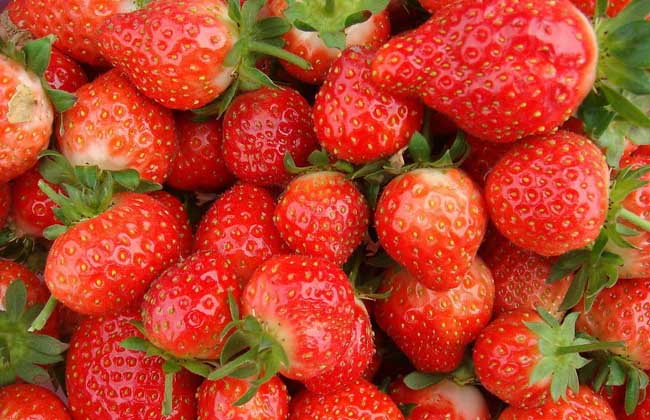
For everbearing strawberries grown in the open field, planting is done at the end of September; they sprout in mid-March of the following year, begin flowering in late March, and from late March onward they flower and fruit successively, continuing until early November. In late October, as temperatures drop, the greenhouse covering is put in place; combined with protected cultivation, they can flower and fruit throughout all four seasons, with essentially no obvious dormant period throughout the year. Let's take a look together at everbearing strawberry cultivation techniques!
Site Selection for an Everbearing Strawberry Orchard
Everbearing strawberries like fertilizer, water and light, but are afraid of waterlogging and drought. Therefore, a site should be chosen with abundant sunlight, level ground, fertile and loose soil, and good drainage and irrigation conditions, on sandy loam or neutral soil, with a pH of 5.5-6.5 being suitable. For clay loam, it is best to apply more organic fertilizer or improve it with added sand before planting. Before planting, apply 3000-5000 kg of well-rotted high-quality organic fertilizer per mu, along with 50 kg of compound fertilizer at the same time; after fertilizing, plow about 30 cm deep, let the fertilizer and soil mix thoroughly, then rake level, allow to settle, and form beds or ridges.
Everbearing Strawberry Planting Techniques
1. Flat bed planting: To make watering and management easier, beds should not be too long or too wide. Generally the bed is 1.2-1.5 m wide (planting 3-4 rows) and 10-20 m long, with bed edges 15 cm high. Once the bed is prepared, rake it level and it is ready for planting.
2. Ridge planting: In low-lying plots, poorly drained plots, and for protected cultivation in winter, ridge planting can be used. The ridge is 15-20 cm high, with a top width of 40-50 cm (planting 2 rows), a bottom width of 60-70 cm, and a ditch width between ridges of 15-20 cm. After making the beds and ridges, give a light watering or firm the soil appropriately so the soil settles.
3. Planting time: Everbearing strawberries are generally planted in spring or autumn; with a winter-warm greenhouse they can also be planted in winter. Spring planting is generally from mid-to-late March to early April, and autumn planting from mid-to-late August to mid-to-late October.
4. Planting density: Everbearing strawberry plots should maintain good ventilation and light conditions and a relatively large soil area, so as to achieve high yield, good quality and large fruit. Planting should not be too dense; plant spacing and row spacing should be kept at 30-40 cm × 40-50 cm, using triangular planting, with 8000-11000 plants established per mu. The planting depth should follow the principle of "shallow enough not to expose the roots, deep enough not to bury the crown."
Post-Planting Management of Everbearing Strawberries
1. Field weeding: Weeds compete with strawberries for water, light and nutrients, causing reduced yield and lower quality. Therefore, weed control is an important guarantee for producing high-quality large-fruited strawberries. Field weeding can use integrated measures such as manual weeding, mulching film to suppress weeds, and crop rotation. To reduce labor, herbicides can also be used for weed control.
2. Fertilizer and water management: During the growing season, everbearing strawberries need multiple soil topdressings and foliar sprays. Soil topdressing is generally done 4-6 times per year, each time applying about 50 kg of compound fertilizer or multi-element compound fertilizer per mu. When applying, spread the fertilizer evenly within the strawberry beds, and water promptly after topdressing. Never scatter fertilizer into the crown of the strawberry, to avoid burning young leaves. Foliar spraying is done about once every 20 days, mainly with nitrogen-phosphorus-potassium compound fertilizer at a concentration of 0.2-0.3%. After each topdressing, water promptly; in dry years, water more often during the growing season to keep soil moisture at 70-80% of field maximum water-holding capacity. Strawberries are not tolerant of waterlogging, so pay attention to drainage during the rainy season.
3. Flower and fruit thinning: Everbearing strawberries can flower and fruit about 60 days after planting. To produce high-quality large fruit with high yield and efficiency, plant strong seedlings and grow them into large plants. Especially for seedlings planted in spring, be sure to grow the plants large and strong before letting them bear fruit; in the early stage, pay attention to promptly removing flowers and runners, and only retain flowers and fruit once the plant canopy has grown to 30-40 cm. Alternatively, plant seedlings in spring, strengthen cultivation and management, and let them fruit in late summer and early autumn, achieving both large, high-quality fruit and high yield and efficiency. At each flowering period, retain 4-5 early flowers and large flowers, and remove small and late flowers. The earlier the flower thinning is done, the better. After fruit set, thin out small fruit and deformed fruit; each time retain 3-4 large fruits per plant. After the previous fruit ripens, select and retain another 4-5 large flowers, so as to maintain continuous flowering and fruiting.
4. Proper pruning: To reduce nutrient consumption and ensure high yield and continuous fruiting, runners must be continually removed during the growing season. Removing runners early can increase strawberry yield by about 20%. Everbearing strawberries grow new leaves and differentiate new stems throughout all four seasons, so throughout the entire growing season, lower old leaves must be continually removed to promote the growth of upper new leaves and new stems. Old leaves can generally be removed from the base of the petiole once the petiole begins to yellow and changes from upright to flat.
5. Straw mulching for fruit: As the fruit enlarges, the inflorescence gradually droops and touches the ground, and is easily contaminated by soil, which affects coloring and quality and easily causes fruit rot. For strawberry orchards not using plastic film mulch, 2-3 weeks after flowering, spread straw between the strawberry plants to cushion beneath the fruit, or arrange straw into rings and place the fruit on the straw rings.
6. Winter management: As long as the temperature is suitable, everbearing strawberries can flower and fruit year-round. Therefore, in production, they can be grown in the open field in spring, summer and autumn. In mid-to-late October, when the temperature drops to 5-7°C, the greenhouse covering should be put in place promptly to ensure continuous flowering and fruiting. Management inside the greenhouse is the same as for ordinary strawberries.
6. Timely renewal: Under general management conditions, growth begins to decline from the 3rd year after planting, with reduced yield, lower quality, more frequent pests and diseases, and lower economic returns. To ensure that everbearing strawberries both flower and fruit continuously and achieve high yield, high quality and high efficiency, renewal is generally required every 2-3 years; for open-field cultivation, replanting once every two years is more suitable.