When to plant strawberries? A detailed guide to planting times
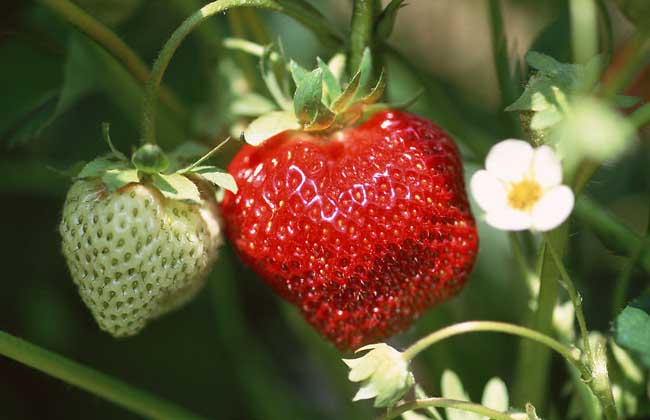
Strawberries are cultivated throughout China, generally growing in areas with warm weather, and they are not cold-tolerant. Strawberries are grown in Hebei Province, Shandong Province and many southern provinces and cities. Strawberries cover more than 1.5 million mu nationwide, mainly distributed in Sichuan, Hebei, Anhui, Liaoning, Shandong and other places. Let's take a look below at when to plant strawberries!
When to plant strawberries?
The strawberry is native to South America and is a perennial herbaceous plant of the genus Fragaria in the Rosaceae family. Its seeds have no obvious dormancy period, or they can germinate when sown after a certain period. The planting time is generally spring or autumn, but in fact strawberries can be planted in all four seasons.
When do strawberries ripen?
Strawberries are widely cultivated around the world, with more than 2000 varieties. They love light, prefer moisture, fear waterlogging, and are not drought-tolerant; they like fertile, well-aerated sandy loam soil. When the spring temperature rises above 5°C, the plants begin to sprout, and the optimum growth temperature is 20-26°C. In the Jiangsu area, they sprout in late February, bloom in early to mid-April, and the fruit ripens in mid to late May. Flower bud differentiation occurs when the temperature is below 17°C and under short-day conditions of 10-12 hours, and there is a short period of dormancy in winter. However, strawberries usually come onto the market around February to March. In fact, every year from December to January of the following year is the peak season for picking strawberries, but some people say that strawberries during this period are basically ripened artificially, so the real ripening time for strawberries is April to May.
What conditions are needed to grow strawberries?
1. Temperature: Strawberries like a warm, cool climate. The root growth temperature is 5-30°C, with an optimum of 15-22°C; the optimum temperature for stem and leaf growth is 20-30°C; buds suffer frost damage at -15 to -10°C; during flower bud differentiation the temperature must be kept at 5-15°C; and during flowering and fruiting it is 4-40°C. When overwintering through summer, if the temperature is above 30°C and the sunlight is strong, shading measures need to be taken.
2. Light: Strawberries are light-loving plants, but they also have fairly strong shade tolerance. Under strong light, the plants are short and sturdy, the fruit is small, the color is deep, and the quality is good. Under moderate light, the fruit is large, the color is pale, the sugar content is low, and the harvest period is longer. Too weak light is unfavorable for strawberry growth.
3. Water: Strawberry roots are shallow and transpiration is high, so water requirements are strict, but the water requirements differ slightly at different growth stages. In early spring and during flowering, the water requirement is slightly below 70% of the soil's maximum water-holding capacity; during fruit growth and ripening, it needs more than 80%; after harvest, when runners are produced and new adventitious roots form, the soil moisture content also needs to be no lower than 70%; autumn is the period when the plants accumulate nutrients and form flower buds, and soil moisture must also not be lower than 60%. Strawberries are not waterlogging-tolerant, require good soil permeability, and attention should be paid to field drainage during the rainy season.
4. Soil: Strawberries are suitable for growing in fertile, loose neutral or slightly acidic loam soil. Excessively heavy clay soil is not suitable for cultivation. In sandy soil, apply more farmyard manure and irrigate frequently, and strawberries can also be grown.