When Do Strawberries Ripen? A Detailed Guide to Ripening Times
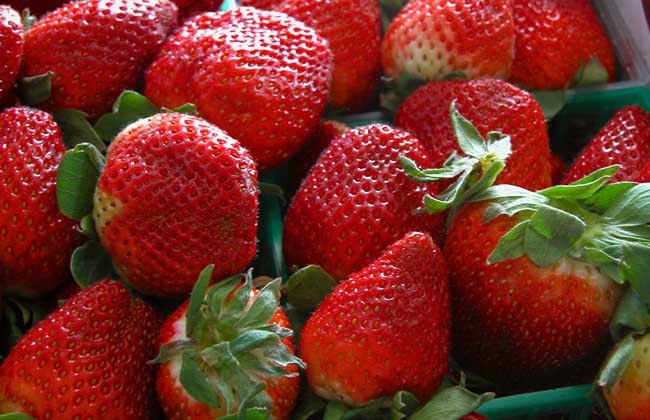
The strawberry is a perennial herbaceous plant of the genus Fragaria in the rose family (Rosaceae), also known as the pineapple strawberry. It originated in South America and is cultivated throughout our country. Its nutritional value is very high, and it is rich in vitamin C. It has the effects of moistening the lungs and promoting fluid production, strengthening the spleen and harmonizing the stomach, promoting urination and reducing swelling, and relieving fever and summer heat. Now let us take a look at when strawberries ripen!
When do strawberries ripen?
Strawberries are widely cultivated around the world, with more than 2,000 varieties. They love light, prefer moisture, fear waterlogging, are not drought-tolerant, and favor fertile, well-aerated sandy loam soil. When the spring temperature rises above 5°C, the plants begin to sprout, and the optimum growth temperature is 20-26°C. In the Jiangsu region, they sprout in late February, bloom in early to mid-April, and the fruit ripens in mid-to-late May. Flower bud differentiation occurs when the temperature is below 17°C and under short-day conditions of 10-12 hours, and there is a short dormant period in winter. However, strawberries usually come onto the market in February to March. In fact, every year from December to January of the following year is the peak season for picking strawberries, but some people say that strawberries during this period are basically artificially ripened, so the real ripening time for strawberries is April to May.
How are strawberries ripened?
1. Irregular ripening: Irregular ripening of strawberries refers to strawberries ripened with the ripening agent ethylene. Those strawberries that are hollow in the middle, unusually large, and irregular in shape are generally caused by excessive ripening agent.
2. Normal ripening: Strawberries were the earliest "model" of off-season fruit to adopt new technology with great success. Off-season growing uses the new technology of "protected cultivation," using windbreaks, cold frames, hotbeds, plastic greenhouses, and glasshouses and other cold-proof and heat-preserving facilities in the cold winter and spring seasons to achieve early ripening, high yield, and an extended supply period. The nutritional content of strawberries produced in this way is no lower than that of open-field-grown strawberries.
Common cultivated strawberry varieties
1. Kinuama strawberry: The Kinuama strawberry has light red, gorgeous fruit with a fragrant aroma and is extremely sweet, with a sugar content as high as 12-18% (ordinary strawberries are 7-12%). It is harvested from December to February of the following year, can bear fruit continuously for 6 months, and can be stored naturally for 7-10 days. Fruit harvested after March can be stored for 4-7 days.
2. Toyonoka strawberry: The Toyonoka strawberry has a short conical fruit shape, a bright red and glossy fruit surface, light red flesh, relatively firm flesh and tough skin, is resistant to storage and transport, and has a moderately sweet-and-sour flavor, with a soluble solids content of 8-13%. It is juicy with fine flesh and rich aroma, and of excellent quality. It is suitable for open-field cultivation in the south. When forced into cultivation in greenhouses, the fruit can be harvested and marketed in mid-to-late November.
3. Juxing No. 1 strawberry: The Juxing No. 1 strawberry has extra-large fruit, is extremely resistant to storage and transport, and has a particularly high yield. The fruit is conical, bright red and gorgeous, uniform and glossy in appearance, richly aromatic, mellow and sweet without sourness, with good flesh firmness and strong skin toughness. It can be stored at room temperature for 45 days without discoloration or spoilage. The average single fruit weight is 50 grams, with a maximum of 120 grams, larger than an egg, and is hailed as today's king of strawberries. It ripens in late April under open-field cultivation, and all the fruit ripens in March under forced cultivation in a solar greenhouse.
4. Weishi strawberry: The Weishi strawberry is suitable for growing in southern regions. The fruit is relatively large, short conical, neat, broad at the shoulders, and rounded at the tip. The fruit surface is bright red (carmine pigment content 0.675%), and the flesh is white, turning red near the fruit surface, fine and soft, with abundant juice, and a rich sweet-and-sour flavor. The soluble solids content is high at 12-13%. The fruit surface is firm and tough, with good storage tolerance. The single fruit weight is 14 grams, with a maximum fruit weight of 18 grams, and the average yield per plant is about 150 grams. The planting period is in early March, and the ripening period is in May.
5. Zaoguang strawberry: The Zaoguang strawberry is suitable for growing in southern regions. The fruit is relatively large, conical, with a neck at the base. The fruit surface is relatively deep red (carmine pigment 0.66%), glossy and vivid, and the fruit is firm and hard, with good storage tolerance. The flesh is red, fine, soft, and dense, with a sweet, rich, and slightly sour flavor. The soluble solids content is 11.4%, and the vitamin C content is 51.0 mg/100 g. In the Nanjing region, the germination period is February, the flowering period is March, and the harvest period begins from April to May.
6. Sanxing strawberry: The Sanxing strawberry is suitable for growing in southern China. The fruit is medium to large, long conical, tapering at the tip, narrow at the shoulders, and deep red (carmine pigment content 1.55%). The flesh is red, the core is slightly hollow, the texture is fine, and it is juicy, with a rich sweet-and-sour flavor. The soluble solids content is 10.6%. The fruit surface is hard, with good storage tolerance and excellent processing quality. When processed into strawberry juice, the color is vivid and fades slowly. The harvest periods are respectively late April to late May, early June to mid-July, and late July to mid-August.
7. Fenjieniya strawberry: The Fenjieniya strawberry is suitable for greenhouse planting. The fruit is long conical or long flat wedge-shaped, deep red and glossy in color, sweet and sour in taste, firm, resistant to storage and transport, and large. The maximum single fruit weight can exceed 100 grams, and the average weight of the first-order fruit is about 42 grams. In a solar greenhouse, it can bloom and bear fruit repeatedly from late November until June to July of the following year.
8. Ningyu strawberry: The Ningyu strawberry is suitable for planting in the Jiangsu area. The fruit is conical, red, strongly glossy, with seeds sparsely and evenly distributed. The fruit surface is smooth, the fruit-setting rate is high, there are few deformed fruits, and the appearance is neat and beautiful. The average fruit weight is 15.5 grams. The flesh is orange-red, the core is orange, the flavor is excellent, sweet and richly fragrant, with a very mild sour taste, and the soluble solids content is 10.7%. The average yield per mu is 2,017 kg. Under forced cultivation in the Nanjing region, it is generally planted in early September, buds appear in mid-to-late October, and the fruit first ripens from late November to early December.