Detailed Explanation of Pomelo Tree Grafting Techniques, Methods and Operation Steps
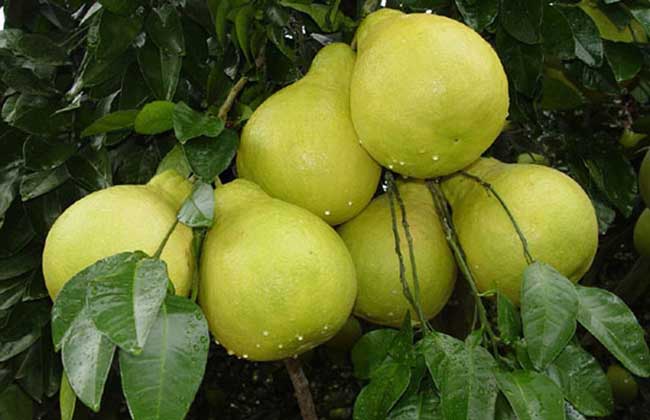
Pomelo is a tree of the genus Citrus in the family Rutaceae, also known as pomelo, Shatian pomelo, Xiangluan, Zhuluan, Neizi, etc. Seedling propagation is mainly done by grafting. Normally, a pomelo seedling grown from seed takes 5 to 8 years to bear fruit, whereas a grafted seedling will produce pomelos in the same year as long as the mother plant has already fruited; if it suffers frost damage, it can also bear fruit after one year of recovery. Let's take a look at pomelo tree grafting and seedling propagation techniques below!
Selection of Pomelo Tree Rootstock
1. Sour pomelo: Pomelo trees grafted onto sour pomelo rootstock have well-developed root systems, strong main roots, strong compatibility, a high survival rate, vigorous growth, tall canopies, strong adaptability, high yields in full bearing period, and good fruit quality. However, they come into production relatively late and are susceptible to gummosis.
2. Trifoliate orange: Pomelo trees grafted onto trifoliate orange rootstock have fairly good compatibility, can be dwarfed, grow robustly, come into production and bear fruit early, and have good quality. However, they tend to age and decline prematurely in later stages, with low yields.
Cultivation of Pomelo Tree Rootstock
1. Seed collection: The fruits used for seed collection of rootstock seedlings (sour pomelo or trifoliate orange) are harvested when fully ripe, cut open to remove the seeds and rinse them clean, then spread them in a ventilated, shady place and air-dry them until the seed coat turns whitish.
2. Sowing: Seeds sown immediately after collection have a relatively high germination rate. If not sown right away, mix the seeds evenly with 3 to 4 times their volume of clean wet river sand (with a moisture level such that it forms a ball when squeezed by hand and breaks into a few pieces when spread out), pile them indoors in a cool, sheltered place at a height of 35 to 45 cm, with two layers of sand about 5 cm thick on the bottom, cover the top with plastic film to retain moisture, and press the edges down with film to prevent rodent damage.
3. Management: After sowing, press the seedbed surface lightly with a wooden board or similar to work the seeds into the soil, cover with river sand, burnt soil or fine soil until the seeds are no longer visible, then cover with 3 to 4 cm of rice straw, secure the straw with straw rope and water thoroughly. After sowing, keep the soil moderately moist; after seedlings emerge, remove the straw in stages so the seedlings receive sunlight and do not become bent. Fertilizer management at the seedling stage should follow the principle of frequent light applications; before 3 to 4 true leaves appear, reduce watering and stop fertilizing. Seedlings are prone to damping-off, so attention should be paid to controlling damping-off, swallowtail butterflies, leafminers and other pests and diseases.
4. Transplanting: When seedlings have 10 to 14 true leaves and are more than 10 cm tall, they can be transplanted. For raising newly planted seedlings, transplant in May to June of the same year after sowing. Graft in winter or the following spring; the entire seedling-raising period takes two years. For raising older transplanted seedlings, transplant in autumn of the same year after sowing or in April to May of the following year after the spring shoots have matured, and graft in the second winter or the third spring; the entire seedling-raising period takes 3 years.
Collection of Pomelo Tree Scions
1. Scion collection: Scions should be collected from healthy mother trees that are high-yielding, consistently productive, of high quality and free of quarantine pests and diseases, or from young trees directly propagated from these superior mother trees or from nursery stock in a scion orchard. Select autumn shoots or spring shoots from the middle and upper outer part of the canopy that are plump, have full buds, moderate thickness and complete, glossy leaves, and use them as scions. Scions should be collected on windless sunny mornings after the dew has dried and in the afternoon when sunlight is weaker; do not collect on rainy days. Remove the leaves immediately after cutting the scions.
2. Storage and transport: Grafting survival rate is higher when scions are collected and grafted immediately. If the quantity is large or long-distance transport requires storage, they can be stored in layers with clean wet river sand (with a moisture level such that when a hand is inserted into the sand, sand sticks to the hand but not to the fingernails). During storage, check frequently, adjust the moisture of the sand, and remove rotting branches and scions to prevent spread. In the lower-temperature seasons of winter and spring, they can be stored for 50 to 60 days.
Pomelo Tree Grafting Techniques
1. Single-bud cut grafting method
① Cutting the scion: Hold the scion with the angular side facing up and the flat side facing down against the index finger, and make a forward diagonal cut about 1 cm below the bud point, with the cut surface at a 45° angle. Then turn the flat side of the scion upward and cut forward from near the bud point to remove the bark layer, requiring a smooth cut surface that just reaches the cambium and slightly exposes the white part of the xylem. Then turn the scion sideways with the bud point facing up. Cut it off about 0.2 cm above the bud point and place it in a basin of clean water.
② Cutting the rootstock: At 6 to 8 cm above the ground on the rootstock, choose a smooth side and make a diagonal cut to remove the upper part of the rootstock, with the cut surface at a 45° angle. Then, below the diagonal surface, make a vertical cut along the junction between the bark layer and the xylem, with the cut surface best just exposing the white xylem. The length of the cut surface depends on the length of the scion.
③ Inserting the bud and wrapping: Choose a graft bud as close as possible in size and length to the cut surface of the rootstock, insert it into the cut surface of the rootstock so that the base of the bud fits tightly against the bottom of the rootstock cut, and the cambium of the rootstock and the cut surface of the scion are in close contact. If the rootstock is thicker than the scion, align the cambium on one side, which makes successful grafting easier. Finally, wrap with plastic film tape and seal with wax.
2. Small-bud side grafting method
① Cutting the scion: With the bud point of the scion facing up, make a diagonal cut at a 45° angle about 1 cm below the bud, then make a forward flat cut about 0.5 cm above the bud and cut the bud off with a little xylem attached, and place it in a basin of clean water. The bud piece of a long small bud is relatively thin, 1.2 to 1.5 cm long, longer than the small buds of ordinary bud grafting.
② Cutting the rootstock: Do not cut off the upper part of the rootstock. At 10 to 20 cm above the ground on the trunk, cut the bark layer on a smooth side, requiring a smooth cut surface with a depth that just reaches the cambium, and a cut surface length sufficient to hold the graft bud; then cut away 1/3 of the peeled bark layer to facilitate wrapping and bud sprouting.