How many years after planting do walnut saplings bear fruit?
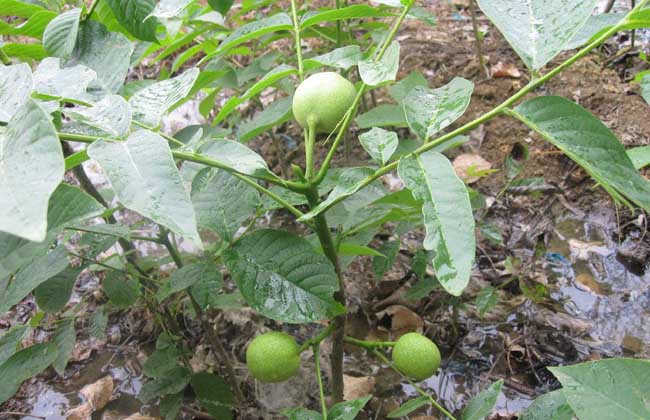
Walnut, together with almond, cashew and hazelnut, is known as one of the world-famous “four great dried nuts”. The kernel is rich in nutrients, abundant in essential trace elements such as calcium, phosphorus and iron, as well as various vitamins including carotene and riboflavin. It is a nut food deeply loved by ordinary people and has extremely high cultivation value. Let us take a look below at how many years walnut saplings take to bear fruit!
How many years do walnut saplings take to bear fruit?
After field planting, walnut usually takes 2 to 3 years, or 5 to 6 years, or even 8 to 10 years to enter the initial fruiting stage. How early or late it bears fruit is related to the variety and cultivation techniques. Precocious walnuts and grafted walnuts can bear fruit in 2 to 3 years, while late-fruiting walnuts and seedling walnuts need 8 to 10 years to bear fruit. Generally, they enter the full fruiting stage at around 20 years of age, and under good cultivation conditions this can be maintained for around 40 years. The flowering period of walnut is April to May, and the fruit ripening period is August to September.
The growth habits of the walnut tree
Walnut is distributed worldwide in Central Asia, West Asia, South Asia and Europe. In China it is produced in North China, Northwest China, Southwest China, Central China, South China, East China and **southern China, usually growing on mountain slopes and hilly areas at an altitude of 400 to 1800 m, and is commonly found in places with deep soil layers on both sides of mountain valleys. It is light-loving, cold-tolerant, and strongly resistant to drought and disease. It adapts to growth in many kinds of soil and prefers fertile, moist sandy loam. It likes water, fertilizer and sunlight, yet is not strict about water and fertilizer requirements. After leaf fall and before bud break, pruning is not advisable, as it easily causes bleeding. It is suitable for growth in most soils and prefers calcareous soil.
Why do walnut trees fail to bear fruit?
1. The planting site conditions for walnut saplings are poor, the soil layer is too thin, the soil is barren, the trees are left to grow without management, causing long-term insufficient tree nutrition, thin and weak branches, no flower buds, and therefore no fruit.
2. Sufficient nitrogen fertilizer and water make the tree grow vigorously, with many dense branches, poor ventilation and light penetration, and the fruiting (reproductive) branches grow too weakly to form the short and medium fruiting branches. The lower branches of the walnut canopy are all pruned away, the tree vigor is strong at the top and weak at the bottom, and the tree posture is upright, resulting in no fruit or late fruiting.
3. Walnut pollination is carried out by wind. The tree is monoecious, and the female and male flowers do not bloom at the same time. If there are no other fruiting walnut trees nearby, or if there is cloudy and rainy weather, pollination can be affected, resulting in no fruit or late fruiting.
4. Walnut seedlings grown from seed, also called seedling trees, have not been grafted with superior varieties, or the seeds were not selected. The resulting walnut saplings vary greatly, and combined with the influence of pollination, they are uneven in quality, which can also lead to no fruit or late fruiting.
5. Walnut saplings are affected by pests and diseases such as flower bud maggots, which specifically eat female flowers, so pollination cannot be achieved, let alone fruiting.