A Complete Guide to the Key Techniques for Growing Walnut Seedlings
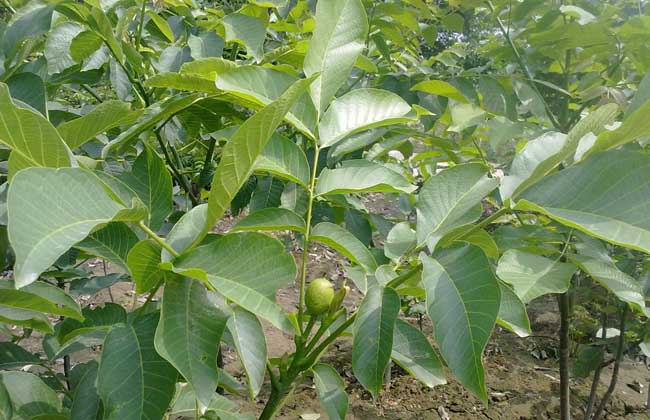
The walnut, also known as the Persian walnut or Qiang walnut, is a plant of the genus Juglans in the family Juglandaceae. Together with almonds, cashews and hazelnuts, it is known as one of the world's famous "four great dried fruits." It has strong drought resistance and disease resistance, adapts to growth in many types of soil, and prefers fertile, moist sandy loam. It is commonly found in mountain valleys on both banks where the soil layer is deep, and it has extremely high cultivation value. Let's take a look at the seedling cultivation techniques for walnuts below!
Seed Selection
When selecting walnut seeds, choose superior individual trees that are 20 to 40 years old, strongly growing, and have strong adaptability, high and stable yields, thin shells, plump kernels, easy kernel extraction, and high kernel-outturn and oil content, to serve as mother trees for seed collection. Generally in September, the fruit ripens when the outer husk turns from green to yellowish-brown. However, seeds kept for planting should be harvested 10 to 15 days later than walnuts used for the market, which helps increase the germination rate. After collection, pile and ferment them to remove the green husk. Walnuts for planting do not need to be rinsed and can be dried directly in the sun. When sun-drying the seeds, spread them flat in a ventilated, dry place; they must not be placed on concrete ground, wooden boards or iron sheets for direct sun exposure, so as not to affect seed viability. Walnut seeds have no after-ripening period. Seeds for autumn sowing can be sown with the green husk still on after harvest, while seeds for spring sowing are stored for a longer time and are generally stored in a ventilated, dry place at about 5°C.
Site Selection and Nursery Preparation
In the process of growing walnut seedlings, whether using field seedling cultivation or self-sufficient courtyard seedling cultivation, the selected nursery site must have flat terrain, shelter from wind and full sun, loose soil, deep and fertile soil, convenient irrigation and good drainage. After selecting the nursery site, carry out deep plowing or deep tillage and carefully prepare the soil, achieving a loose surface and firm subsoil, fine soil and level ground, and evenly mixed fertilizer. This is generally done before Frost's Descent. While preparing the soil, apply sufficient base fertilizer, including 3000 to 5000 kg of farmyard manure per mu and 50 kg of superphosphate per mu. After soil preparation is finished, make seedbeds of a length that varies with the terrain and the number of seedlings to be grown, and 1 m wide, for later use.
Seed Treatment
Walnut seeds for autumn sowing need no treatment and can be sown directly with the green husk on. For spring sowing, the seeds should be treated before sowing to ensure germination; the usual method is the cold-soaking plus sun-drying method. The cold-soaking plus sun-drying method involves soaking the seeds for 7 to 10 days, changing the water once a day, so that the seeds absorb water and swell. When a small number of seeds have split open, take them out and dry them in the sun for 2 to 3 hours on packed earth or the ground, and they are ready to sow.
Sowing Management
1. Sowing time: Walnuts are divided into autumn sowing and spring sowing. Autumn sowing should be done before the soil freezes, and not too early or too late, otherwise the germination capacity is affected. Because seeds sown in autumn are susceptible to damage by rats and rabbits, spring sowing for seedling cultivation is often used. Spring sowing should be done after the soil thaws, generally in late March to early April.
2. Sowing method: Walnuts commonly use the spot-sowing method. In the prepared seedbed, sow in spots with a row spacing of 20 to 30 cm and a plant spacing of 15 cm. The seed suture line should be perpendicular to the ground, with the pointed tip of the seed facing to one side, so that after emergence the seedling roots spread out, the stems are upright, and growth is vigorous. The sowing depth is 6 to 8 cm, and after sowing cover with 9 to 12 cm of soil. When sowing, follow the principle of deeper in autumn and shallower in spring, and deeper in drought and shallower in waterlogged conditions.
3. Sowing rate per mu: The sowing rate for walnuts varies with plant and row spacing and with seed size and quality. Generally, 100 to 150 kg of dry walnuts are sown per mu, about 9000 to 12000 seeds, producing 8000 to 10000 seedlings per mu; for green-husked walnuts, 400 to 500 kg of seed are used per mu. In addition, whether in the field or in a courtyard, it is best to use the spring film-mulching seedling method, which results in earlier emergence, uniform emergence and a longer seedling growth period.
4. Fertilization and irrigation: After spring sowing, walnuts germinate and emerge in about 20 days and are fully emerged in about 40 days. Generally, if it is not too dry, no irrigation is needed before emergence, to avoid causing surface crusting. If the soil moisture is too low, water promptly and carry out shallow plowing and loosening of the soil. After the seedlings have fully emerged, irrigate promptly to speed up growth. May and June are the critical period for seedling growth; water 2 to 3 times depending on soil moisture, and combine this with a topdressing of quick-acting nitrogen fertilizer, applying 10 kg of urea per mu each time. July and August have more rainfall, so phosphate and potassium fertilizers can be applied as appropriate.
5. Cultivation and weeding: In spring walnut nurseries, weeds grow quickly and reproduce strongly, competing with the seedlings for water and nutrients. Some weeds are also vectors and hosts for pests and diseases, so the nursery land should be cultivated and weeded in a timely manner.