What Kind of Walnut Is the Iron Walnut? A Detailed Guide
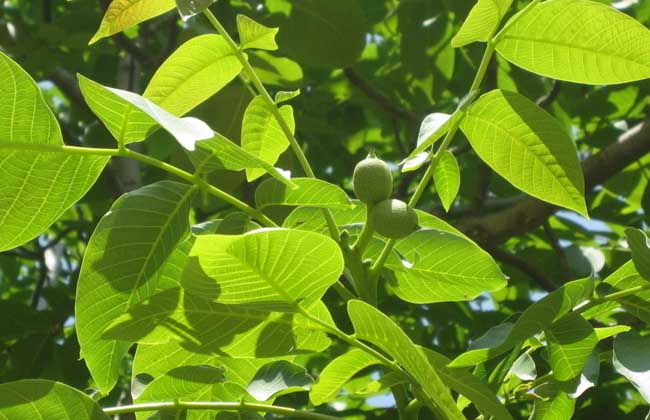
The iron walnut, also known as the Yangbi walnut, is a deciduous tree of the genus Juglans in the family Juglandaceae. It is distributed in southwestern China and other areas. Its fruit has a hard shell. At first, the iron walnut was mainly used for oil pressing and as rootstock for ordinary edible walnuts. Now many new uses have gradually been developed for it, and it can be used to make various beautiful and durable handicrafts. In some places, large and unusually shaped iron walnuts are selected to make fitness balls; their uneven shells can massage the acupoints of the hands and have a certain health-care effect.
The iron walnut tree is 10 to 20 m tall and can live for more than a hundred years. The trunk bark is grayish brown to dark brown, with vertical cracks. New branches are light green and smooth, with white lenticels. The odd-pinnate compound leaves are alternate. The female inflorescence is terminal, with small flowers in clusters of 2 to 4. The fruit is round and yellow-green, covered with fine hairs on the surface, and contains 1 seed. The outer seed coat is bony and is called the shell; its surface is dotted with pits, and the shell varies in thickness.
The iron walnut has strong compatibility and vigorous growth, but poor cold resistance. It adapts to a subtropical climate. Its producing areas are mainly Yunnan, Guizhou and Sichuan. Its extreme minimum temperature is -2°C, and it cannot overwinter in northern regions. In the Taihang Mountains area, its yield is lower than that of the Qiaozi walnut; however, because of factors such as the altitude, climate and rainfall of its producing area, the iron walnut of the Taihang Mountains area is clearly different from that of the south, which also causes differences between northern and southern iron walnuts in size, shape and other aspects.
Iron walnuts are mostly used by literati and refined scholars for handling and play, and are called literary-play iron walnuts. The reason they are favored by players is probably their large size, strange shapes and relatively low price. While being used as objects for handling and play, they are also carved by folk artisans into art treasures highly favored by players. Artisans carve images and patterns of various animals and figures on tiny walnuts, entrusting them with beautiful meanings and expressing people's expectations and longings for the future.
The shapes of iron walnuts are quite rich, including various cap types and head types, and there are also many abnormal forms, such as Buddha belly, toad head, eagle beak, duck bill, jujube pit, double valve, triplet, trihedral and multi-ridged, and so on. Some shapes are extremely strange and have no commonly accepted names, and they are very worth playing with. The grain patterns include honeycomb grain, snake skin grain, dense grain, and so on, and the tip types include cross tip, hidden tip, beak-shaped tip, needle-shaped tip, and so on.