What are the ways to ripen mangoes without letting them rot?
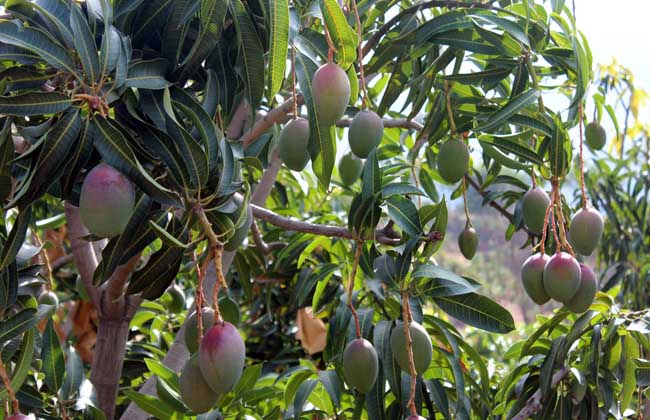
Mango is a famous tropical fruit, native to India, and widely grown in Guangdong, Hainan and other places in China. Its flesh is delicate, its flavor unique, and its varieties plentiful, able to satisfy different taste preferences. It is deeply loved by people and has long been known as the "king of tropical fruits." Many times the mangoes we buy are still unripe. Let's take a look below at how to ripen mangoes without letting them rot!
How do you ripen mangoes without letting them rot?
1. Ripening with rice: Every fruit produces its own ripening substances, but these substances are released rather slowly and need outside help to boost their secretion. After buying green mangoes, you can put them in the rice at home and bury them in the rice, which will help ripen them. After leaving them in the rice for one or two days, the green mangoes will turn yellow and be ready to eat.
2. Ripening in a paper bag: Put the green mangoes you bought into a paper bag, add two apples or pears, tie the bag shut and place it in a warm environment. After about a day the green mangoes inside will turn orange-yellow, and after about another day the mangoes will soften and be fully ripe, ready to take out and eat.
How do you tell ripened mangoes apart?
1. Skin: Naturally ripened mangoes do not have a very uniform color on the outside, while most ripened mangoes show emerald green at the pointed tip of the small end, with the skin elsewhere turning yellow.
2. Fruity aroma: When choosing, smell the skin carefully and you can detect the fruity fragrance. Compared with ripened mangoes, naturally ripened ones have a richer fragrance, and some ripened mangoes even have an off smell.
3. Feel: Naturally ripened mangoes are firm and springy, while ripened mangoes are relatively soft.
4. Weight: Weigh a mango in your hand. A ripened mango will be somewhat heavier than a naturally ripened one.
How do you best select mangoes?
1. Fruit shape: A mango's pit is relatively large, so when choosing mangoes you should try to pick ones with small pits so you can eat more flesh. The size of the pit can be judged from the fruit shape. Generally speaking, mangoes with a longer shape have smaller, finer pits, while mangoes with a short, thick shape have thicker, larger pits.
2. Skin: The best mangoes have evenly yellow-orange skin, a smooth surface, no black spots around the stem end, and feel firm yet fleshy to the touch. If the skin is green, the surface is puckery, or there are black spots on the skin and around the stem end, it is an unripe mango or an overripe mango.
3. Stem end: When buying mangoes, you can press the stem end with your hand. If it feels fairly firm and springy, it is a ripe mango, while a stem end that is too hard or too soft indicates poor quality.
4. Flesh: Cut the mango open. If you find the pit is hard and the flesh is yellow, it shows the fruit is already ripe. If the pit is still soft and the flesh looks white, it shows the fruit is not yet ripe.
5. Sinking or floating: If a mango sinks or half-sinks after being put in water, it shows the mango is already ripe, while if the mango floats on the surface, it shows the mango is not yet ripe.