What are the conditions for growing durian? A detailed explanation of its growing environment requirements
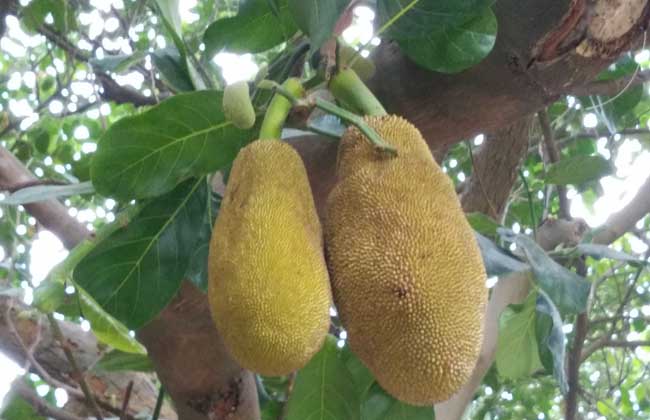
Durian is a giant tropical evergreen tree of the genus Durio in the family Bombacaceae, and one of the famous tropical fruits. It is known as the king of fruits and is grown in large quantities in some Southeast Asian countries, with Thailand being the most famous. It has a strong odor; those who love it praise its fragrance, while those who dislike it complain of its stench. Its nutritional content is very rich, giving it extremely high cultivation value. Let us take a look below at the growing conditions of durian!
The growing conditions of durian
Durian is a purely tropical crop. It can be grown in areas where the average daily temperature at the growing site is above 22°C and there is no frost. Some areas of Hainan Province and Yunnan Province in China can develop it, because durian needs a year-round high-temperature climate to grow and bear fruit. Even in equatorial regions at elevations above 600 m, durian cannot be grown or cannot bear fruit because temperatures drop. It has already been successfully cultivated at the Xinglong Tropical Botanical Garden in Hainan, flowering from April to May and ripening fruit from August to September.
The origin and distribution of durian
The places of origin of durian are Brunei, Indonesia, Malaysia and other places, and some people also believe it originated in the Philippines. Its growing areas are all over Southeast Asia, mainly in Thailand, Malaysia, Indonesia and other places. Other places where durian is grown include Cambodia, Laos, Vietnam, Myanmar, India, Sri Lanka, the West Indies, Florida, Hawaii, Papua New Guinea, the Polynesian Islands, Madagascar, northern Australia and Singapore, among others. It is also grown in Guangdong and Hainan in China.
The cultivation techniques of durian
1. Sowing and propagation: Durian can be sown every year, preferably in spring, with a plant-to-row spacing of 20 cm x 20 cm. During the seedling growth period, attention should be paid to weeding, combined with fertilization, to promote seedling growth. Superior mother plants can be propagated by air layering, which roots very easily; from ringing the branch to a completed seedling takes only 60 to 70 days.
2. Transplanting seedlings: When durian seedlings are 30 to 40 cm tall, they can be transplanted, with a plant-to-row spacing of 3 x 5 m, and organic fertilizer, farmyard manure and an appropriate amount of lime applied as base fertilizer. Transplanting can be done throughout the year, and planting with soil is best.
3. Fertilization management: Durian trees should be given 1 key fertilization each year, namely spring bud-promoting fertilizer, summer fruit-swelling fertilizer and pre-harvest fertilizer. In particular, the fruit-swelling fertilizer should be applied well, and after harvest a deep application of organic fertilizer should be made once.
4. Shaping and pruning: Durian trees have very strong sprouting ability. Attention should be paid to shaping 1 to 2 years after planting, and timely pruning after harvest to maintain a good tree shape.
5. Harvesting the fruit: When durian fruit turns orange-yellow or orange-red, it is ripe and can be harvested. After harvest, the fruit cannot be eaten fresh directly; it needs 4 to 7 days of after-ripening until the flesh becomes soft before it can be eaten.