Where are the main production areas of dragon fruit?
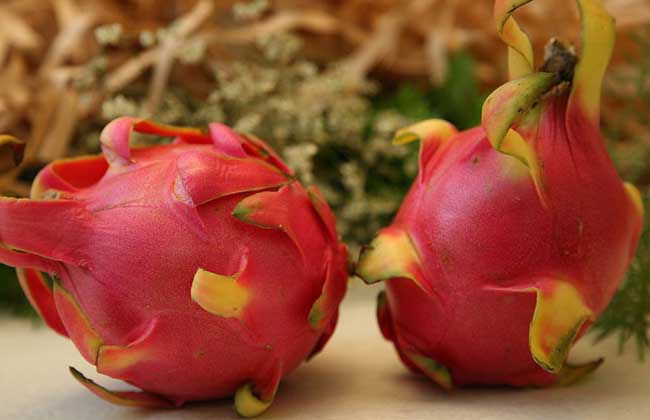
Dragon fruit, also known as red dragon fruit, green dragon fruit, fairy honey fruit, jade dragon fruit, etc., is a perennial climbing succulent plant of the genus Hylocereus in the cactus family. The fruit is oval-shaped, 10-12 cm in diameter, red or yellow in appearance, with green rounded triangular leafy scales, white, red or yellow flesh, and black seeds. Let's take a look below at where dragon fruit is produced!
Where is dragon fruit produced?
Dragon fruit originated in Central America in Costa Rica, Guatemala, Panama, Ecuador, Cuba, Colombia and other places, and was later introduced to Vietnam, Thailand and other Southeast Asian countries and Taiwan, China, and is cultivated in Hainan, Guangxi, Guangdong, Fujian, Yunnan, Guizhou and other provinces and regions of mainland China.
The production environment of dragon fruit
Dragon fruit is a tropical and subtropical fruit. It likes light and tolerates shade, tolerates heat and drought, likes fertilizer and tolerates barren soil. It grows rapidly in a warm, humid environment with sufficient light. When cultivated in the open field in spring and summer, it should be watered more to keep its root system in a vigorous growth state. In continuous rainy weather, drainage should be done in time to avoid infection by pathogens that cause stem and flesh rot. Its stems can also grow attached to rocks, and the plant has extremely strong wind resistance; as long as the support is firm, it can resist typhoons. It can tolerate low temperatures of 0°C and high temperatures of 40°C, and the optimum temperature for growth is 25-35°C. It can adapt to a variety of soils, but neutral soil and slightly acidic soil with much humus and good water and fertilizer retention are best.
Common types of dragon fruit
1. Red-fleshed dragon fruit: The flesh of red dragon fruit is red or purplish red, with excellent fresh-eating quality. In Taiwan, Guangdong and Guangxi, the production period is from May to November, and in Hainan the production period is even longer. Red-fleshed dragon fruit has poor self-compatibility, a low fruit-setting rate under self-pollination, small fruit and poor marketability, and needs to be pollinated by white-fleshed dragon fruit to have a high fruit-setting rate and large fruit. At present, the variety names of red-fleshed dragon fruit are chaotic, with no definite variety name, and each grower decides according to their own preference.
2. White-fleshed dragon fruit: White-fleshed dragon fruit has red skin and white flesh, and its fresh-eating quality is ordinary. In Taiwan, Guangdong and Guangxi, the production period is from June to October. It has good self-pollination compatibility, a high fruit-setting rate, strong disease resistance and high yield, and can be processed into juice, fruit powder and jam. At present, among white-fleshed dragon fruits, Vietnam No. 1 is the best variety and is the main cultivated variety in Vietnam. It has strong adaptability, grows quickly, and produces large fruit with no spines on the surface, with an average single fruit weight of 420 grams and a maximum of 1000 grams. The soluble solids content is 18.1%, it is high-yielding, and the yield per hectare is 16,500-27,500 kg.
3. Yellow-fleshed dragon fruit: Yellow-fleshed dragon fruit has yellow skin and white flesh, with excellent fresh-eating quality and large, fragrant flowers. It takes 45-60 days from bud emergence to flowering, 90-100 days from flowering to fruit maturity, and in autumn and winter it takes 110-150 days to mature. The fruit does not split, and it takes 1 month (in winter) to turn from green to yellow. After turning yellow, if left hanging on the tree, it can remain for more than a month without affecting quality, making it the type with the best quality and the best taste and sweetness among dragon fruits. It has a fragrant aroma, and the seeds in the flesh are large and soft, not at all bothersome to eat. The soluble solids content is above 18%, but its fruit is slightly small, generally about 200 grams. The main fruit-bearing period (autumn and winter fruit) is around the Spring Festival, while summer fruit comes to market at the Mid-Autumn Festival.