How to Grow Sugar Apple from Seed? A Detailed Guide to Planting Methods
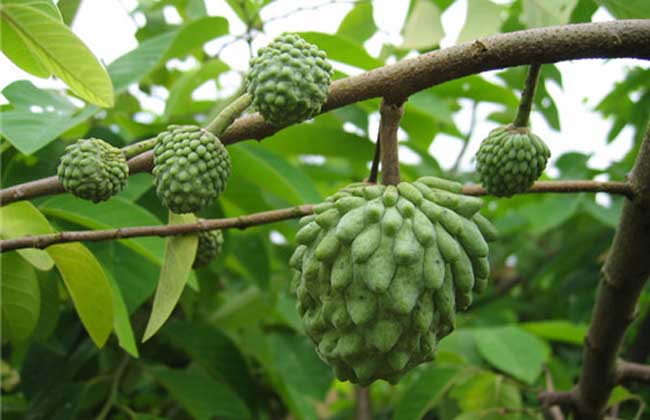
The sugar apple, also known as custard apple, sweet sop, and Buddha's head fruit, is a perennial semi-deciduous small tree of the genus Annona in the family Annonaceae. It is native to the tropical regions of the Americas. Besides being grown as a tropical fruit tree, it is also well suited for ornamental planting in garden green spaces, looking equally good planted as a specimen or in groups. Now let's take a look at how to grow sugar apple from seed!
Sugar Apple Seed Treatment
When growing sugar apple directly from seedlings, the source of the seeds is very important. The seeds should come from large, well-shaped fruits on high-yielding, high-quality mother plants of a superior variety (common sugar apple), and it is best to use fruits produced by hand-pollination of the same variety. Wait until the fruit is fully ripe, when the fruit turns pale greenish-yellow and the seams between the segments become obvious, then harvest and collect the seeds. For raising rootstock for grafting, the requirements for seed collection can be lowered. After the seeds are removed, wash them clean, discard the empty and small seeds, and dry them in the shade before sowing immediately. Seeds to be sown in the following spring should be thoroughly sun-dried, then placed in polyethylene plastic bags and sealed for storage.
Sugar Apple Sowing Time
In areas with higher winter temperatures, sugar apple is best sown in August to September, right after the seeds are harvested and dried in the shade. Fresh seeds have a higher germination rate, and the seedlings have a longer growing period, which helps produce strong seedlings. To grow strong seedlings, before sowing the seeds can be soaked in 200 mg/kg gibberellin for 24 to 36 hours, which can bring emergence forward by 3 to 5 days. After the seedlings have 6 leaves, spraying the foliage twice with Aiduoshou diluted 5000 to 6000 times can effectively increase the rate of strong seedlings. Because sugar apple seedlings are rather sensitive to frost, seedlings sown in autumn need special attention to cold protection and insulation. In other southern subtropical regions, it is best to sow in spring, generally after the local cold, overcast and rainy weather has passed and the weather has become sunny, warm and fairly stable.
Sugar Apple Sowing Methods
Stored sugar apple seeds should be sun-dried before sowing to promote germination. The nursery should be chosen on sunny, well-drained, fertile sandy loam, preferably gentle slopes or flat land. Before sowing, the nursery land should be deep-ploughed and sun-dried for 1 to 2 months, then rotted organic fertilizer and a small amount of lime should be applied as base fertilizer, broken up and mixed evenly, and then trenches should be made and beds raised. Both drilling and broadcasting can be used, with 7 to 8 kg of seed per mu. Cover with river sand or fine soil, press down lightly, then water thoroughly and cover with grass or plastic film. The seedbed should be kept moist, but it also fears waterlogging, so be careful to strictly prevent excess water, to avoid causing root rot. After germination, uncover the grass or plastic agricultural film so as not to bend the seedlings.
Sugar Apple Seedling Management
1. Watering and fertilizing: During the seedling stage, water about once every 3 days; in dry weather, once a day. After 6 to 8 leaves appear, thin manure water or 0.5% urea solution can be applied, and the concentration can then be gradually increased. In the later nursery stage, potassium fertilizer or compound fertilizer should also be applied as a liquid drench to help produce strong seedlings. Before fertilizing, weeds should be removed and the soil loosened.
2. Pest and disease control: During the sugar apple seedling stage, insect pests occur relatively rarely, but diseases occur frequently, especially root rot. Therefore, during the seedling stage, attention should be paid to control, preventing excessive shading and waterlogging, and taking care to drench with thiophanate-methyl as a preventive measure.