Where is the sugar apple produced? A detailed explanation of the main producing areas
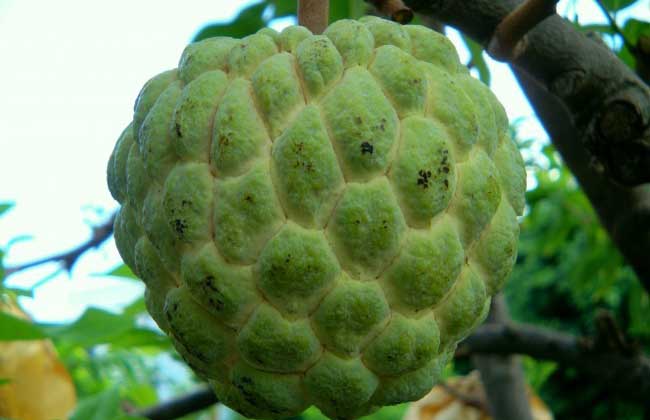
The sugar apple, also known as lai qiu guo, fo tou guo, shi jia guo, and so on, is a perennial semi-deciduous small tree plant of the genus Annona in the Annonaceae family. Its fruit is similar in size to a pomegranate, and its skin is covered with bumps joined into a spherical shape. The flesh is snowy white with a dense, creamy texture, sweet and fragrant with a slight tartness. It is sweet and fragrant when eaten fresh, with an excellent flavor. Now let us take a look together at where the sugar apple is produced!
Where is the sugar apple produced?
The sugar apple is native to the tropical regions of the Americas, and is cultivated in Hainan, Fujian, Taiwan, China, Guangdong, Guangxi, and Yunnan in China. It likes light and prefers a warm, humid climate, requiring an annual average temperature above 22°C. It is not cold-tolerant and is best suited to deep, fertile, well-drained sandy loam soil. Its main fruit ripening period is from June to November.
The nutritional value of the sugar apple
The sugar apple is a tropical fruit and was once considered in Japan to be the fruit with the highest vitamin C content in the world, and it is rich in nutritional value. The nutritional content of the fruit flesh tissue per 100 grams of sugar apple is 8.36 grams of water, 18.0-26% soluble solids, 0.14%-0.3% fat, 0.6%-0.7% minerals, 23.9% carbohydrates, 0.2% calcium, 0.04% phosphorus, 1.0% iron, 0.42% organic acids, 15.3%-18.3% total sugars, 0.265 grams of vitamin C, 1.55 grams of protein, and so on, containing many substances needed by the human body.
The edible benefits of the sugar apple
1. Delays skin aging: The sugar apple is rich in vitamin C and has the effect of lowering blood sugar. It is the best antioxidant fruit and can effectively delay skin aging and whiten the skin.
2. Promotes bowel movements: The sugar apple has a relatively high fiber content and can effectively promote intestinal peristalsis and expel accumulated feces stored in the intestines.
3. Lowers blood sugar: The sugar apple has the effect of activating brain cells and lowering blood sugar, and is often used abroad to treat brain atrophy and diabetes. People with diabetes who regularly eat sugar apple experience a clear auxiliary dietary therapeutic effect in reducing symptoms.
4. Anti-cancer: Since 1970, experts have conducted more than 20 studies on the sugar apple. The research results show that extracts of the sugar apple can effectively fight malignant cells of 12 types of cancer, including colon cancer, breast cancer, prostate cancer, lung cancer, and pancreatic cancer. At the same time, the sugar apple also has antifungal and antiparasitic effects. In addition, it can help regulate blood pressure and is also an antidepressant and a broad-spectrum antibiotic.
5. Promotes children's growth and development: The sugar apple fruit is a food with very balanced nutrition, rich in sugars, proteins, amino acids, minerals, vitamins, flavonoids, and crude fiber arginine. Acid can promote insulin production and secretion and enhance the immune function of cells, and lysine is an amino acid for the regeneration of brain nerve cells. Arginine can stimulate the pituitary gland to secrete growth hormone, can promote the synthesis of collagen tissue, and has a role in promoting children's growth.
6. Maintains neuromuscular excitability: The sugar apple fruit contains a variety of mineral elements. The contents of potassium, sodium, calcium, magnesium, iron, and zinc are all high, and potassium, sodium, calcium, and magnesium maintain a certain ratio, which can promote muscle contraction and maintain neuromuscular excitability.