How many years does it take for a miracle fruit plant to bear fruit?
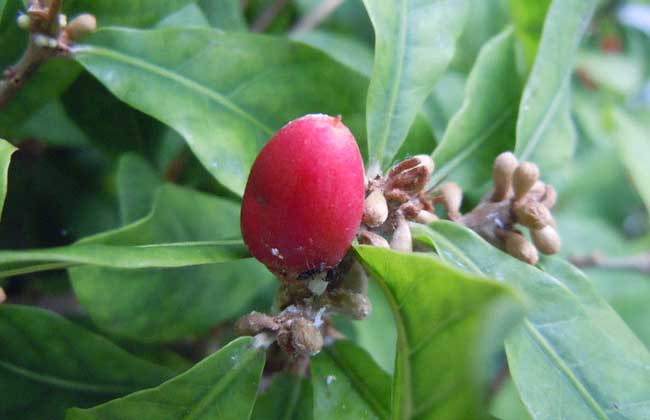
Miracle fruit (Synsepalum dulcificum) is a typical tropical evergreen shrub, native to the regions of West Africa, Ghana and Congo. It began to be cultivated in China in the 1960s, mainly in Guangdong, Guangxi, Yunnan, Hainan and other places, but whether in West African countries or in China, it is protected and banned from export. Let's take a look below at how many years it takes for a miracle fruit plant to fruit!
How many years does it take for a miracle fruit plant to fruit?
Miracle fruit grows slowly, generally flowering and fruiting only 3 to 4 years after planting. With vegetative propagation, it can fruit 1 to 2 years earlier, and the tree can be dwarfed to enhance its ornamental value. The flesh is sour and astringent, and contains rich and unusual glycoproteins, vitamin C, KI, citric acid, succinic acid, oxalic acid, etc. It can make sour bread become sweet and tasty, and make sour palm wine and beer become sweet. After eating sour, spicy, bitter or salty foods, chewing a few miracle fruits will immediately turn the taste sweet.
When does miracle fruit ripen?
The fruit ripening period of miracle fruit is not uniform, and the peak fruiting periods are usually March, June and October. The fruit is small and oval, bright red when ripe, with white juicy flesh, and is pollinated by insects such as ants. Miracle fruit was introduced to China in the 1960s, and is now cultivated as a garden ornamental plant in many regions. It blooms small white flowers every September, sets fruit in October, and in November the fruit turns from green to red and ripens.
Why does miracle fruit not bear fruit?
1. Lack of pollination: Fruiting is the next generation produced by plant mating. If there are only males or only females, or if males and females cannot mate, no next generation can be produced, and of course no fruit or seeds can be produced. Therefore, artificial means can be used to help miracle fruit pollinate. The method is to raise flies beside the potted plant during the flowering period, as flies can also pollinate effectively.
2. Environmental factors: During the flowering period of miracle fruit, the flowers and pollen have low resistance to the environment. Therefore, during the flowering period of miracle fruit, it is best to avoid factors such as low temperatures, cold waves, rainfall and strong winds. In terms of human management, it is best not to pour water over the whole plant when watering, so as to prevent the pollen from being washed away.
3. Fertilizer issues: Using fertilizer with high phosphorus and potassium content before miracle fruit blooms can increase its fruit-setting rate.