When does the miracle fruit ripen? An introduction to its ripening season
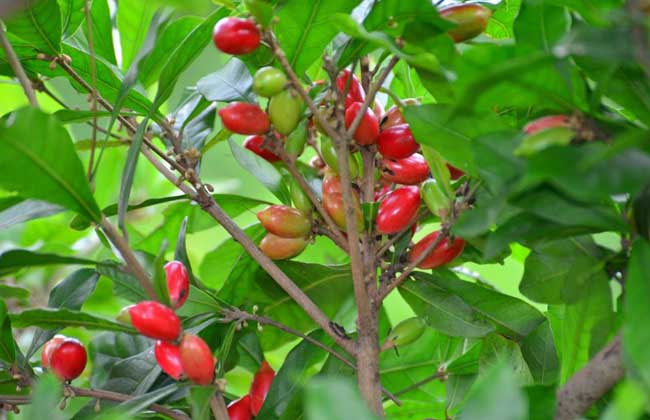
The miracle fruit is a rare plant of national treasure status. It belongs to the Sapotaceae family and is a tropical evergreen shrub, also known as the flavor-changing berry. It is now cultivated as an ornamental garden plant in many regions of China and has good prospects for cultivation. It is best planted in hot, humid subtropical and tropical regions. Let us take a look below at when the miracle fruit ripens!
When does the miracle fruit ripen?
The fruit of the miracle fruit does not ripen uniformly, and the peak fruiting periods are usually March, June, and October. The fruit is small and oval; when ripe, the fruit is bright red with white, juicy flesh. It is pollinated by insects such as ants. The miracle fruit was introduced to China in the 1960s and is now cultivated as an ornamental garden plant in many regions. Each year it produces small white flowers in September, sets fruit in October, and in November the fruit turns from green to red and ripens.
Where is the miracle fruit produced?
The miracle fruit is a typical tropical evergreen shrub, native to West Africa, Ghana, and the Congo region. In the 1960s, when Premier Zhou Enlai visited West Africa, the Republic of Ghana presented the miracle fruit to Premier Zhou as a national gift. After that, it began to be cultivated in China, with the main production areas being Guangdong, Guangxi, Yunnan, Hainan, and other places. Whether in the countries of West Africa or in China, it is protected and prohibited from export.
Growing environment and conditions for the miracle fruit
The miracle fruit prefers slightly acidic or neutral soil and grows best in well-drained sandy loam. It is suitable for cultivation in tropical and southern subtropical low-altitude areas of China. The plant prefers a hot, humid climate and has a certain tolerance to drought and cold. In winter, at 3 to 5 degrees Celsius, young branches and leaves suffer cold damage but do not die, and it can overwinter safely at 8 to 10 degrees Celsius. It likes light; during the seedling stage it can receive direct sunlight, but it can also flower and bear fruit normally in slightly shaded conditions.