Why is the miracle fruit called the miracle fruit?
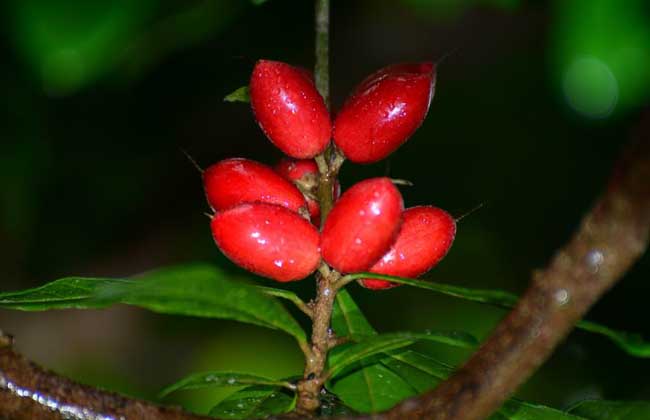
The miracle fruit is a typical tropical evergreen shrub, native to the West Africa, Ghana and Congo regions. Its flesh is sour and astringent, but it contains miraculin. Within half an hour of eating a miracle fruit, if you then eat other acidic fruits, you will find that these sour fruits no longer taste sour but become sweet, hence the name miracle fruit. Now let us take a look at what is so mysterious about the miracle fruit!
What is so mysterious about the miracle fruit?
The miracle fruit contains a taste-altering protease (miraculin). Although it cannot truly change the flavor of food, it can change people's sense of taste, so after eating a miracle fruit, anything sour tastes sweet. After eating a miracle fruit, the miraculin in it is distributed on the taste bud cell membranes of the tongue. In a neutral pH environment, the sweet-taste receptor protein on the miraculin will not bind to the sweet-taste receptor site, so miraculin itself has no sweet taste. Therefore, the taste-altering function of the miracle fruit is a safe change and is suitable for consumption as an everyday food.
Where is the miracle fruit produced?
The miracle fruit is native to the West Africa, Ghana and Congo regions. In the 1960s, when Premier Zhou Enlai visited West Africa, the Republic of Ghana gave the miracle fruit to Premier Zhou as a national gift, and cultivation in our country began after that. The main production areas are Guangdong, Guangxi, Yunnan, Hainan and other places. But whether in West African countries or in our country, it is protected and prohibited from export.
What are the uses of the miracle fruit?
1. Edible value: The flesh of the miracle fruit is rich in unique glycoproteins, vitamin C, KI, citric acid, succinic acid, oxalic acid, etc. The seeds contain natural sterols, etc., and the leaves contain trace mineral elements such as sodium, potassium, calcium and magnesium. Ripe fruit can be eaten raw, made into juice, made into concentrated lozenges, or combined with juice into sugar-free lemon ice pops. The seeds can be eaten raw and made into concentrated lozenges. The leaves are a purely natural plant MSG.
2. Medicinal value: Because the fruit contains special glycoproteins, the miracle fruit can turn highly acidic fruits into sweet nectar. Regularly eating the ripe fruit or concentrated lozenges has the effect of regulating high blood sugar, high blood pressure, high blood lipids, gout, uric acid, headaches, etc., and stabilizing them to normal levels. Juice applied to mosquito and insect bites can reduce inflammation and swelling. The seeds can relieve angina, sore throat, hemorrhoids, etc. The leaves, brewed as tea or used in cooking, can regulate high blood sugar and high blood pressure, protect the heart, beautify and slim the body, detoxify and relieve constipation, control uric acid, reduce gout pain, and also relieve intoxication.