Where are olives produced? An introduction to the distribution of the main producing areas
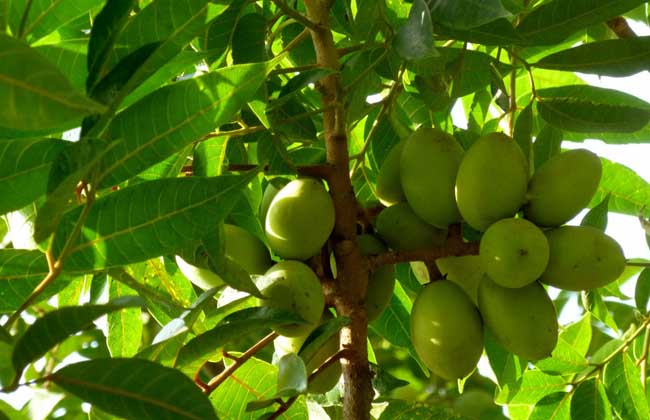
The olive is also known by other names such as yellow olive, green fruit, mountain olive, white olive and red olive. It is a tree plant of the genus Olea in the family Oleaceae, a famous subtropical specialty fruit tree with a long history of cultivation. Records of the olive already appear in the ancient book "Qi Min Yao Shu". It often grows wild in ravine and hillside mixed woods below 1300 m in altitude, or is cultivated in courtyards and beside villages. Now let us take a look at where olives are produced!
Where are olives produced?
The olive originated in southern China. It is cultivated in China's Fujian, Taiwan, China, Guangdong, Guangxi, Yunnan and other regions, and is distributed from northern to central Vietnam. It is cultivated in Japan (Nagasaki, Okinawa) and the Malay Peninsula. In China, it is most widely distributed in Fujian Province, and is also found in parts of Sichuan, Zhejiang and Taiwan, China. Besides China, countries that cultivate olives include Vietnam, Laos, Cambodia, Thailand, Myanmar, India and Malaysia.
The production environment of the olive
The olive prefers warmth. During the growing period it needs suitably high temperatures to grow vigorously and bear good fruit. Areas with an annual average temperature above 20°C and no severe frost damage in winter are most suitable for its growth. In winter it can endure short periods of low temperatures down to minus 3°C, but when the temperature drops below 4°C severe frost damage occurs. It can grow normally in areas with rainfall of 1200 to 1400 mm. It has a fairly wide adaptability to soil, and can be cultivated along riverbanks, on hills and mountains, and in red-yellow soil and gravelly soil. As long as the soil layer is deep and drainage is good, it will grow well.
China's hometowns of the olive
1. Hometown of Chinese olive in China: Fujian ranks first in the country in olive production, and the planting area and output of Minhou olives have ranked first in Fujian for many years. In 1996, Minhou County was rated as the "Hometown of Chinese Olive in China" by the Development Research Center of the State Council and other institutions. In 2006, Minhou County passed the acceptance inspection for the olive standardization demonstration zone of the Ministry of Agriculture of China.
2. Hometown of Chinese oil olive in China: Kaijiang County in Sichuan Province is the main producing area of China's oil olive capital, and it has been introducing and developing oil olives for 40 years, having successively gone through four development stages: introduction trials, demonstration and promotion, adjustment and consolidation, and large-scale development. In 2014, it was named the "Hometown of Chinese Oil Olive in China" by the Chinese Cereals and Oils Association.
3. Hometown of Chinese green olive in China: The green olive is one of Puning's major traditional fruit types, with a long history of cultivation, found throughout the whole city. The main producing areas include Lihu, Meitang, Hongyang, Guangtai, Shipai, Gaopu, Chuanpu and other places. The city's planting area is more than 8 thousand hectares, with a total output of 4000 tons, ranking first in the country. In June 1996, Puning was named the "Hometown of Chinese Green Olive in China" by the Ministry of Agriculture of China. In March 2006, it was approved and recognized as a "Famous and High-Quality South Subtropical Green Olive Base" by the South Subtropical Crops Office of the Ministry of Agriculture.