Key Technical Points and Detailed Methods for the Prevention and Control of Pests and Diseases in Shatian Pomelo
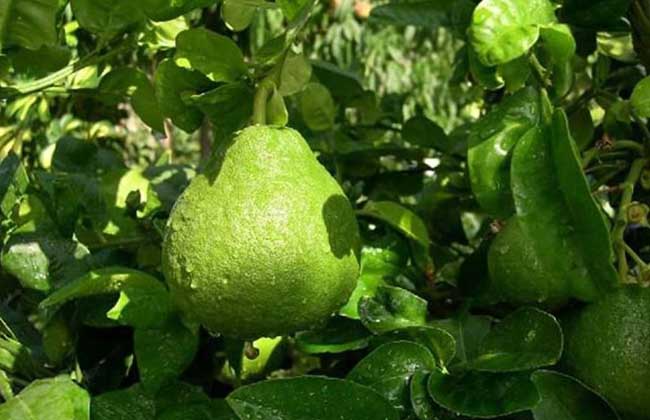
Shatian pomelo is named after Shatian Village in Rong County, Guangxi, where it was first cultivated. As early as the 1930s, it was exported to Hong Kong, China, Nanyang, Europe, and the Americas, and it is highly competitive in the international market. It has now been expanded to the Xunjiang, Longjiang, Guijiang, Lijiang, and Hongshui River basins in Guangxi, and has also been introduced to Guangdong, Hunan, Sichuan, Zhejiang, and Jiangxi. Let us now take a look at the pest and disease control techniques for Shatian pomelo!
Scab
[Damage] Scab mainly damages spring shoots and young fruit. When leaves are first affected, they show oil-soaked spots, which later turn waxy yellow. The lesions expand and bulge outward on one side into conical wart-like protrusions, resembling ox horns or funnels, with a rough surface. If the lesions cluster together, the leaves become distorted and deformed, and the fruit also becomes deformed, with severe leaf and fruit drop. In humid weather, a layer of gray mold-like substance appears on top of the lesions, which spreads through wind, rain, and insects. The disease is prone to occur from April to May when daytime temperatures are 15-24°C. Dense orchards are more susceptible, and continuous rainy weather makes the disease even more severe.
[Control] ① New orchards should use disease-free nursery stock. For scions and nursery stock from non-disease-free nurseries and from external sources, soak in 50% benlate 800-fold solution or 50% carbendazim wettable powder 800-1000-fold solution for 30 minutes. ② During winter orchard cleaning, prune out insect-damaged branches, weak branches, and shaded branches and burn them in a centralized manner to ensure good ventilation and light penetration in the canopy, reduce humidity, and spray 1 application of 0.5 degree Beaume lime sulfur mixture. ③ Strengthen routine management and apply more potassium fertilizer so that new shoots emerge uniformly and mature quickly. ④ During the spring bud sprouting and elongation stage and after flowering is complete, spray 75% chlorothalonil wettable powder 600-800-fold solution, or 0.5% equal-amount Bordeaux mixture, or 70% thiophanate-methyl wettable powder 1000-fold solution to protect new shoots, tender leaves, and young fruit.
Brown Rot Phytophthora Disease
[Damage] Brown rot Phytophthora disease mainly damages fruit, causing massive fruit drop after infection. In the early stage of the disease, light brown small round spots appear on the rind. These small spots rapidly expand and become dark brown water-soaked lesions. The affected area softens and becomes slightly sunken. Under high-temperature and high-humidity conditions, sparse pure white mycelium can be produced on the fruit surface, and diseased fruit gives off a pungent, stuffy odor. It occurs throughout the entire fruit growth and development period of Shatian pomelo, but is more severe from May to August.
[Control] ① Strengthen management, promptly remove diseased fruit and spread quicklime powder on the orchard floor for disinfection. Pay attention to digging drainage ditches to reduce water accumulation and prevent waterlogging, and prune appropriately to improve ventilation and light penetration in the orchard. ② During the fruit growth and development period, fertilizer should combine nitrogen, phosphorus, and potassium with farmyard manure to promote strong tree vigor and enhance resistance. ③ In view of the short incubation period and rapid onset of this disease, during high-temperature and rainy seasons, after wind and rain, the canopy and the ground should be sprayed simultaneously in a timely manner. You may choose 53% Jindleidomier water-dispersible granules 600-700-fold solution, 90% yishuangling wettable powder 700-800-fold solution, or 72% keyishuang wettable powder 800-fold solution, and spray again after 7 days.
Black Spot Disease
[Damage] The pathogen infects young fruit after flowering, but symptoms do not appear immediately. Black star-type or black spot-type lesions appear only when the fruit is nearly mature. In the black star type, affected fruit initially develop scattered reddish-brown small spots, which later expand into round, "crater"-like spots that do not invade the flesh. In the black spot type, affected fruit initially develop light yellow or yellow-brown spots, which gradually expand into dark brown or black-brown round or irregular lesions that merge into patches. This disease is prone to occur in warm and humid climates in spring and summer. It is especially obvious in pomelo orchards with weak tree vigor, dense canopies, low-lying water accumulation, and poor ventilation and light penetration. The peak incidence period is from September to November when the fruit matures.
[Control] ① Starting 15 days after flowering, you may choose 50% thiophanate-methyl wettable powder 500-fold solution, 77% copper hydroxide wettable powder 600-800-fold solution, or 45% crystal lime sulfur mixture 300-400-fold solution for protective spraying, once every 7 days for 2-3 consecutive applications. ② In winter and spring, during orchard cleaning combined with pruning, remove diseased branches and leaves, fallen leaves, and fallen fruit and burn them in a centralized manner. ③ Apply more organic fertilizer and rationally combine nitrogen, phosphorus, and potassium to promote strong tree vigor and improve disease resistance.
Rust Mite
[Damage] Adult and nymph mites gather in groups on leaves, fruit, and tender branches to suck sap. Affected fruit and leaf undersides turn bronze-colored, with a rough, lusterless surface. In severe cases, leaves curl, wither, and fall off, and the fruit surface turns black, affecting the growth and development of pomelo trees and the yield and quality of pomelo fruit. In Guilin City, the rust mite occurs for more than 35 generations per year, with overlapping generations. Adult and nymph mites overwinter on branches and leaves, with no obvious overwintering period. From March to April, they begin feeding and damaging spring shoots. From May to June, they spread to fruit, and the mite population then surges. From July to August, the population reaches its annual peak, and July to October is the peak occurrence period.
[Control] When rust mite density reaches an average of 2-3 mites per field of view (10x handheld magnifying glass), or when a few black-skinned fruit are found on individual trees and rust spots and brown leaves appear on leaves of individual branch tips, spraying can begin. Chemical control should take care to protect natural enemies such as black lady beetles and green lacewings. You may choose 1.8% abamectin emulsifiable concentrate 2000-3000-fold solution or 73% propargite emulsifiable concentrate 2000-fold solution. For orchards with a large mite population, spray again after half a month for 2-3 consecutive applications. When spraying, be sure to spray the inner canopy, leaf undersides, and the shaded sides of fruit.