What regions are the main production areas of avocados distributed across?
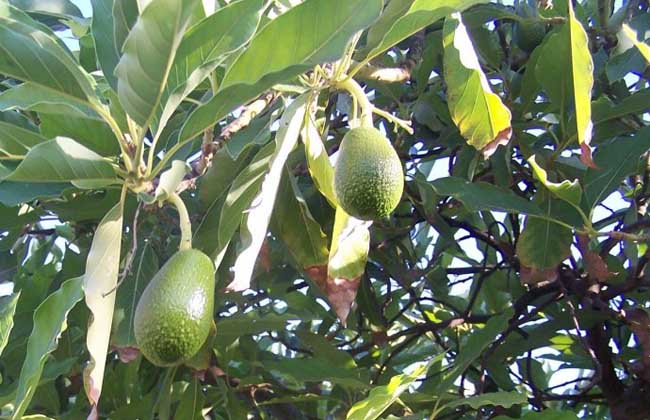
The avocado is an evergreen tree of the genus Persea in the family Lauraceae, also known as butter pear, alligator pear, avocado, and butter fruit. Its fruit is a highly nutritious fruit, containing multiple vitamins, abundant fats and proteins, and high levels of sodium, potassium, magnesium, calcium, etc. In addition to being eaten as a fresh fruit, it can also be used in dishes and canned goods. The kernel is used for food, medicine, and the cosmetics industry. Now let us take a look at where avocados originate from!
Where do avocados originate from?
The avocado originated in Mexico and Central America, and was later widely cultivated in California, so California became the world's largest avocado production area. It is grown in tropical and subtropical regions worldwide, but is cultivated most extensively in the southern United States, Guatemala, Mexico, and Cuba, and has formed three major groups: the Mexican race, the Guatemalan race, and the West Indian race. In China, small-scale cultivation exists in Guangdong, Hainan, Fujian, Guangxi, Taiwan, China, Yunnan, and Sichuan.
The production environment of avocados
The avocado's adaptability to temperature varies greatly depending on the variety. The Mexican race has relatively strong cold resistance, while the Guatemalan race and West Indian race have weaker cold resistance. Most of those introduced to China are of the Mexican race, which originated in tropical highlands. Avocados require annual rainfall of more than 1000 mm, have shallow roots, and brittle branches, and cannot withstand strong winds; strong winds can lead to reduced yields. They have relatively strong adaptability to soil.
The cultivation value of avocados
1. Economic value: Avocado trees bear fruit after 3-4 years of planting, and yields become relatively stable from the 6th year. The investment capital is relatively small. Avocado trees have very high yields, averaging 60-70 kg per tree, with some trees reaching 200 kg, giving them high economic value.
2. Health benefits: The sugar content of avocado flesh is extremely low, at 1/5 the sugar content of bananas, making it a rare high-fat, low-sugar food for diabetic patients. Soaking the peel in water and drinking it can help alleviate diabetes.
3. Beauty benefits: Avocado flesh has good compatibility with human skin and is very easily absorbed by the skin. It has strong absorption of ultraviolet rays and, being rich in vitamin E and carotene, etc., it has good skin care, sunscreen, and health benefits. Countries such as the United States and Japan have widely used it in more than 240 kinds of cosmetics, including skin creams, facial cleansers, face masks, shampoos, and sunscreens.