Where are lemons grown? Introduction to the main producing regions
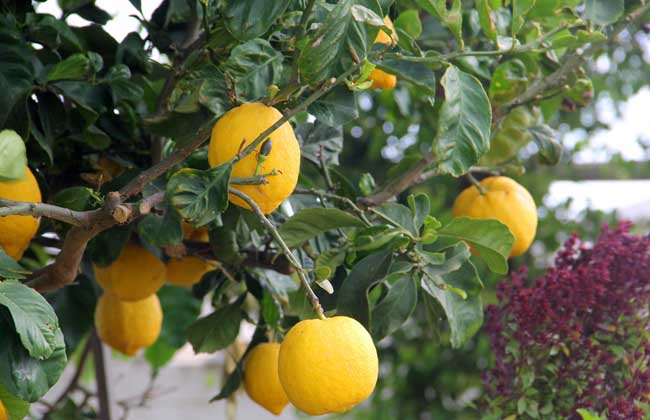
The lemon is also known as ningguo, yangningmeng, yimuguo, yimuzi and so on. It is a small tree of the genus Citrus in the family Rutaceae, rich in citric acid, and is therefore known as a “citric acid warehouse”. The fruit is juicy with crisp flesh and a rich fragrance. Because it tastes extremely sour, it can only be used as a premium seasoning, used to prepare beverages, dishes, cosmetics and medicines. Let us take a look below at where lemons are grown!
Where are lemons grown?
The lemon originated in India, and it is said also in southwestern China and northern Myanmar. It was cultivated relatively late in China, and the quantity cultivated is not large either. It is distributed in the provinces (autonomous regions) south of the Yangtze River. Taiwan, China is a major lemon producing area in our country, and then Sichuan has the most cultivation. Anyue County, Ziyang City, Sichuan Province is the hometown of Chinese lemons and is the only county in the country with a commercial lemon production base. Other producing areas are mainly in Fujian, Hainan, Guangdong, Guangxi, Yunnan and other places. Because the economic benefits of cultivating lemons are relatively high, they have now been introduced to some provinces and cities south of the Yellow River.
The growing environment of lemons
The lemon likes warmth, tolerates shade, is not cold-resistant, and also fears heat. It is suitable for cultivation in subtropical regions with warm winters and cool summers. The suitable annual average temperature is 17-19°C, the annual effective accumulated temperature (≥10°C) is above 5500°C, the average January temperature is 6-8°C, the extreme minimum temperature is above -3°C, the annual rainfall is above 1000 mm, and the annual sunshine hours are above 1000 hours. It is suitable for planting on warm gentle slopes with deep soil and good drainage. The most suitable soil pH is between 5.5 and 7.0. The lemon plant grows relatively fast, with the plant reaching 3-6 m in height, and it has a relatively large fertilizer requirement. It sprouts, blooms and fruits multiple times a year, and the yield often varies greatly depending on how well it is managed.
The plant culture of lemons
In the 15th century, European adventurers, in pursuit of spices and gold, sailed across the oceans one after another to seize colonies. During the voyages, sailors were often struck by a plague-like scurvy, losing tens of thousands of lives.
In 1593, more than 10000 sailors died of scurvy in England, while four fifths of the sailors from Spain, Portugal and other countries died of scurvy. Around the time of these events, another kind of miracle occurred. Some French explorers spent the winter in Canada. Among them, 110 people contracted scurvy. The local Indians told them to drink water soaked with pine leaves. In despair, the sick men drank this water and were unexpectedly saved.
From 1772 to 1775, when Britain's Captain Cook led his ships on their second voyage, during an expedition crossing the Pacific Ocean that lasted 3 years, only 1 of the 118 crew members died. It turned out that Captain Cook ordered the crew to eat pickles regularly, which spared the crew from the disaster of scurvy.
Research on the treatment of scurvy began between 1745 and 1755, when the British doctor Lind tried fresh vegetables, fruits and medicines, among other things, to conduct medical experiments on sailors suffering from scurvy. Once, while treating the scurvy of sailors on the British ship “Chuanhai No. 5”, he selected some sailors and divided them into 6 groups, using different methods of treatment, such as different foods, medicines and physiotherapy methods. The result was unexpectedly that the patients who took medicine showed no improvement at all. On the contrary, the group who ate lemons, as if they had taken a “miracle elixir”, were immediately freed from the disease and quickly recovered their health.
Around 1795, the British navy adopted this method and stipulated that during their time at sea, each sailor had to drink a fixed amount of lemon leaf water every day. Two years later, scurvy had disappeared from the British navy. Because of this, the British often used the amusing elegant nickname “lemon men” to refer to their sailors and seamen.