Where are the main production areas of pecans distributed?
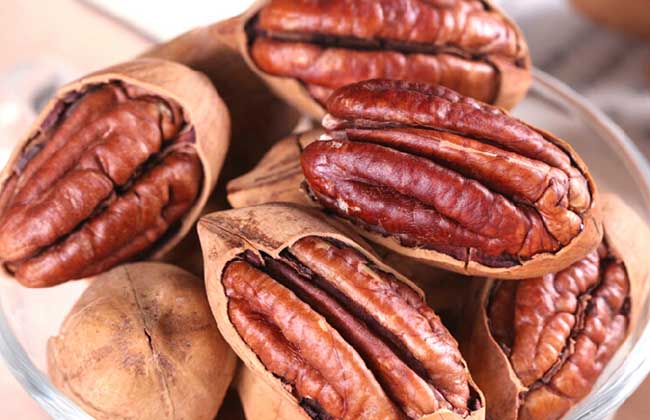
The pecan, also known as the American hickory or longevity nut, is the fruit of a large tree in the genus Carya of the Juglandaceae family. It is one of the world's top ten nuts, crisp and delicious with a rich lingering aroma. It can be eaten raw or roasted, and can also be used to make all kinds of pastries. It is a fine snack for travel and leisure and a high-grade gift for relatives and friends. Let's take a look at the production areas and distribution of pecans below!
Production areas and distribution of pecans
The pecan originated in the North American continent, in the United States and northern Mexico. It is one of 17 species of hickory in the world, a purely wild fruit type, a natural green food free of any pollution, and has now become one of the world's nut tree species. In China, it is cultivated in Hebei, Henan, Jiangsu, Zhejiang, Fujian, Jiangxi, Hunan, Sichuan and other provinces.
The production environment of pecans
The pecan is a sun-loving tree species that prefers a warm, humid climate. It has a fairly wide tolerance for soil acidity and alkalinity, growing well in both slightly acidic and slightly alkaline soils. It is not tolerant of drought or barren soil. It grows rapidly in alluvial plains or river valley areas with deep, loose soil rich in humus. It has a deep root system, strong sprouting ability, moderate growth speed and a long lifespan, and is suitable for cultivation in river and lake areas.
How to select pecans
1. When choosing pecans, check whether the pecans are plump and whether the color of the pecans is uniform. Choose ones that are similar in size.
2. Pecans come in large pointed, medium pointed, small pointed, large round, medium round, small round and other types. The large ones are more expensive, but bigger is not necessarily better. It depends on personal preference; the small ones even have a finer flavor.
3. Pecans are generally considered best when they are large and round, with thin, white and clean shells, dry, with large kernel pieces, white and clean in color and high in oil content. The selection method should mainly be based on cracking open the nut to observe; plump kernels are best, shriveled ones are inferior.
4. If the kernels are entirely oily, sticky to the touch, dark brown and rancid-smelling, they have seriously deteriorated and must not be eaten.