How to graft a jujube tree? Detailed explanation of grafting methods and steps
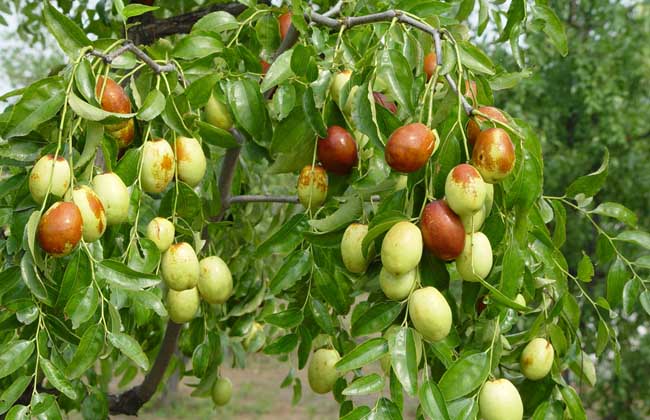
Red jujube, also known as jujube, Chinese date, etc., is a deciduous small tree of the genus Ziziphus in the buckthorn family (Rhamnaceae), growing in mountainous areas, hills or plains below 1700 m in altitude. Propagation is mainly by division and grafting, and some varieties can also be grown from seed. Jujube grafting generally uses the bark grafting, cleft grafting, side grafting and bud grafting methods. Let's take a look at jujube grafting methods below!
Bark grafting
Bark grafting is a type of branch grafting, and it is best carried out after the jujube tree has sprouted, when sap flow is vigorous and the bark peels easily. The grafting method is simple, fast, and the survival rate is higher than other grafting methods. Choose a smooth spot on the rootstock and cut off the rootstock, then on one side of the cross-section cut a small slit about 0.5 cm from top to bottom through the bark, deep enough to reach the xylem, and peel back the bark to form a triangular opening. At the lower end of the scion, 2-3 cm from the lower cross-section, cut downward at a slant with a knife so the cut surface forms a horse-ear shape, with the slant extending past the pith; on the opposite side of the slant, cut another short small bevel 2-3 mm long at the lower end, forming a straight sharp point that makes it easy to insert into the bark. Insert the long cut surface of the prepared scion along the xylem into the bark through the triangular opening already cut in the rootstock (the long cut surface of the scion should fit tightly against the xylem of the rootstock), leaving 1 mm of the cut surface above the cut, commonly known as "revealing white," to promote the growth of callus tissue, then wrap the cut on the rootstock and the entire joint with the scion tightly with plastic film so no air can get in, and grafting is complete. If the scion has not been wax-sealed, wrap the scion tightly with thin plastic film.
Cleft grafting
Cleft grafting is a type of branch grafting, also called large grafting. The grafting time can be earlier than bark grafting, carried out when the bark does not yet peel easily but the sap has already begun to flow. It can be used for grafting small seedlings in nurseries or for top-working large trees. For grafting small seedlings in a nursery, first clear away the weeds and useless root suckers around the small seedling. Cut off the rootstock seedling close to the ground, then dig down about 10 cm of soil to expose the thicker, smooth part of the root crown, cut the cross-section of the rootstock with scissors, and split the rootstock vertically along the center of the cross-section to make a cut 2-3 cm long, then quickly cut the scion from 2-3 cm above its lower end downward into a smooth double-sided wedge shape, thick at the top and thin at the bottom. If the scion is thinner than the rootstock, make one side of the cut slightly thinner than the other, with the main bud on the thin side, then quickly insert the prepared scion into the split opening of the rootstock, leaving 1-2 mm of the cut surface at the upper end of the scion's cut surface, commonly known as "revealing white," so that the cambium on the thicker side of the scion aligns with the cambium of the rootstock (if the rootstock and scion are the same thickness, you can align the cambium of the bark on both sides of the rootstock and scion). Then wrap the split opening of the rootstock and the joint with the scion evenly and tightly with plastic film to help retain moisture. If the scion has not been wax-sealed, wrap the entire scion tightly with thin plastic film to prevent water loss.
Side grafting
Side grafting is also a type of branch grafting, and the suitable time for grafting is the same as for cleft grafting. When grafting, cut off the rootstock, then make a slanted cut along the cross-section of the rootstock, with a depth more than half the diameter of the rootstock but not more than 2/3, otherwise it is prone to breaking in the wind, forming a slanted cut deep enough to reach the xylem. The scion is cut basically the same way as for cleft grafting, except that the cut surface of the scion should be cut so that one side is slightly longer and the other slightly shorter. When grafting, insert the prepared scion into the slanted cut of the rootstock with the long cut surface facing inward and the short cut surface facing outward, align the cambium of the bark of the scion and rootstock, and the other steps and requirements are the same as for cleft grafting.
Bud grafting with wood
Bud grafting with wood is carried out in spring after the sap of the rootstock begins to flow. At a smooth spot at the base of the rootstock, use a budding knife to make a horizontal cut into the rootstock deep enough to reach the xylem, with a length about 1/3 of the diameter of the rootstock, then about 1 cm below the cut, use the knife to cut a shield-shaped piece connected to the cut. Remove the wooden piece; it is best to use a scion similar in thickness to the rootstock. Make a horizontal cut with the knife 3 mm above the main bud, with a length the same as the horizontal cut on the rootstock, then below the bud use the knife to cut a shield-shaped bud piece, the same size as the shield-shaped piece on the rootstock. Insert the bud piece into the shield-shaped cut on the rootstock so that the cambium of the bud piece aligns with the cambium of the shield-shaped cut on the rootstock, wrap it tightly with plastic film strips, leaving the main bud of the scion exposed in the middle, and bud grafting with wood is complete. If the bud piece of the scion is smaller than the shield-shaped cut surface of the rootstock, align the upper cut of the scion and the cambium on one side with the upper cut of the rootstock and the cambium on one side, then wrap tightly with plastic film strips, leaving the main bud exposed.
Bud grafting
1. Bud grafting time: Bud grafting is generally carried out after the main bud has formed during the growing season, using the current year's main bud for grafting, also called T-shaped bud grafting. If using last year's scion, bud grafting can also be carried out in spring after the jujube tree has sprouted; because it is difficult to take a bud piece with the complete vascular bundle, bud grafting with wood is generally used, also called chip budding. Rootstocks grafted successfully before July can have the rootstock cut off above the grafted bud, and they can still grow into mature grafted seedlings in the same year. For rootstocks grafted successfully after August, do not cut the rootstock that year, otherwise the grafted seedlings will find it difficult to survive the winter due to their low degree of lignification; wait until just before sprouting the following spring to cut the rootstock.