What conditions are needed for growing hazelnut trees?
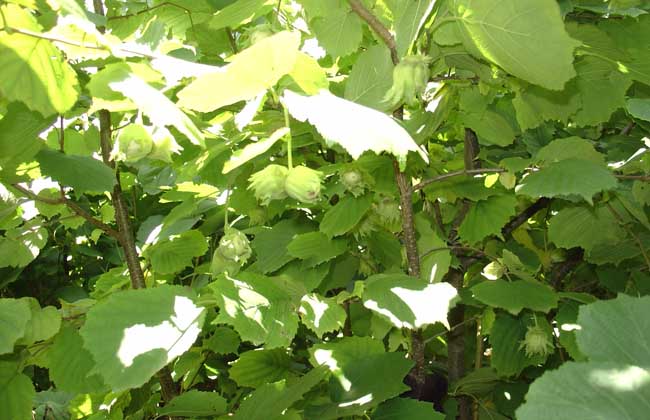
The hazelnut tree is a shrub or small tree of the genus Corylus in the birch family (Betulaceae), and is one of the four major dried nuts, with very high cultivation prospects. It usually grows wild in mountain shade-slope thickets at altitudes of 200-1000 m, has strong cold resistance, prefers a humid climate, and is relatively light-loving; sufficient light can promote its growth, development and fruiting. Let's take a look below at the growing conditions for hazelnut trees!
Temperature conditions
Different types of hazelnut trees have different temperature requirements. The European hazelnut (Corylus avellana) prefers a warm, humid climate. It is suitable for areas with an average temperature of 13-15°C, an absolute minimum of -10°C, and an extreme high of 38°C. The Ping'ou hybrid is more cold-resistant than the European hazelnut, and is suitable for cultivation in areas with an average annual temperature of 7.5-13°C and a minimum temperature that can reach -30°C.
Light conditions
The hazelnut tree is a light-loving plant and generally requires annual sunshine hours of more than 2100 hours; otherwise, few flower buds form and yields are low.
Soil conditions
The hazelnut tree likes to grow on fertile, well-aerated sandy loam soil. The Ping'ou hybrid in particular has high soil requirements; dry sandy soil, heavy clay soil, marshland, saline land and low-lying land are all unsuitable for establishing a hazelnut orchard. The Ping'ou hybrid requires a soil pH of 6.5-7.5, while the European hazelnut requires 5.5-7.
Propagation techniques
The branches of the hazelnut tree root easily, and adventitious buds readily sprout root suckers. Therefore, layering or grafting is usually used to propagate nursery stock. For layering in early spring, use vigorous one-year-old sprouted branches; for layering in June, use current-year young branches as material. For grafted nursery stock, Ping hazelnut (Corylus heterophylla) seedlings are mostly used as rootstock.