How many years after planting does a hazelnut tree generally bear fruit?
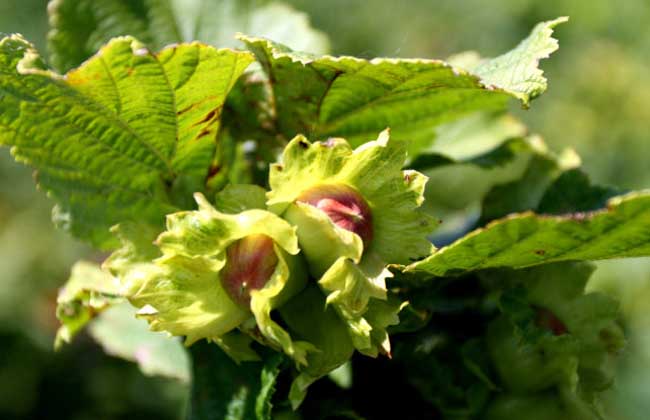
The hazelnut tree is a shrub or small tree of the genus Corylus in the birch family (Betulaceae). It grows in mountain shade-slope thickets at an altitude of 200-1000 m, has strong cold resistance, and prefers a humid climate. In natural growth it is clump-forming, with a tree height reaching 7-8 m, while cultivated trees are 3-5 m tall. The flowering period is April to May, and the fruiting period is September to October. Let us take a look below at how many years after planting a hazelnut tree bears fruit!
How many years does a hazelnut tree take to bear fruit
Hazelnut trees generally begin bearing fruit 3-4 years after planting when grown from sexually propagated seedlings, while asexually propagated hazelnut seedlings begin bearing fruit in 2-3 years, and enter full bearing after more than 7 years. The lifespan of a plant clump can reach more than 50 years.
Growth habits of the hazelnut tree
1. Temperature: Different species of hazelnut trees have different temperature requirements. The European hazel (Corylus avellana) prefers a warm, humid climate. It is suitable for areas with an average temperature of 13-15°C, an absolute minimum of -10°C, and an extreme high temperature of 38°C. Ping'ou hybrids are more cold-resistant than the European hazel and are suitable for cultivation in areas with an average annual temperature of 7.5-13°C and a minimum temperature that can reach -30°C.
2. Light: The hazelnut tree is a light-loving plant and generally requires an annual sunshine duration of more than 2100 hours; otherwise, flower bud formation is reduced and yields are low.
3. Soil: The hazelnut tree prefers to grow on fertile, well-aerated sandy loam. Ping'ou hybrids in particular have high soil requirements; dry sandy soil, heavy clay soil, marshy land, saline land and low-lying land are all unsuitable for establishing a hazelnut orchard. Ping'ou hybrids require a soil pH of 6.5-7.5, while the European hazel requires 5.5-7.
4. Propagation: The branches of the hazelnut tree root easily, and adventitious buds readily sprout root suckers. Therefore, layering or grafting is usually used to propagate nursery stock. For layering in early spring, use vigorous one-year-old sprouting branches; for layering in June, use current-year tender branches as material. For grafted nursery stock, flat hazel (Corylus heterophylla) seedlings are mostly used as rootstock.
Cultivated varieties of the hazelnut tree
1. Dawei: The Dawei tree is vigorous with a semi-spreading growth habit. The nut is elliptical, with an average single nut weight of 2.6 g, a brown shell with a shell thickness of 1.5 mm, and a smooth, plump kernel with good flavor; the kernel yield is 44%. It is high-yielding, with multiple nuts per cluster, averaging 2.0 nuts per cluster, and a 5-year-old plant yields 1.5-2.0 kg. The average yield per plant of 7-8-year-old trees is more than 2.0 kg; with 1110-1245 plants planted per hectare, the yield is 2.0-2.5 tons per hectare. The nuts mature in late August. It has strong overwintering ability and can withstand low temperatures of -35°C during dormancy, making it suitable for cultivation in areas with an average annual temperature above 4°C.
2. Liaozhen No. 1: The Liaozhen No. 1 tree is vigorous with a semi-spreading growth habit and few male catkins. The nut is elliptical and light yellow with grooves. The single nut weight is 2.6 g, the shell thickness is 1.1 mm, and the kernel is plump, smooth and good in flavor; the kernel yield is 40%. It is high-yielding, with multiple nuts per cluster, and the average yield per plant of 7-8-year-old trees is more than 2.0 kg. The nuts mature in early September. Its overwintering ability is moderate, making it suitable for cultivation in areas with an average annual temperature above 8°C.
3. Liaozhen No. 2: The Liaozhen No. 2 nut is large, round and yellow-brown, with an average single nut weight of 2.5 g, a relatively thin shell of 1.2 mm, a kernel yield of 46%, and a smooth, plump kernel with good flavor. The tree is moderately vigorous with an upright growth habit and few male catkins. It is high-yielding and bears early; layered seedlings begin bearing fruit 2-3 years after planting, with early high yields, a 5-year-old plant yielding 1 kg and an 8-year-old plant yielding 2.0 kg. In Dalian it flowers in mid-March, and the nuts mature in early September. This variety is not cold-resistant and often shows shoot dieback in Dalian and Shenyang, so it needs to be cultivated in areas with an average annual temperature above 8°C.
4. Liaozhen No. 3: The Liaozhen No. 3 tree is vigorous with an upright growth habit. The nut is long elliptical and yellow-brown, with an average single nut weight of 2.8 g, a kernel weight of 1.3 g and a shell thickness of 1.1 mm; the kernel yield is as high as 48%, and the kernel is smooth, plump and good in flavor. It is high-yielding, with a 7-8-year-old plant yielding more than 2.0 kg. It is cold-resistant and has strong overwintering ability, enduring low temperatures of -35°C in winter, and can be cultivated in areas with an average annual temperature above 4°C.
5. Liaozhen No. 7: The Liaozhen No. 7 tree is moderately vigorous with a spreading growth habit. The nut is conical and red-brown, and attractive. The average single nut weight is 2.8 g, the shell thickness is medium, and the kernel yield reaches 40%; the kernel is plump and smooth, the kernel skin easily falls off, and the flavor is good. It has strong early-fruiting and high-yielding characteristics; it begins bearing fruit 2-3 years after planting, a 5-6-year-old plant yields 1-1.5 kg, and a 7-8-year-old plant yields more than 2.8 kg. In Shenyang the fruit matures in mid-August. It is strongly cold-resistant and overwintering, enduring low temperatures of -35°C in winter, and can be cultivated in areas with an average annual temperature above 4°C.
6. Liaozhen No. 8: Liaozhen No. 8 is a cold-resistant variety. The nut is round and red-brown with longitudinal stripes, and attractive. The nut is large, with a single nut weight of 2.7 g and a kernel yield of 41%; the kernel is plump and smooth, with a fragrant flavor and a slight sweetness. The crown is relatively small, forming a dwarf tree shape. It bears fruit early and is high-yielding; it begins bearing fruit 2-3 years after planting, and a 6-year-old plant yields more than 1.8 kg. It has strong cold resistance, enduring low temperatures of -38°C in winter, and can be cultivated in areas with an average annual temperature above 2°C.