Where are the main places of origin of the ginkgo tree distributed?
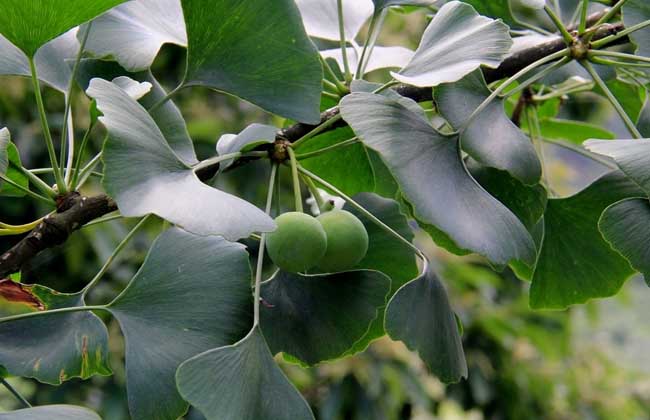
Ginkgo is a deciduous tree of the genus Ginkgo in the family Ginkgoaceae. It is the oldest relict plant among the gymnosperms left over after the Quaternary glaciation. It grows slowly and has an extremely long lifespan. Under natural conditions, it takes more than 20 years from planting to bearing ginkgo nuts, and only after 40 years can it bear fruit in large quantities. It has ornamental, economic and medicinal value. Let us take a look at the places of origin and distribution of the ginkgo tree!
Places of origin and distribution of the ginkgo tree
The natural geographical distribution range of ginkgo is very wide, with large distributions in countries and regions such as China, Japan, Korea, South Korea, Canada, New Zealand, Australia, the United States, France and Russia. In China, ancient ginkgo trees growing well have been found from the eastern plains at an altitude of a few meters to several dozen meters up to the southwestern mountainous areas at around 3000 meters. They are most numerous in provinces such as Shandong, Zhejiang, Jiangxi, Anhui, Guangxi, Hubei, Sichuan, Jiangsu and Guizhou.
The growing environment of the ginkgo tree's places of origin
Ginkgo is a sun-loving tree. It prefers deep loam that is appropriately moist and well drained, and is suited to growing in subtropical monsoon areas with relatively favorable water and heat conditions. It can grow well in both acidic soil and calcareous soil, but neutral or slightly acidic soil is most suitable. It does not tolerate waterlogged ground and is relatively drought tolerant, yet it grows poorly in overly dry places, on rocky slopes or in low-lying wet places. It grows slowly in the early stage and has strong sprouting ability. Female trees generally begin to bear fruit after about 20 years, and 500-year-old large trees can still bear fruit normally.
Common varieties of the ginkgo tree
1. Dongting Huang: The seed is obovate-round and plump. The kernel averages 3.53 grams in weight and measures 1.75×2.93×1.48 cm (dimensions refer to longitudinal diameter × transverse diameter × thickness). It is the largest-seeded type among the ginkgoes of Dongting Mountain.
2. Xiao Foshou: The seed is oblong. The kernel averages 2.6 grams in weight and measures 1.62×2.62×1.32 cm. It is produced in Dongting Mountain, Suzhou, Jiangsu.
3. Yawei Yixing: The tip of the kernel is flat and pointed, shaped like a duck's tail, and it is mostly seed-grown. It is produced in Dongting Dongshan, Suzhou, Jiangsu.
4. Fozhi: The seed is obovate-oblong. The kernel averages 3 grams in weight and measures 1.7×2.7×1.3 cm. The shell is thin, the kernel is plump, the sap is abundant, and the yield is high. Each seed-bearing branch can bear anywhere from 1 to 20 seeds, with 2 to 4 generally being best. It is produced in Taixing, Jiangsu.
5. Luanguo Foshou: The seed is egg-shaped, slightly smaller at the tip and gradually widening below the middle. The kernel is large and plump-round, elliptical or rhombic, with both ends slightly pointed. It is produced in Madian, Zhuji, Zhejiang.
6. Yuandi Foshou: The seed is oblong, with both ends rounded and blunt. The kernel is long-elliptical, slightly pointed at the tip and rounded and blunt at the base, and extremely plump. It is produced in Xiadu, Zhuji, Zhejiang.
7. Ganlan Foshou: The seed is long-obovate, slightly rounded and blunt at the tip, widest in the upper middle and narrow below. The kernel is narrowly long-elliptical, rounded at the tip, pointed at the top and extremely narrow at the base. It is produced in Xing'an, Guangxi.
8. Wuxin Yixing: The seed is flat-round, rounded and blunt and plump at the top, flat and slightly concave at the base. The kernel is broadly ovate and flat-round, with inconspicuous ridges, measuring 2.1×2×1.6 cm. The endosperm is richly developed but has no embryo, and there is no bitter taste. It is produced in Dongting Mountain, Suzhou, Jiangsu.
9. Da Meihe: The seed is large, nearly round, rounded and blunt at the tip and slightly wide at the base. The kernel is round and slightly flat, rounded and blunt or slightly pointed at the tip, and gradually narrowing at the base. It is produced in Zhuji, Zhejiang.
10. Tongziguo: The seed is large and flat-round, rounded and blunt at the tip and wide at the base. The kernel is nearly round, wide and bluntly rounded at the tip with no point, relatively wide at the base, with prominent ridges on both sides and a fish-tail shape at the bottom. It is produced in Xing'an, Guangxi.
11. Mianhuaguo: The seed is elliptical, bluntly rounded at the tip, with a small pointed protrusion at the top and groove lines in the shape of the character "one" or "ten" near the tip. The base of the seed is relatively wide, and it often bears twin seeds. The kernel is flat-elliptical, slightly narrow, roundly wide and pointed at the tip, with prominent ridges on both sides, sharp edges, narrower below and 1 or 2 small protrusions at the bottom. It is produced in Xing'an, Guangxi.
12. Da Maling: The seed is oblong, rounded and blunt at the top, flat and wide at the base, with a raised pointed tip. The kernel is elliptical and plump, bluntly pointed at the tip and wide and round at the base, with ridges above the middle and inconspicuous wings.