Which regions are the main cashew-producing areas?
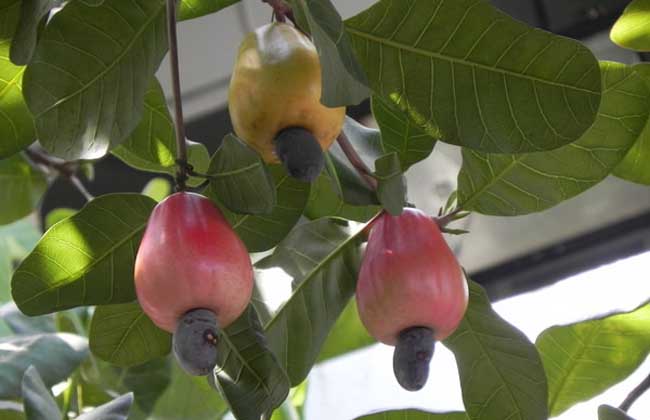
Cashew, also known as the cashew tree, chicken cashew, and Jieshou fruit, is a shrub or small tree of the genus Anacardium in the family Anacardiaceae, order Sapindales. The edible part is the kidney-shaped portion borne at the tip of the false fruit. It is rich in nutritional value, can be used in stir-fried dishes, and can also be used medicinally. It is one of the world's four famous dried nuts. Now let us take a look at the distribution of cashew producing areas!
The distribution of cashew producing areas
Cashew is native to northeastern Brazil, in areas within 10° south latitude. It was introduced to Asia and Africa in the 16th century and is now found throughout East Africa and South Asian countries. The countries with relatively large cashew planting areas in the world include India, Brazil, Vietnam, Mozambique, and Tanzania. In China, cashew is mainly distributed in Hainan and Yunnan, and has also been introduced and planted in Guangxi, Guangdong, Fujian, and Taiwan, China.
The producing environment of cashew
Cashew has extremely strong adaptability. It is a warmth-loving, strongly heliophilous tree species, tolerant of drought and poor soil, and has a certain wind resistance. It is best grown below 400 m above sea level. It has low requirements for soil. Apart from poor growth on heavy clay and limestone, it can grow on red soil, sandy loam, or rocky mountainous land with soil organic matter content of less than 1%. It is not cold-tolerant and requires very high temperatures during the growing period. Flowering and fruiting are normal when the monthly average temperature is 23-30°C, growth is slow at 20°C, it is prone to cold damage below 17°C, and below 15°C it suffers severe damage and dies. It needs more than 2000 hours of annual sunshine, and annual precipitation of 1000-1600 mm is more suitable. It should not be planted in areas where the groundwater level is too high or where water accumulates in the rainy season, and the flowering period should avoid cloudy and rainy weather.
How to choose cashews
1. Choose raw or roasted: Raw cashews need to be processed yourself, and generally also need soaking, which is rather troublesome. You can buy roasted ones, which are more convenient.
2. Look at the appearance: Before buying cashews, you should carefully look at the appearance. Normal cashews should appear as complete crescent shapes. Also, they should not be too broken or too small.
3. Smell the aroma: Good-quality cashews have a fragrant smell, but they should not be too strongly scented; otherwise, it indicates too many additives and too much essence, which is not good for the human body when eaten in excess.
4. Look at the price: Cashews are not cheap. Generally speaking, roasted cashews are around 50 yuan per jin. Very cheap cashews definitely have poor quality, so you should check the price before buying.
5. Not damp: When buying cashews, taste them first to avoid buying damp ones. In particular, some that feel a bit sticky indicate that they have absorbed moisture, so do not buy them.