Detailed Guide to Rosa roxburghii Cultivation Techniques, Master All Cultivation and Management Methods
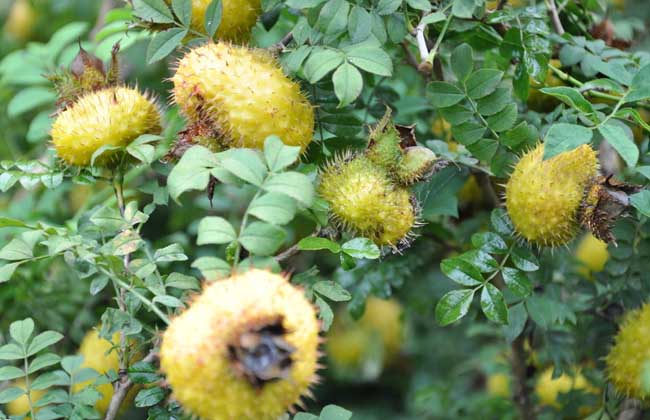
Rosa roxburghii, also known as ci suan li zi, mu li zi, ci mei guo, etc., is the fruit of the perennial deciduous shrub Rosa roxburghii in the Rosaceae family. It prefers a warm and humid climate and can be planted in areas with an average annual temperature of 12-16°C and annual rainfall of over 1000 mm. It has low soil requirements, with acidic or slightly acidic soil at pH 5.5-7 being best. Let's take a look at the cultivation techniques for Rosa roxburghii below!
Propagation Methods for Rosa roxburghii
1. Seed propagation: Divided into spring sowing and autumn sowing. Rosa roxburghii seeds have no obvious dormancy period. Sowing immediately after the seeds mature in autumn can achieve a germination rate and seedling emergence rate of over 90%. For autumn sowing, collect seeds after the fruit matures in early to mid-September, sow immediately in the seedbed, and seedlings emerge in mid to late October. Transplant to the nursery in March of the following year, and they can leave the nursery by the end of the year. However, in areas with severe winter cold, plastic film covering is needed to prevent freezing. Spring sowing is best from late February to early March, with emergence in early April and transplanting to the nursery from late May to early June. The day before sowing, soak the seeds in warm water at 50-60°C for 12-24 hours, then remove, rinse, and sow. This can advance germination by 5 days and improve the germination rate.
2. Cutting propagation: Can be done in spring, summer, and autumn. For spring cuttings, cut 1-year-old branches pruned in winter into 10-12 cm lengths, with the lower end cut diagonally below a bud and the upper end cut diagonally 1 cm above a bud. Store in bundles of 100 in moist sand. In mid to late February of the following year, insert obliquely in the nursery at a spacing of 9x24 cm, with 1 bud exposed, and firm the soil around the cuttings. They sprout in mid-March with a survival rate of over 90%. For summer and autumn cuttings, take 1-3 year old branches and treat the base of the cuttings with ABT rooting powder; the rooting and survival rate is 100%.
Planting Methods for Rosa roxburghii
1. Planting preparation: Before planting, the soil should be deeply plowed, aged, improved, and planting trenches or holes dug. When building an orchard on hillsides, the soil plow layer is thin, organic matter is scarce, and fertility is low, so soil improvement is needed. Before planting, generally dig trenches or holes 40 cm deep and 60 cm wide or in diameter, thoroughly mix topsoil with farmyard manure, backfill, and settle with water or firm layer by layer.
2. Planting density: For plots with poor site conditions or extensive management, a row spacing of 2 m × 1 m or 2 m × 1.5 m can be used. For plots with fertile soil and sufficient rainfall, the row spacing can be appropriately larger, with 2.5 m × 1.5 m or 2.0 m × 1.5 m being more suitable.
3. Planting time: Because Rosa roxburghii prefers moisture and is not drought-tolerant, and its protective tissues are not well developed, it is prone to transpiration water loss. Therefore, in the Guizhou region, planting is generally done from late November to early February of the following year during the dormant period after leaf fall. Other regions can adjust according to actual conditions.
4. Planting method: When planting, first dig a suitably sized hole at the planting site, place the Rosa roxburghii seedling into the hole, determine the position and depth of the seedling, spread out the root system, fill with fine soil, then lift the seedling slightly upward to allow the roots to spread out, then backfill the soil and firm it. The planting depth should be based on the soil burial depth when the seedling left the nursery. Build small soil ridges around the planting hole or on both sides of the trench, water thoroughly after planting, and strengthen management to ensure survival.
Cultivation Management of Rosa roxburghii
1. Training and pruning: Maintain a tree height of 1.5-2 m and a crown width of about 1.5 m, with 5-8 main branches per clump, on which fruiting mother branches are distributed alternately. In the early planting stage, let them grow freely to promote fruiting and form the crown, then thin out excessively dense, drooping, and overly long branches, and adopt a combination of winter and summer pruning to cultivate fruiting mother branches, achieving the goal of three-dimensional fruiting.
2. Fertilizer and water management
① Adjusting pH: Adjust the soil pH to be slightly acidic to neutral, pH 5.5-7.0. If the soil is too acidic, add lime water to adjust it; if the soil is too alkaline, add gypsum or sulfur.
② Increasing organic fertilizer: Increase the application of organic fertilizers, such as barnyard manure and farmyard manure. Apply basal fertilizer every autumn, 22500 kg per hectare. Apply top dressing once before flowering and once during the young fruit stage, with 75-90 kg of urea per hectare.
③ Soil moisture management: Strengthen soil moisture management. Irrigate promptly during drought, drain promptly during waterlogging, and cultivate and weed promptly when the soil becomes compacted.
3. Pest and disease control: Common pests and diseases of Rosa roxburghii include powdery mildew, aphids, nettle moths, bagworms, black spiny whiteflies, and fruit borers. Powdery mildew occurs in both spring and autumn. Spray triadimefon promptly at the early stage of the disease in early June, with a control effect of up to 74%-88%. Aphids mainly damage new shoots. Spraying with 80% dichlorvos 2000x solution is effective, and it is also effective against leafhoppers, nettle moths, tortrix moths, and small leaf beetles. Black spiny whiteflies parasitize the underside of leaves. When pest damage occurs from May to August, use 2000x isocarbophos for control. Spraying with 2.5% deltamethrin 6000x solution twice consecutively from early July to August can control fruit borers.
4. Harvesting and drying: Fruits mature successively from August to the end of September. It is best to pick them in batches when the fruit is deep yellow and exudes a fruity aroma. Handle gently during picking to prevent compression, and sell immediately after harvest. Dried fruit processing is simple; just sun-dry or oven-dry the fruit. Dried products can be stored for about 1 year. Before storage, fumigate each ton of dried product with 2 kg of sulfur powder for 2 hours, then pack in burlap bags with an outer plastic film bag for storage. After 1 year, vitamin C loss is only 2.85%. Without sulfur fumigation, vitamin C loss after 1 year can be as high as 80%.