A Complete Guide to Melon Pest and Disease Control Techniques
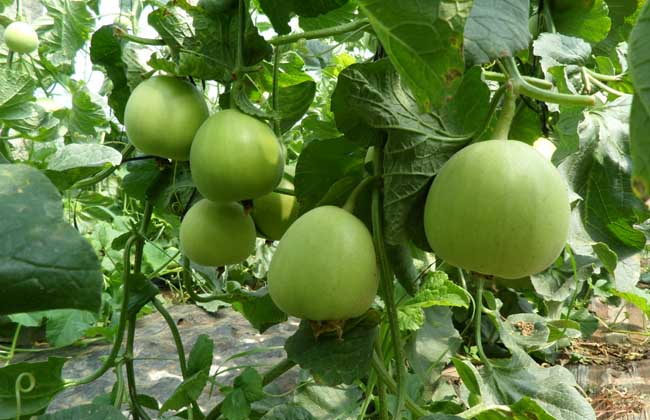
Melon, also known as sweet melon or muskmelon, has seen its cultivation area in small tunnels, medium tunnels, large greenhouses and glasshouses increase year by year alongside the adjustment of the planting industry structure and the rapid development of high-efficiency agriculture. Due to continuous replanting on the same land, sources of disease and pests accumulate year after year, causing the variety of pests and diseases to increase and the severity of damage to worsen annually. Let us now take a look at melon pest and disease control techniques!
Phytophthora Blight
[Damage Characteristics] Phytophthora blight is a major disease of watermelon and melon from the seedling stage to the vine-running stage. When leaves are infected, irregular dark green water-soaked lesions initially appear, then expand into a soft rot; when dry, the lesions turn brown and tend to crack. When the stem base is infected, spindle-shaped dark green water-soaked sunken lesions initially appear, then constrict and rot around the stem base, and finally the plant dies.
[Control Methods] Disinfect seeds before sowing by soaking in 55°C warm water for 15 minutes. Sterilize the nutrient soil by mixing 2 liang (100 g) of 50% carbendazim into every cubic meter of nutrient soil. Apply chemicals at the early stage of disease onset: spray with 64% Sandofan at 500 times dilution, 72.2% Previcur at 800 times dilution, or 58% Ridomil (metalaxyl-mancozeb) at 500 times dilution, then spray again after 7-10 days.
Gummy Stem Blight
[Damage Characteristics] Gummy stem blight mainly occurs on leaves and stems. When leaves are infected, nearly circular lesions initially appear, or light brown "V"-shaped lesions extend inward from the leaf margin. In the later stage, the lesions break apart and many small black dots, namely pycnidia, form on them. When stems are infected, elliptical to spindle-shaped lesions initially appear; in the later stage they dry up, shrink and split longitudinally, oozing a yellow gummy substance. In severe cases, leaves wither and stems rot.
[Control Methods] Avoid watering on cloudy days and try to water before a stretch of sunny days. If continuous rainy weather follows watering, pay attention to short periods of moisture removal around noon. At the early stage of disease onset, spray with 75% chlorothalonil at 600 times dilution, or 70% thiophanate-methyl at 800 times dilution + 80% Daconil (or Yuesheng) at 800 times dilution. After harvest, promptly remove diseased plant residues to reduce sources of inoculum.
Anthracnose
[Damage Characteristics] The disease can occur throughout the entire growth period. When leaves are infected, circular to fusiform or irregular water-soaked spots initially appear, sometimes with concentric rings. When dry, the lesions tend to break and perforate; when moist, pink sticky matter appears on the leaf surface. When petioles or stems are infected, water-soaked pale yellow circular spots initially appear, slightly sunken, then turn black. In severe cases, they girdle the stem and cause death. When fruit is infected, water-soaked sunken brown lesions initially appear, and the sunken areas often crack. Under high humidity, pink sticky matter forms in the center of the lesions. In severe cases, the lesions merge and cause rot.
[Control Methods] Use disease-resistant seeds and disinfect seeds with hot water. At the early stage of disease onset, spray with 70% thiophanate-methyl at 800 times dilution, 75% chlorothalonil at 600 times dilution, or 80% anthracnose thiram at 800 times dilution, then spray again after 7-10 days.
Bacterial Angular Leaf Spot
[Damage Characteristics] Bacterial angular leaf spot is a mid-to-late season disease of cucurbits, mainly occurring on leaves. In greenhouse watermelon fields, the diseased plant rate is generally around 25%, up to 70%, and the diseased leaf rate is around 10%. After leaf infection, pinhead-sized transparent spots initially appear, which enlarge into pale yellow lesions with yellow halos; the center turns brown or becomes grayish-white and perforates and ruptures. Under high humidity, milky white bacterial ooze is produced on the diseased areas.
[Control Methods] Use disease-free seeds and disinfect seeds with hot water. At the early stage of disease onset, spray with 13% copper ammonium complex aqueous solution at 300 times dilution, 50% DT (copper succinate) wettable powder at 500 times dilution, 77% Kocide powder at 400 times dilution, or 72% agricultural streptomycin wettable powder at 400 times dilution, then spray again after 7-10 days.
Powdery Mildew
[Damage Characteristics] Powdery mildew mainly damages leaves. At the early stage of disease onset, white nearly circular star-shaped small powder spots appear on the upper surface of leaves, then expand outward to form continuous white powder patches with indistinct edges. In severe cases, they cover the entire leaf, later turning grayish-black, and the diseased leaves turn yellow and wither.
[Control Methods] Practice alternating irrigation between large and small furrows. Vent promptly on sunny days and pay attention to moisture removal on cloudy days. Remove growing tips and old leaves in time to prevent the field from becoming too dense. At the early stage of disease onset, spray per mu with 4 grams (1 bag) of 40% DuPont "Fuxing" emulsifiable concentrate, or 0116 biological pesticide at 150 times dilution in water.
Viral Disease
[Damage Characteristics] Viral disease mainly has two types: mosaic type and crinkle type. Specifically, the upper leaves of the plant develop mosaic disease spots of alternating dark and light colors; leaves become smaller, curled, wrinkled and deformed. If infected early, the plant cannot set fruit; if infected late, the fruit is small and deformed.
[Control Methods] Make every effort to lower the temperature and appropriately increase humidity inside the greenhouse. Pull out diseased plants early to reduce the source of virus. Control aphids to prevent the disease: from the seedling stage, spray with 10% imidacloprid at 1500 times dilution, or 5% cypermethrin at 2000 times dilution. At the early stage of disease onset, spray with 30% Virus A at 500 times dilution or 1.5% Zhibingling at 1000 times dilution.