Which regions are the main plum producing areas?
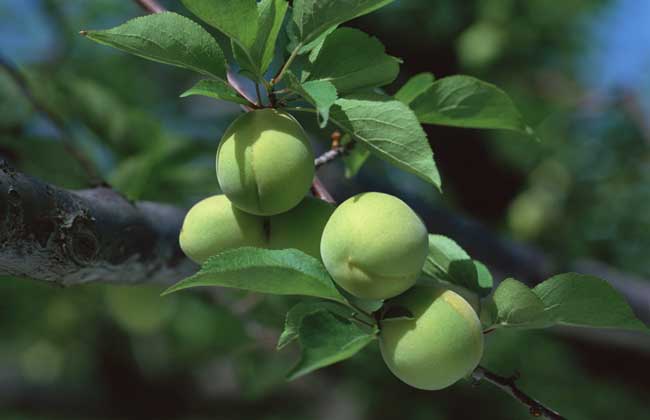
Plums originated in southern China and are a specialty fruit tree of the subtropics, with a cultivation history of more than three thousand years. They are grown throughout China, with the largest number of production areas in the provinces south of the Yangtze River basin. There are also a few varieties in northern Jiangsu and southern Henan, and some varieties have been successfully introduced to North China. Let's take a look at the distribution of plum production areas below!
Plum production areas and their distribution
Plums are distributed over a fairly wide area in China, from the southern side of the Yellow River basin in the north, to the coast of Guangdong in the south, from Bomi in Tibet in the west, to the island of Taiwan, China in the east. Cultivated or wild species are found in a total of 18 provinces (municipalities and autonomous regions). Guangdong, Taiwan, China, Guangxi and Fujian are developing relatively quickly, while Zhejiang, Yunnan, Jiangsu, Anhui and other provinces and municipalities are also cultivating them on a large scale.
The production environment for plums
Plums prefer warm climatic conditions. Judging from the temperatures in China's fruit plum cultivation regions, they can be cultivated in areas with an average annual temperature of 12 to 23°C. They are not strict about soil requirements, and can be planted on both plains and mountain land, whether the soil is somewhat acidic or somewhat alkaline, but the soil layer should be relatively deep, the soil texture loose and drainage good. Hilly and sloping land with a gradient below 30°C is most suitable for cultivation, and slopes facing south or east and west should generally be chosen.
The hometown of Chinese plums
1. Eryuan plums: Among the many forest and fruit cash crops produced in Eryuan County, Dali, Yunnan, plums are the most famous, earning it the title of hometown of plums. Eryuan plums are high quality and large, with an attractive color, and contain a variety of vitamins and organic acids. They have thick flesh and small stones, and are sour, crisp and tasty. They are not only a thirst-quenching summer fruit that promotes salivation, but also a widely used raw material for medicines. Eryuan plums are a geographical indication protected product.
2. Dachuan dark plums: Dachuan District, Dazhou City, Sichuan Province is the native resource area of the "dark plum". The dark plums produced there have a pure botanical origin and excellent varieties, and are the national standard-setting variety for dark plum GAP. Their active ingredient citric acid content is 29.4%, nearly double the standard of the Pharmacopoeia, ranking first in the country. In October 2014, the China Economic Forest Association officially issued a document naming Dachuan District as the hometown of Chinese dark plums.