What are the main foods of woodpeckers?
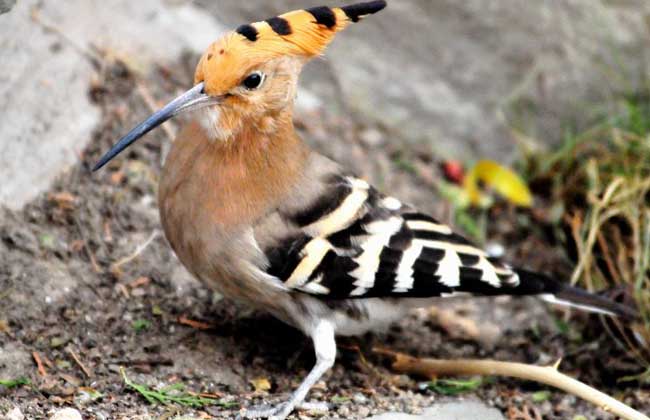
The woodpecker is the collective name for birds of the family Picidae in the order Piciformes, with about 221 species and an extremely wide distribution range. It has extremely advanced insect-catching skills, and because of its great contribution to protecting trees, people call it the "forest guardian" or "tree doctor," and it has been loved and praised by people since ancient times. Let's take a look below at what woodpeckers eat!
What do woodpeckers eat?
Woodpeckers have extremely advanced insect-catching skills. Their beaks are strong, straight and pointed, able not only to peck open bark but also to peck open hard woody parts, much like a carpenter's chisel. Their tongues are slender and soft, able to extend long out of the mouth, and they also have a pair of very long hyoid bones that wrap around the outside of the skull and serve a special spring function. The flexing of the hyoid bones allows the tongue to extend and retract freely, and the tip of the tongue is keratinized, with rows of backward-facing barbs and sticky mucus, making it very suitable for hooking insects and larvae on tree trunks. The pests that woodpeckers peck and eat include Coleoptera weevils, false ground beetles, longhorn beetle larvae, and scarab beetles in forests; Lepidoptera bagworm moths and snout moths; as well as flower bugs, stink bugs, locusts, ants, grubs, bark beetles, longhorn beetle larvae, grubs, termites, and more.
How do woodpeckers catch their food?
Woodpeckers tap tree trunks with their beaks. If they find insects somewhere in the trunk, they cling tightly to the tree, with the head and beak almost perpendicular to the trunk, first pecking through the bark, then hooking out the pests one by one with their tongues and eating them, and also sticking out insect eggs with mucus. When insects hide in channels deep in the trunk, they also cleverly use the trick of "drumming to drive out insects," tapping at the channel with their beaks to produce a special drumming sound that frightens the pests, causing them to become dizzy and disoriented under the stimulation of the sound waves and to scurry around, often trying to escape from the hole, only to be caught and eaten by the woodpecker waiting there. Woodpeckers generally must completely eliminate the bark beetles on an entire tree before moving to another tree. When they encounter a tree with a serious pest infestation, they will work continuously on that tree for several days until all the pests are cleared.
Do woodpeckers get concussions?
Woodpeckers tap trees about 500 to 600 times a day at extremely high speed, almost twice the speed of sound, so their heads inevitably endure very violent shocks, yet they neither get concussions nor headaches. It turns out that woodpeckers have at least three layers of shock-absorbing structures in their heads. The skull structure is loose and filled with air, and inside the skull there is also a tough outer cerebral membrane. Between the outer cerebral membrane and the brain marrow there is a narrow gap containing fluid, which reduces the fluid transmission of shock waves and plays a shock-absorbing role. Sudden rotational movement is more likely to cause brain injury than straight horizontal movement, so on both sides of its head there are well-developed and powerful muscles that can play a role in shock prevention and shock absorption.