Is the green pit viper venomous? Let us learn about its toxicity
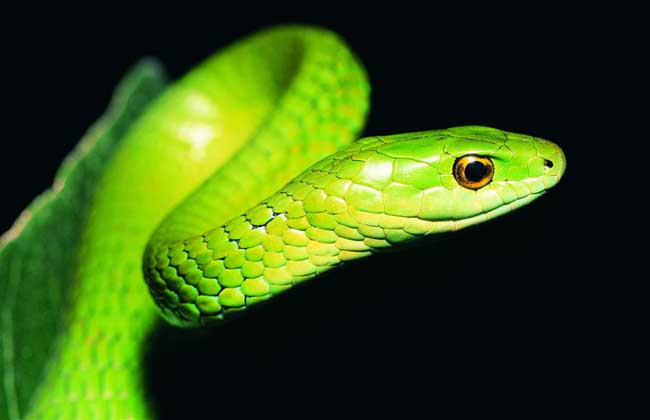
The green pit viper, also known as the bamboo pit viper, Qingzhubiao, Diaozhuqing, Jiaoweiba, etc., is a snake of the genus Trimeresurus in the family Viperidae. It has a relatively large, triangular head, a slender neck, and a clearly distinct head and neck. The top of the head is covered with fine scales, the left and right internasal scales do not touch and are separated by fine scales, and all dorsal scales except the outermost row are keeled. Except for a few that are oviparous, the vast majority of species are ovoviviparous. Let us take a look below at whether the green pit viper is venomous!
The living habits of the green pit viper
The green pit viper is active both day and night and is highly arboreal, often hanging or coiling on tree branches, and is especially fond of resting in thickets beside mountain caves. It is mostly active day and night during rainy weather, with more frequent activity at night. It feeds on small animals such as frogs, lizards, small birds and rodents. It is suited to temperatures between 22 and 32 degrees and has a nervous temperament and is aggressive.
Is the green pit viper venomous?
The green pit viper is venomous. The green pit viper is one of the world's 10 most deadly creatures, and the toxin it produces is a hemotoxin. There are many types of hemotoxins with complex compositions, mainly affecting the cardiovascular and blood systems and producing toxic effects in many aspects. The amount of venom injected when it bites is small, and its toxicity mainly causes hemorrhagic changes. It can discharge 15 mg of dry venom at one time, but on average 100 mg is needed to cause death, so it rarely kills people, but if not treated in time, it will leave disability.
Symptoms of a green pit viper bite
The wound from a green pit viper bite has 2 fang marks (occasionally only one), with a spacing of 0.3 to 0.8 cm. The wound has a small amount of oozing blood, severe burning-like pain, local redness and swelling, may ulcerate, and progresses rapidly. Its typical features are that bloody blisters are relatively common and appear relatively early, while systemic symptoms are generally relatively rare. Systemic symptoms include nausea, vomiting, dizziness, abdominal distension and pain, local redness and swelling, mucosal bleeding, etc. Some patients vomit blood and pass blood in the stool, and in severe cases there is toxic shock. Its clinical manifestations are equivalent to the symptoms of fire-heat toxicity in traditional Chinese medicine, hence it is called “fire toxicity”.
First aid for a green pit viper bite
1. For a green pit viper bite, immediately squeeze out the blood containing snake venom and promptly send the victim to the hospital for tetanus and antivenom serum, otherwise the venom may spread.
2. If there is water nearby when a green pit viper bite occurs, squeeze the blood from the wound while rinsing with clean water, or suck the blood out with the mouth.
3. For a green pit viper bite, find a way to tie off the proximal end of the wound. If the injury is on the dorsum of the foot, tie above the ankle joint and below the knee joint. If the injury is on the back of the hand, tie above the wrist joint and below the elbow joint.
4. The time for binding the wound from a green pit viper bite should not be too long. Generally, the rope should be loosened for 2 to 3 minutes every 1 hour of binding, so as to avoid necrosis caused by prolonged ischemia of the limb.