When Is Jackfruit in Season? A Full Guide to Its Season
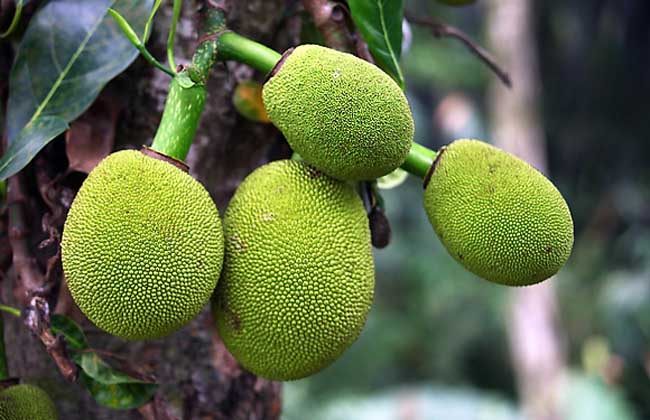
Jackfruit, also known as pala-pala, wood jackfruit, or tree jackfruit, is an evergreen tree of the genus Artocarpus in the mulberry family (Moraceae). It originated in tropical Asia in India and was introduced to China from India during the Sui and Tang dynasties. In the Song dynasty it was renamed boluomi (jackfruit), a name still used today. Its nutritional value is very high, and the flesh has the effects of quenching thirst, promoting lactation, and tonifying the middle and boosting qi. Let's take a look below at when jackfruit is in season!
When is jackfruit in season?
Jackfruit is the heaviest fruit in the world. It usually flowers from February to March and ripens and comes to market from September to October. When the fruit is ripe, the skin is yellowish-brown, with wart-like protrusions and coarse hairs on the surface. A single fruit generally weighs 5 to 20 kg, with the heaviest exceeding 59 kg. It is widely cultivated in Fujian, Taiwan, China, Guangdong, Guangxi, Hainan and other places in China, and is also cultivated in Nepal, Sikkim in India, Bhutan and Malaysia.
How much does jackfruit cost per jin?
The market price of jackfruit is about 4 to 5 yuan per jin (jackfruit weighs 5 to 20 kg, with the heaviest exceeding 59 kg), while the price of dried jackfruit is around 40 to 50 yuan per jin. In fact, the main factors affecting the price of jackfruit are the place of sale and the time. If you buy it in Hainan, it is certainly cheap, but once outside Hainan it becomes expensive, and the further north you go, the more expensive it gets. At the same time, when jackfruit is heavily in season, the price drops a lot.
How to choose jackfruit
1. Color: Ripe jackfruit is generally golden yellow in color. If the jackfruit is not yet fully ripe, it may have a bit of green. Green is the natural color of jackfruit; when the ripe season arrives, its size basically stays the same and the color slowly turns golden yellow. But this does not mean you cannot buy jackfruit that is not golden yellow; green jackfruit can also be bought, and after you take it home and leave it for two or three days, it will slowly ripen and turn yellow.
2. Outer skin: High-quality jackfruit has an intact outer skin, with quite a lot of pointed “little nails” or “spikes” on it, which is what makes jackfruit's skin special. A few small black spots on the skin are normal and are also a normal sign of ripe jackfruit. However, if these small black spots are very numerous or join together into a patch of black, then you need to be careful. Check whether the black areas have rotted, and handle them cautiously if they have.
3. Size: The size of jackfruit is not a useful reference, because jackfruit varies greatly in size and any size is fine. What you look at here is the size of the “nails” on the skin. Jackfruit still in its growing stage has relatively sharp “nails” on its skin, because it is in a state of growth. Jackfruit during its ripening period has relatively understated and restrained “nails” on its skin, a bit softer, but generally the tips of the “nails” have already begun to look somewhat shriveled.
4. Smell: Once jackfruit is ripe, it has a fairly strong fragrance, and the skin will crack open a little; the fragrance is even stronger at the cracked areas.
5. Taste test: Opinions on the taste of jackfruit differ from person to person, but if after cutting it open you find the inside has rotted, treat it with caution and stop eating it if necessary.