Detailed Explanation of Key Points of Winter Pruning Techniques for Fruit Trees
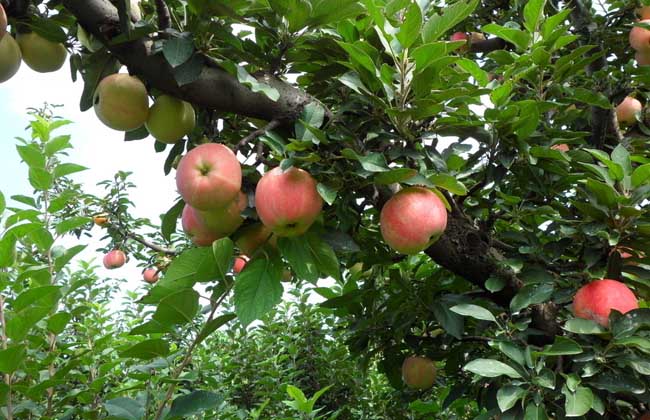
Pruning carried out during the period from leaf fall to bud break the following year is called winter pruning. For most tree species, winter pruning is generally done between January and February. The main purpose of winter pruning is to thin out and shorten unwanted branches, such as diseased and pest-infested branches, dead branches, densely growing branches, and unusable water sprouts, so as to develop a tree canopy of a certain shape, keep the growth of the scaffold branches at each level of the canopy in balance, build up tissues, promote the formation of fruiting branches, and thereby adjust the relationship between growth and fruiting.
Shortening (Heading Back)
Shortening, also called cutting back, means cutting off part of a relatively long branch. Its main effect is to stimulate the sprouting of lateral buds so that they send out new shoots and increase the number of branches, thereby keeping the tree vigorous and ensuring normal fruiting. Different degrees of shortening have different effects on the growth and fruiting of fruit trees. Light shortening is cutting off 1/5 to 1/4 of the total length of the branch; moderate shortening is cutting off 1/3 to 1/2 of the total length; heavy shortening is cutting off 2/3 to 3/4 of the total length; and very heavy shortening leaves only 1 to 2 buds at the base.
When light or moderate shortening should be used and when heavy or very heavy shortening should be used depends on the tree species, variety, tree age, type of branch, and the purpose required. Generally, the heavier the shortening, the stronger the stimulus to lateral bud sprouting and growth vigor, but this is not conducive to the formation of fruiting branches. Sometimes, if the shortening is too heavy, the opposite result occurs and growth vigor is weakened. The lighter the shortening, the more lateral buds sprout, but the growth vigor is weak; short branches tend to form on the middle and lower parts of the branch, and flower buds form relatively easily. The lighter the shortening throughout the whole tree, the more profusely it blooms every year, and the tree tends to decline early.
For young fruit trees, the focus should be on developing a good and sturdy canopy and bearing fruit early, so light shortening and little thinning are often the main approach. Under normal conditions, shortening the branches of young trees can stimulate the lateral buds below the cut to sprout, prompt them to send out branches, favor vegetative growth, and accelerate the expansion of the canopy. For fruit trees that have begun to bear fruit and up to those entering full bearing, the main goal is to enable them to bear more fruit and grow well, so when there are large numbers of fruiting branches, a combination of appropriately heavier shortening and branch thinning should be adopted. As for fruit trees entering the decline stage, since they gradually decline and die back and yields drop year by year, the aim should be to restore tree vigor; pruning should therefore intensify shortening to prompt the growth of new shoots, so that the tree vigor is rejuvenated and fruiting branches continue to form. This is especially true for stone fruit trees, because their flower buds are borne on new shoots of the current year, and almost every node on a new shoot has a flower bud; shortening can prompt them to send out more new shoots and increase fruiting.
Thinning Out Branches
Thinning out branches, also called thinning or thinning pruning, means cutting out dead and dry branches in the canopy, unusable water sprouts, competing branches, diseased and pest-infested branches, weak drooping branches, and excessively dense crossing and overlapping branches. The degree of thinning can be divided into three levels: removing no more than 10% of the branches of the whole tree is light thinning; removing 10-20% is moderate thinning; and removing more than 20% is heavy thinning.
The degree of thinning must also be adapted to the tree and the site. Young fruit trees should be thinned lightly to favor flower bud formation and early fruiting. After entering the fruiting stage, on the basis of not affecting yield, it is necessary on the one hand to build up the fruiting branches and on the other to stimulate branch growth so as to create good conditions for fruiting the following year, and moderate thinning is often carried out. For ordinary large trees, because there are more branches, more thinning can be done. After entering the decline stage, there are more short fruiting spurs or bouquet fruiting spurs on the tree, and growth is weaker, so these short fruiting spurs or bouquet fruiting spurs must be carefully thinned to promote vegetative growth.
Renewal Pruning (Cutting Back to Older Wood)
Renewal pruning, also called cut-back pruning, comes into play at the full bearing stage, when the growth vigor of new shoots gradually weakens, most of the branches produced are short branches, and at the same time some branches begin to droop, with bare, leafless areas appearing in the middle and lower parts of the canopy. In order to improve light conditions, rejuvenate tree vigor, and prolong the fruiting years, renewal pruning must be carried out so that the various short branches can be renewed and rejuvenated, keeping the tree vigorous and bearing heavily. Renewal pruning generally means leaving a vigorous lateral branch at a point on a perennial branch and cutting off the terminal branch. This shortens the length of large branches, reduces the number of small branches on them, and concentrates the supply of nutrients and water to the remaining branches, which is very favorable for rejuvenating tree vigor.
Along with cut-back pruning, fertilizer and water supply should be strengthened to promote normal branch growth and favor the formation of fruiting branches. In addition, for some excessively aged main branches, heavy renewal pruning can be carried out, even leaving only a short section at the base, so that the branches below the saw cut grow vigorously, or latent buds are stimulated to sprout into water sprouts and a new canopy is formed again. This method of heavy renewal pruning is also called canopy renewal pruning.
Notching
Cutting horizontally through the bark of a branch with a knife before bud break in spring, deep enough to reach the xylem, is called notching. Notching above a bud can block the further upward transport of nutrients, so that the buds below the notch receive ample nutrients, and at the same time, because the buds are stimulated by the notch, bud sprouting and shoot growth are favored. If notching is done below a bud in summer, it will block the downward transport of carbohydrates, which accumulate in the upper part of the branch, thereby inhibiting tree vigor and promoting flower bud formation and branch maturation. Therefore, if you want to add branches at a certain part of the canopy, you can notch above the bud, and if you want to moderate the growth vigor of a certain branch or make it form fruiting branches, you can notch below the bud.