Jaboticaba Cultivation Techniques and Management Methods
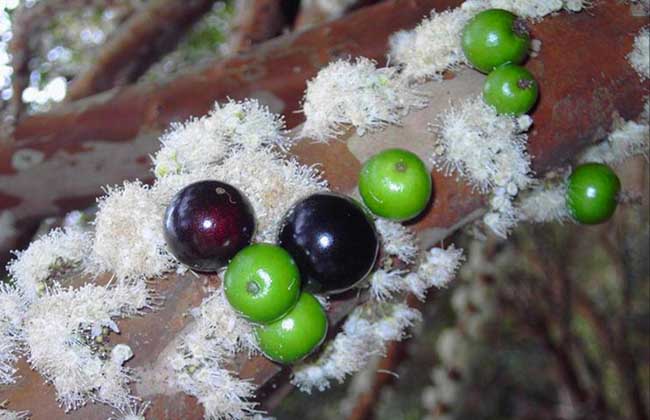
Jaboticaba, also known as tree grape and precious fruit, is an evergreen shrub of the genus Plinia in the Myrtaceae family, native to Brazil and other places. Its branches and leaves are dense and green all year round, and it can bloom and bear fruit in all four seasons. What is truly amazing is that the same branch of the jaboticaba can simultaneously bloom, bear fruit, and ripen, with the flowers blooming on the branches. Let us take a look at the cultivation techniques of jaboticaba below!
Jaboticaba Growth Habits
Jaboticaba is suitable for growing in cooler tropical and subtropical climates with medium to high rainfall. Most varieties can tolerate low temperatures of -2.8°C, while some varieties can tolerate low temperatures of -4.4°C. It is a sun-loving tree species that requires full sun or tolerates slight shade, requires moist soil but is intolerant of waterlogging, and can withstand short-term drought. It has strong adaptability to soil, but the best is deep, fertile, well-drained slightly acidic (pH 5.5-6.5) sandy loam. It grows poorly on calcareous soil and is intolerant of saline-alkali conditions.
Jaboticaba Propagation Methods
1. Seed propagation: Each jaboticaba fruit contains 1 to 4 seeds, which are irregularly angular and polyembryonic. Fresh seeds germinate better. Generally, the seed coat is crushed and the seeds are squeezed out. After 1-2 days, when the pulp acidifies and rots, the pulp can be washed off with clean water and the seeds can be sown. After harvest, the fruits are stored in plastic bags and refrigerated at 5-8°C. When ready to sow, the seeds are removed, washed, and sown. Cold storage can maintain seeds for 1-2 months with a certain germination rate. Germination occurs 20-40 days after sowing, and germination is slower at low temperatures.
2. Grafting propagation: Seedling trees of most jaboticaba varieties need 6-10 years to begin bearing fruit. Grafting can advance fruiting, with fruit production about 3 years after grafting. Two-year-old seedlings are selected as rootstock, and one-year-old branches are cut from fruiting mother trees as scions. Cut grafting or approach grafting in autumn and winter gives a higher survival rate, while the success rate after March-April is poorer, and summer grafting is difficult to succeed.
3. Cutting propagation: Jaboticaba is not easy to root from cuttings. Domestic research has identified it as a typically difficult-to-root species. In May each year, semi-hardwood cuttings (2 nodes and 4 leaves) can be quickly dipped in NAA at 2000 ppm, with peat soil as the rooting medium, and the rooting rate can reach 90%. Foreign research, however, uses 10 cm long cuttings with 3-4 pairs of mature leaves, inserted in a medium of sand mixed with peat soil (ratio 1:1). Slitting the base of the cutting lengthwise in 4 places and treating with IBA at 1000 ppm can promote rooting.
Jaboticaba Cultivation Techniques
1. Site selection and orchard establishment: When cultivating jaboticaba in flat paddy fields, drainage and irrigation ditches should be properly built, with a bed height of 30 cm, and the groundwater level should be below 100 cm. For sloping land cultivation, terraces 3-4 m wide should be reclaimed along contour lines, with the terrace surface sloping inward 3-5 degrees. The planting variety should be the native tree grape variety. Planting can be done in pits or trenches, with specifications depending on the seedlings or cultivation model, generally 60×60 cm or 80×80 cm.
2. Planting specifications: Jaboticaba planting specifications include short-term, long-term, and short-to-long models. The short-term model has a spacing of 0.5×0.5 m with 2666 plants per mu, and one year constitutes one planting cycle. The long-term model has a spacing of 4×4 m with 88 plants per mu, and 15 years or longer constitutes one cycle. The short-to-long model has a spacing of 1×0.5 m with 1333 plants per mu, and after planting, one half is thinned and removed from the nursery each year starting from the second year.
3. Bud removal and shoot training: After jaboticaba sprouts, remove twin buds, multiple-head buds, and overly weak buds. After new shoots form, tie them to wires on both sides, set shoots at 15-20 cm intervals, and promptly spray Flower Promoter No. 3, which can effectively control excessive shoot growth, promote more flowering branches, and promote flower bud differentiation. It can effectively balance large and small flower clusters and save the trouble of flower and fruit thinning.
4. Fertilizer and water management: Jaboticaba cultivation should emphasize the use of organic fertilizer, advocating the combined use of organic fertilizer, microbial fertilizer, and chemical fertilizer, with a nitrogen, phosphorus, and potassium fertilization ratio of 1:2:1. Promote plant nutrition diagnosis and formula fertilization, which can be applied in pits or trenches, using water-soluble fertilizers or slow-release fertilizers, with organic fertilizer, microbial fertilizer, and chemical fertilizer used together in small amounts multiple times. Jaboticaba is a moisture-loving species, and the soil should be kept moist, but waterlogging should be avoided.
5. Pruning and training: Jaboticaba grows slowly, and strong pruning is usually unnecessary. However, to control plant height and potted tree shape, it is advisable to timely prune the vigorously growing terminal branches. In cultivation, it is generally recommended to prune low and internal thin, short branches to create a ventilated tree shape with elegant branches. In autumn and winter, dense or leggy branches can be pruned.
6. Pest and disease control: Jaboticaba has few pests and diseases when cultivated in China, and pesticides are rarely used in management, making it an extremely easy tree species to cultivate. However, during the fruiting period, it is susceptible to bird damage. If tussock moth larvae harm the leaves, recommended pesticides from the plant protection manual can be applied for control. In addition, aphids, fruit flies, scale insects, and beetles have all been recorded as occurring, and these pests and diseases should also be monitored during cultivation.