Where are the main producing areas of kumquat distributed?
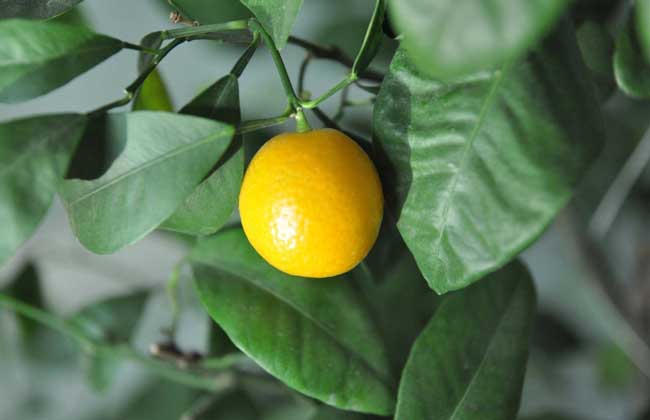
Kumquat, also known as jinzao, jindan, jingan, etc., is an evergreen shrub of the genus Fortunella in the family Rutaceae, with extremely high cultivation value; its leaves, flowers and fruit are enjoyed, or it is grown specifically to produce fruit for making candied kumquat. After potting and careful management, a single plant can bear more than 10 small golden kumquats. During the Spring Festival it is generally exported to Hong Kong, China, and is very popular among Hong Kong people. Now let us take a look at where the producing area of kumquat is!
Morphological characteristics of kumquat
The kumquat is 3 m tall, generally without thorns, with green branchlets that branch abundantly when nutrients are sufficient. The leaves are lanceolate to long elliptic, 5-9 cm long, with entire margins, and the petioles are slightly winged. The flowers are small, white and fragrant, borne 1-3 per axil, with 5 petals, 20-25 stamens and a 5-loculed ovary. The fruit is elliptic or obovate, 2.5-3.5 cm long, golden yellow. The flowering period is April-May, and the fruiting period is November to February of the following year. Under artificial cultivation, it flowers three times a year, the first time between March and April, and the last time between August and September.
Where is the producing area of kumquat?
Kumquat likes sunlight and a warm, humid environment, is not cold-tolerant, slightly shade-tolerant and drought-tolerant, and requires well-drained, fertile, loose, slightly acidic sandy loam. Kumquat is native to southern China and is widely distributed in the Yangtze River basin and the provinces and regions to its south, especially in Guangdong, where it is most widely planted. Youxi in Fujian, Rong'an in Guangxi, Suichuan in Jiangxi and Liuyang in Hunan are the most famous.
The four major producing areas of kumquat
1. Youxi, Fujian: Youxi kumquat is beautiful in shape and bright in color, juicy and tender, sweet and sour and tasty, and the quality of the fruit produced in the "Sanhong" (namely the three villages of Hongpai, Hongcun and Hongtian) of Baziqiao is the best. In recent years, the planting area in the two townships of Baziqiao and Guanqian has exceeded 10,000 mu, with a total output of more than 1,100 tons, and it is known as the "hometown of kumquat" in Fujian. It has now become one of the four major kumquat producing areas in the country.
2. Rong'an, Guangxi: Rong'an kumquat has a planting history of more than 260 years, with a planting area of more than 92,000 mu and an annual output of 87,000 tons, and is known as the "hometown of kumquat" in China. Rong'an kumquat has the characteristics of being juicy and sweet, crisp in texture and free of a glycerol taste, and sells well in all provinces of China and ASEAN countries.
3. Suichuan, Jiangxi: Suichuan kumquat is famous for its golden yellow color, large fruit, thin peel and sweet taste, and is excellent in color, aroma, taste and shape. Its fresh fruit is golden yellow in color, and its appearance is elliptic or obovate-elliptic, like a pigeon egg. Suichuan kumquat ranks first among the four major kumquat producing areas in the country in terms of area, output and fruit quality. In 1997, Suichuan was named "hometown of kumquat in China" by the Ministry of Agriculture of China.
4. Liuyang, Hunan: Liuyang kumquat is mainly produced in the Guandu District of Liuyang City, and has a cultivation history of more than 1,000 years. Through the dynasties it was mostly a precious tribute fruit. During the reign of Emperor Tongzhi of the Qing Dynasty, the area of Dahu and Tuanluo alone produced as many as ten thousand dan of kumquats a year, and it was known as the "hometown of kumquat". Before liberation, the cultivation area in the Guandu area was more than 400 mu, with more than 35,000 plants and a maximum annual output of 300 tons. The current annual output reaches more than 1,500 tons.