How to Grow Star Apple? Key Points of Cultivation Techniques Explained
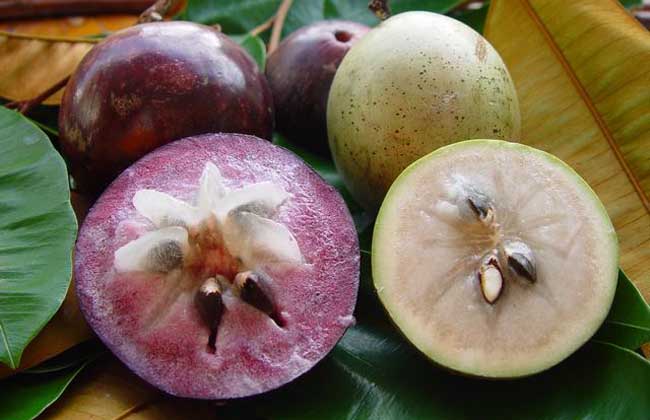
Star apple, also known as star apple, milk fruit, etc., is a tropical fruit tree of the genus Chrysophyllum in the family Sapotaceae. Its flesh is smooth and fine-textured with a mild sweet taste. Besides being cultivated as a fruit tree, it is also very suitable as an ornamental garden tree or shade tree. In Cuba, Jamaica, Sri Lanka, Hawaii and Florida in the United States and other places, it is often grown as an ornamental tree. Let's take a look at the cultivation techniques for star apple!
Growth Habits of Star Apple
Star apple is native to tropical America or the West Indies, and is widely cultivated in tropical regions. In China, it is distributed in Hainan, Guangdong, Taiwan, China, Fujian, Yunnan and other provinces. It generally buds and blooms in July and August, with a flowering period from August to November, a fruiting period from November to April of the following year, and a ripening period from April to May. In soil with a pH value of 6-7 and organic matter content<1、年均温2O~22℃、年均相对湿度7O~8O、冬季极端低温3~5℃、年均降雨量1400~1600毫米的沙质土能正常生长和开花结果,冬季植株寒害轻,病虫害少,耐旱,抗风性较强,具经济栽培价值。
Cultivation Value of Star Apple
1. Ornamental value: Because its leaves are dark green and glossy on the upper surface and golden underneath, star apple is often jokingly called "two-faced" and has considerable ornamental value. Its fruit is greenish-white, about the size of a mangosteen, ripens in winter, and has a long fruiting period, making it a landscape tree that offers both foliage and fruit for viewing, with great garden ornamental value. It is very suitable for cultivation in scenic areas, parks, courtyards and as urban street trees.
2. Economic role: Star apple is a unique tropical fruit with tender flesh and a mild taste. It can be eaten fresh directly, or processed into juice, or eaten as dried fruit. Its production can bring substantial economic income to local areas, and it is a specialty fruit with high economic value.
3. Nutritional value: Star apple is a tropical fruit with high nutritional value. This fruit contains a large amount of sugars and carbohydrates, as well as various vitamins and amino acids. After people eat it, it can accelerate the metabolism and regeneration of tissue cells, and is of great help in improving health. In addition, the vitamins in star apple can be directly absorbed by skin cells, and can play a role in nourishing and whitening the skin.
Cultivation Techniques for Star Apple
1. Propagation techniques: Star apple can be propagated by seeds, layering, cuttings, grafting and other methods. Seedlings grown from seed need 5-7 years to bear fruit, while layered and grafted seedlings can bear fruit 2-3 years after planting. The plant height of layered and grafted seedlings can be controlled within 3 m, so dwarfing cultivation is advisable in production.
2. Planting method: For star apple planting, choose gently sloping land with loose, fertile soil, slightly acidic to neutral pH, and good drainage. The plant and row spacing depends on the purpose of cultivation and use. For commercial cultivation, it is 4×5 m, while for ornamental cultivation it can reach more than 10 m. The planting hole is 1×1×0.8 m, and 25-3O kg of farmyard manure is placed in each hole as base fertilizer. Generally, planting is done in the rainy season, and enough water is poured after planting to settle the roots.
3. Fertilizer and water management: Young star apple trees are given nitrogen fertilizer twice a year, 100-120 g each time. Bearing trees are given 1-1.5 kg of compound fertilizer per tree each year, applied in May and September respectively, to promote shoot growth and flowering and to retain and plump the fruit. In winter, 15-2O kg of organic fertilizer is applied per tree. Water regularly once a week, and pay attention to preventing waterlogging in the rainy season.
4. Pruning and training: Star apple branches low and has many dense branches, so attention should be paid to pruning and training. For young trees, first form 3-5 main branches, and then gradually train them into an open-center tree shape over the years. Diseased and insect-damaged branches and excess branches should be removed in time to increase the fruit-setting rate.
5. Fruit period management: To prevent damage from fruit flies and birds, bag the fruit starting from the young fruit stage. The fruit can be harvested once it colors, but fruit on the same tree ripens at different times, so it must be harvested in batches. When harvesting, cut from the fruit stalk to avoid mechanical damage to the fruit that would shorten the shelf life of fresh fruit. After harvest, the fruit softens after ripening, and its quality and flavor are excellent.
6. Pest and disease control: Star apple has relatively mild pest and disease problems. Common ones include fruit flies and fruit-boring insects damaging the fruit, and scale insects damaging the leaves. Measures such as fruit bagging combined with pruning and thinning branches to let in light can achieve good control results.