How to Grow Kiwano Melon? A Detailed Guide to Cultivation Techniques
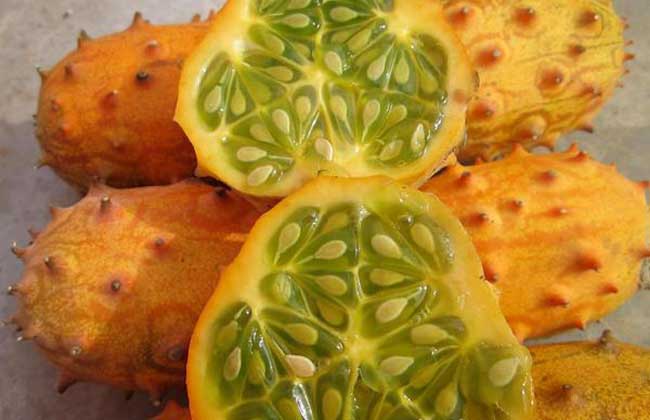
The kiwano melon, also known as the African horned cucumber, kiwano, horned melon, and jelly melon, is an annual vining herbaceous plant in the Cucurbitaceae family, genus Cucumis. This strangely striking fruit is a favorite of many, commonly translated into Chinese as “African honeydew.” In its place of origin, its root system can reach underground aquifers. Let's take a look at kiwano melon cultivation techniques below!
Seed Treatment
Before sowing kiwano melon seeds, they need simple disinfection treatment, low-temperature or variable-temperature treatment, and soaking in trace element solutions. After treatment, place the seeds under 28-30°C conditions to germinate, sprouting in about 24 hours. During this period, the seeds should be washed 2-3 times to remove germination-inhibiting substances and promote gas exchange.
Seedbed Preparation
The kiwano melon seedbed soil formula consists of 30% decomposed pig or cow manure, 20% aged stove ash, 10% decomposed night soil, and 40% peat soil. Another formula consists of 50% decomposed animal manure, 10% aged stove ash, 20% decomposed night soil, and 20% peat ash. To the above mixed nutrient soil, add 4 kg of superphosphate, 1 kg of plant ash, and 1 kg of ammonium nitrate per sq m.
Seedling Stage Management
Sow the pre-germinated kiwano melon seeds in a sandbox. First water thoroughly, then cover with 1 cm of sand after sowing, and cover with agricultural film or woven fabric to retain heat. Keep the temperature inside the sandbox at 28-30°C. Seedlings will emerge successively after 24 hours. When 80% of the seeds have emerged, lower the temperature appropriately to prevent leggy growth, to 20-25°C during the day and 16-17°C at night. Another method is to sow the germinated kiwano melon seeds directly into seedbed soil made of peat soil and garden soil inside a heated greenhouse. When seedlings grow to 10-20 cm, transplant them directly. Temperature control is the same as the method above.
Timely Transplanting
The best time to transplant kiwano melon seedlings into nursery nutrient pots is when the cotyledons are fully expanded, that is, on the 4th day after the cotyledons open, around the 8th day after sowing. At this point, the stored nutrients in the seeds have been mostly consumed, and the plant begins absorbing nutrients through its roots to support growth. If transplanting is too late, the seedling period is prolonged; after the cotyledons are fully expanded, nutrient deficiency easily occurs, and seedlings tend to age, which is a common phenomenon in current production. At the same time, the number of transplanting operations should not be excessive; once is best. You can also sow germinated seeds directly into seedling pots without transplanting, reducing root damage.
Established Seedling Management
When the first true leaf of the kiwano melon expands, it enters the established seedling stage. The soil should maintain a certain moisture level and a relatively high low temperature (15-20°C). During the seedling stage, based on nutrient status, apply 0.2% monopotassium phosphate as a foliar feed, or apply carbon dioxide gas fertilization. This should be done 1 hour after the sun rises in the morning, and the temperature should rise rapidly to 28-30°C.
Planting Management
Kiwano melon cultivation generally plants 600-700 plants per mu. From sowing to harvest takes about 3.5 to 4 months. For open-field cultivation, the transplanting temperature in spring must reach above 15°C. Under greenhouse conditions, planting can be done in early autumn. When growing in polytunnels and greenhouses, a pollinating agent is needed because kiwano melon is a monoecious plant, but male flowers generally open a few days before female flowers.
Field Management
Kiwano melon is not cold-tolerant and is suited to hot, dry climate conditions. It has strong disease resistance, but is prone to disease in high-humidity, rainy environments. One week before the first flowering period, water twice, replenishing 40% of water evaporation. After the first flowering period, replenish 80% of water evaporation.
Post-Harvest Storage
Kiwano melon is extremely storage-friendly. In a dry environment at 17-24°C, it can stay fresh for up to 6 months. Its golden-yellow appearance is extremely beautiful. Besides being eaten, it can also be used as indoor decor, both elegant and attractive. After harvesting, coat the fruit surface with wax to prevent moisture loss from the skin.