Detailed Explanation of Key Techniques for Greenhouse Cultivation of Honeydew Melon
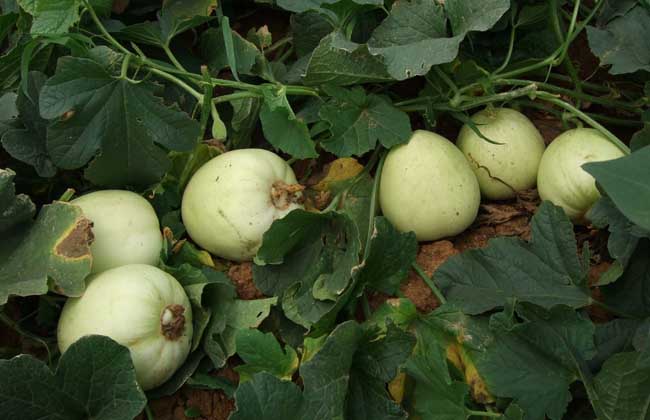
Honeydew melon (Cucumis melo var. inodorus) is an annual trailing or climbing herbaceous plant of the genus Cucumis in the Cucurbitaceae family. This cultivated variety was introduced from the United States. Using gravel-mulched field small-row sheds combined with plastic greenhouses for double-cover forcing cultivation, compared with traditional cultivation using only greenhouses or small-row shed covers, has the advantages of earlier market availability and better quality, and can also effectively avoid the period of high disease incidence, thereby increasing economic benefits. Let us now take a look at the greenhouse cultivation techniques for honeydew melon!
Growth Habits of Honeydew Melon
Honeydew melon is widely cultivated throughout China and also extensively cultivated in temperate to tropical regions worldwide. In China, it is mostly grown in Lanzhou, with the product from Qingbaishi Township, Chengguan District, Lanzhou City being the most famous. It prefers dry conditions and is suitable for cultivation in arid regions. Lanzhou is located in the central part of the Loess Plateau in northwest China, with a continental climate, low rainfall, strong sunlight, and large day-night temperature differences, which are very favorable for the growth of honeydew melon and sugar accumulation.
Cultivation Techniques for Honeydew Melon
1. Site selection and land preparation: It is advisable to choose new gravel-mulched land with an open surrounding area and superior microclimate as the cultivation site. In the autumn of the previous year, apply base fertilizer along the sowing rows at a rate of 2000 kg of decomposed cow manure, 25 kg of diammonium phosphate, 100 kg of oil residue or bean residue, and 30 kg of phosphate fertilizer per mu. After application, level and compact the soil, cover evenly with gravel, spray with sufficient water, and set aside for later use.
2. Variety selection: Small-maturity red-fleshed honeydew melon, large-maturity honeydew melon, Huanghe Mi, and other varieties. Large-maturity honeydew melon (Dashu honeydew melon) belongs to the thick-skinned non-netted melon type and is the main cultivated variety. Small-maturity honeydew melon (Xiaoshu honeydew melon) has a growth period of 110 days. Because it comes to market earlier, its cultivation area is quite large, but its quality is far inferior to that of the large-maturity honeydew melon.
3. Greenhouse construction: The span and length of the plastic greenhouse depend on the plot. Generally, the width is 3.5-5.5 m and the length is 70-90 m; too long is not conducive to management. Cover the greenhouse 7-10 days before sowing (around February 25) to facilitate the rise of ground temperature. Prepare sufficient bamboo poles and film for building small sheds over the planting rows. The film used for the greenhouse can generally last for two seasons.
4. Timely sowing: Sowing is best done in early March. First wrap the seeds in gauze and soak them in 55°C warm water, allowing them to cool naturally in the warm water. After 12 hours, rinse with clean water and place the seed container under a constant temperature of 25-30°C for germination. Sow after reaching the germination standard. Sow 2 seeds per hole (if the seeds are precious, 1 plump seed per hole may also be selected). Generally, the row spacing is 0.55-0.75×0.75 m, with a density of 1300 plants per mu. Immediately after sowing, build small row sheds inside the greenhouse along the sowing rows, and pull the film tight and press it down firmly.
Field Management of Honeydew Melon
1. Seedling stage management: Seedlings begin to emerge about 10 days after sowing. Generally, full emergence is reached in about 2 weeks. As the seedlings grow and temperatures gradually rise, the greenhouse should be ventilated during the day. Gradually open both ends of the greenhouse during the day and press them tight at night. At the same time, ventilation of the small row sheds should also be gradually increased. Generally, the temperature inside the row sheds should be controlled at around 30-32°C. When the seedlings reach the "5-leaf stage," the small row sheds can be gradually removed depending on weather conditions.
2. Assisted pollination: Greenhouse cultivation of honeydew melon adopts the 3-2-1 pruning method on secondary vines. During the flowering period, manual assisted pollination should be used to ensure normal fruit setting. Pollination is generally carried out in the morning.
3. Ventilation: The time and intensity of ventilation should be determined according to the different growth stages of honeydew melon and the weather conditions of the day. The seedling stage coincides with early spring, when meteorological factors outside the greenhouse are variable, so ventilation should be less; merely ventilating for 4-5 hours at noon is sufficient. As the seedlings grow and the outside temperature warms up, the ventilation volume can be gradually increased and the ventilation time extended.
4. Temperature management: Generally, the daytime temperature inside the greenhouse should be 30-35°C, and the nighttime minimum temperature should not be lower than 15°C. After fruit setting, in order to promote fruit expansion and sugar accumulation, ventilation should be increased during the day. Depending on weather conditions, the greenhouse film at both ends can be opened during the day. In later periods with high temperatures, ventilation openings can even be made by rolling up the film on both sides of the greenhouse in sections, closing them at night. If consecutive overcast days occur, pay even more attention to extending ventilation time to reduce humidity inside the greenhouse.
5. Timely harvest: Honeydew melon and Huanghe Mi both belong to the mid-to-late maturing varieties of thick-skinned melons. These two varieties take about 120 days from sowing to harvest. Among them, it takes 55 days from female flower opening to fruit maturity. In addition to harvesting based on fruit development time, harvesting can also be based on the inherent color of these two varieties at maturity. When harvesting, gently press the navel area to feel slight elasticity, and also pay special attention to the skin color of the part of the fruit touching the ground. If the skin color of the ground-touching part of the honeydew melon fruit has turned milky white and is glossy, and that of Huanghe Mi has turned orange-yellow or golden yellow, the fruit is fully mature and can be harvested.
Pest and Disease Control of Honeydew Melon
1. Damping-off: Prevention and control should focus on cultivating strong seedlings and practicing crop rotation to improve plant resistance. Dexon solution can also be used to spray the roots for control.
2. Gummy stem blight: Upon finding diseased plants, immediately spray the entire plant with mancozeb, and then spray once every 5-7 days thereafter. A 100-fold formalin solution can also be applied to the diseased areas.
3. Powdery mildew: It generally occurs in the mid-to-late growth stages of melons, mainly damaging the leaves. Upon finding diseased leaves, promptly spray the entire crop with pesticide. A 500-fold solution of 50% wettable carbendazim or an 800-1000-fold solution of 70% thiophanate-methyl can be used for spraying, and a 3000-fold solution of 25% triadimefon can also be used for control.