Detailed Explanation of Key Techniques for Growing Watermelons in Greenhouses
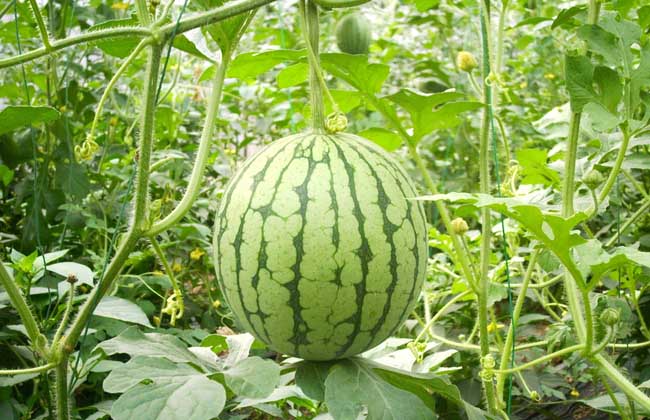
Watermelon is a famous summer fruit, also known as summer melon, cold melon, Qingmen Lyuyu Fang, etc. It is an annual climbing vine of the genus Citrullus in the Cucurbitaceae family. Its original species may have come from Africa, and it has long been widely cultivated in tropical to temperate regions around the world. It was first introduced to China around the Jin and Yuan dynasties, and is now commonly cultivated throughout our country. Let's take a look at watermelon greenhouse cultivation techniques below!
Variety Selection
There are many cultivated varieties of watermelon. Watermelon varieties suitable for early spring greenhouse cultivation are required to be both early-maturing and high-quality, as well as having characteristics such as easy fruit setting, disease resistance, high yield, and suitability for market demand. Based on summaries from recent years, the main varieties suitable for greenhouse cultivation include Jinmei Daguo, Zhizun, Lidu, etc.
Rootstock Selection
Watermelon rootstock is required not only to have good and stable compatibility with watermelon grafting, but also to have good disease resistance and no adverse effects on watermelon quality. According to observations in recent years, gourd rootstock performs poorly in resisting acute wilt of watermelon, which can easily cause immeasurable losses, while pumpkin rootstock performs relatively better. Therefore, currently, basically all watermelon rootstocks use pumpkin rootstock. At present, the better rootstocks include Zhuangsi, Pumpkin No. 2, Pumpkin Changbai Daban, etc.
Seed Treatment
Rootstock seeds and watermelon seeds are treated in the same way. Soak the seeds in warm water at 25-30°C for 48 hours. After soaking, wash the seeds several times in clean water and rub them repeatedly to wash off harmful substances on the seed surface. Then wrap them well in fine cloth and place them in a constant-temperature incubator at 27-30°C for germination, or insert a thermometer and place them on a heated kang for germination. The germination length is best when the seeds have just sprouted white.
Sowing Techniques
The sowing period for greenhouse watermelons is best around December 20th on the solar calendar. Place the germinated rootstock seeds in the middle with the embryo bud facing down, then cover with floating soil (fine sandy loam) with 1.5-2 cm of soil. Under normal circumstances, watermelon seeds can be germinated about 5 days after the rootstock seeds are sown. Watermelon seeds can be germinated using a sand box.
Grafting Techniques
1. Grafting time: Grafting can be carried out after the cotyledons of the rootstock seeds have flattened out, which is also the best time for grafting.
2. Grafting method: Use the top insertion method. When grafting, remove the growing point of the rootstock, use a bamboo skewer at the cut of the rootstock, insert diagonally downward at 45° along the direction of the cotyledon line into the hypocotyl, to a depth of 0.5-1 cm, with the tip of the bamboo skewer reaching the cortex on the other side of the hypocotyl. Then immediately take out the scion seedling, place it on the index finger and cut it off with a blade at 45°, trim the scion seedling well, then immediately pull out the bamboo skewer and insert the scion seedling along the direction of the bamboo skewer hole.
3. Grafting management: Keep the temperature at 25°C, and the low temperature at 24°C. For the first three days after grafting, keep it sealed without ventilation or air exchange, so that the air humidity reaches saturation. One week before planting, lower the ground temperature to 15-13°C, and lower the air temperature to 23°C during the day and 13°C at night, with the nighttime minimum not lower than 10°C for hardening off the seedlings, so that the seedlings are close to the environmental temperature after planting.
Planting Techniques
1. Planting period: In recent years, due to abnormal climate, the planting time has been greatly postponed. Generally, the latest is from the end of February to early March on the solar calendar, which is when the 10 cm ground temperature stably passes 13°C.
2. Planting density: Generally, the row spacing is 3 m, the plant spacing is 0.4 m, and about 555 plants are planted per mu.
3. Planting method: Choose fine weather, place the grafted seedlings with the nutrient pots removed into the prepared planting holes, make the soil ball level with the furrow surface, fill and firm the surroundings, and water using the spot watering method (scooping water with a bowl or ladle). When planting, note that the grafting cut should be more than 1 cm above the ground surface.
Rational Fertilization
1. Fertilization amount: Apply 15-25 kg of ternary compound fertilizer (nitrogen: phosphorus: potassium = 15:15:15) per mu, or apply a certain amount of biogas slurry with irrigation water.
2. Fertilization method: Topdressing should be carried out in combination with watering. When the watermelons grow to the size of an egg, apply a heavy topdressing once in combination with watering to promote fruit development.
Planting and Irrigation