Complete Guide to Peach Tree Bonsai Cultivation Techniques: Teach You How to Grow Potted Peach Trees Well
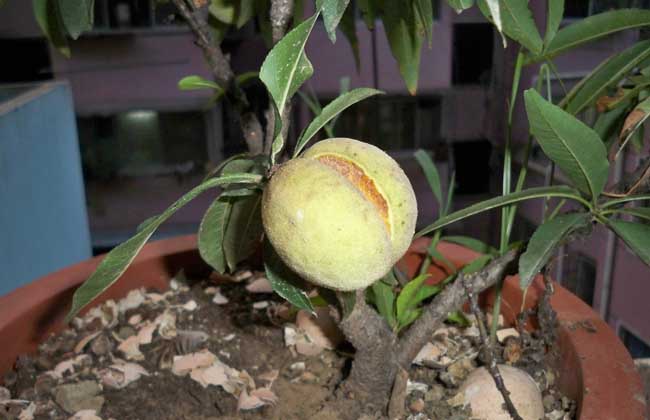
The peach tree is a deciduous small tree of the genus Prunus in the rose family (Rosaceae), native to China, and is widely cultivated across all provinces and regions of the country. Potted peach trees are a combination of fruit tree horticulture and bonsai art. Besides delighting the heart and pleasing the eye, beautifying the home, and providing delicious fresh fruit, they are also a path to wealth. Let us now take a look at peach tree bonsai cultivation techniques!
Peach Tree Variety Selection
Most varieties of common peach, nectarine, flat peach, and flat nectarine grown in production, as well as ornamental peach varieties, can be grown in pots. However, it is best to choose varieties with a compact tree body, an open tree posture, abundant flowers, beautiful flower color, large fruit, bright fruit color, a high rate of self-fruiting, and a relatively short dormant period, as well as dedicated flower-viewing varieties, such as Zaoxiangyu, Chunyan, Lichun, Huaguang, Sahua Hong Pantao, Zao Lu Pantao, as well as Bitao, Yangchun Baixue, Juhua Chongban, American Flower Peach, and others.
Peach Tree Seedling Cultivation
1. Rootstock cultivation: Potted peach trees require a compact and dwarf tree body, and using dwarfing rootstocks is an effective approach. Suitable dwarfing rootstocks mainly include Nanking cherry (Prunus tomentosa) and dwarf flowering cherry (Prunus japonica). Nanking cherry and dwarf flowering cherry are wild resources widely distributed in Northeast China, North China, and other regions. Their common characteristics as peach rootstocks are significant dwarfing and strong adaptability and stress resistance (cold resistance, drought resistance, tolerance of poor soil), and they can also make peach trees bear fruit earlier, mature earlier, and improve fruit quality. Nanking cherry has strong grafting compatibility with peach trees, and the grafting survival rate is very high in all four seasons, while dwarf flowering cherry has a lower grafting survival rate with peach trees. Dwarfing rootstocks can be propagated by seedlings, sowing and raising seedlings in the field, and then transplanting them into pots. Wild Nanking cherry and dwarf flowering cherry growing on hillside terraces can also be dug up, and attention should be paid to using unusual perennial plants with striking trunks; after digging back the rootstocks, give them a little shaping and pruning and plant them directly into pots, then graft after they survive.
2. Grafting techniques: Grafting methods can use scion grafting and bud grafting. If the goal is to cultivate a distinctive tree form, "inverted bud grafting" can be used for bud grafting, that is, the bud eye points downward, and after the graft survives, the branches that grow out naturally form a crooked shape. At the same time, "inverted bud grafting" also has the effect of moderating tree vigor and reducing tree size. According to experiments, there is no obvious difference in survival rate between inverted bud grafting and normal bud grafting on peach trees. In addition, varieties with different flower colors and different fruit colors and shapes can also be grafted onto the same rootstock, so that it produces flowers of different colors and fruits of different colors and shapes, improving the ornamental value of potted peach trees.
Planting Peach Trees in Pots
1. Pot selection: Pots should be chosen according to the display environment, cultivation purpose, tree size, and so on. Commonly used pots include clay pots, porcelain pots, and purple clay pots. Clay pots are the most commonly used pots for potted fruit trees and flowers; they are inexpensive, have good aeration, and are beneficial to root growth, but they are relatively fragile, easily damaged, rough on the surface, and not very attractive. Porcelain pots are sturdy and attractive in appearance, but have poor drainage and aeration, and are relatively expensive, so they are generally best used for indoor ornamental cultivation. Purple clay pots are fine and dense in texture, harmonious in color, elegant and simple, and their drainage and aeration fall between those of clay pots and porcelain pots; they are relatively expensive and suitable for indoor ornamental use. In addition, containers such as plastic pots, cement pots, and wooden boxes can also be chosen. The size of the pot can be determined according to need and tree size, and generally a diameter of 24 cm or more is better.
2. Potting soil preparation: The potting soil must be culture soil. There are no strict requirements for the ingredients and proportions of culture soil. Generally, 2 parts fertile garden soil, 2 parts leaf mold, and 1 part decomposed livestock and poultry manure are used, or 3 parts garden soil, 1 part furnace slag, and 1 part decomposed high-quality organic fertilizer are mixed. When preparing, first crush and sieve the various ingredients, then mix them evenly in the required proportions. In short, the prepared potting soil should be nutrient-rich, loose and breathable, able to retain fertilizer and water, and slightly acidic, with a pH value of 5.5 to 6.5. The prepared potting soil should be disinfected to kill pathogens and pests in it. Commonly used disinfection methods include sunlight exposure and formalin disinfection. Sunlight exposure is to spread the potting soil thinly and evenly on a cement surface and expose it to the sun for 2 to 3 days. Formalin disinfection is to spray the potting soil with 5% formalin solution, then seal it with plastic film and fumigate for 1 to 2 days, then remove the film, and use it after the chemical has evaporated.
3. Planting method: The planting time is after leaf fall in autumn or before bud break in spring. Fill the prepared potting soil to about half the pot, higher in the middle and lower around the sides. After properly pruning the seedling roots, place the seedling in the center of the pot and spread the roots out, with the root crown 3 to 4 cm from the pot rim, then add potting soil while shaking the pot so that the roots and soil are in close contact, with the potting soil slightly above the root crown, and finally water thoroughly. If the soil sinks after watering and exposes the root crown, add soil to cover the root crown.
Peach Tree Shaping and Pruning
1. Shaping: Potted peach trees can be shaped freely according to requirements, such as open-center form or curved-trunk form. Use branch-pulling methods on the main branches to adjust branch direction and angle, promote side branches through repeated pinching, and use techniques such as branch bending, branch coiling, and branch twisting to cultivate branches into different shapes such as round, slanting-trunk, weeping-branch, and fan shapes, increasing beauty and filling out the crown.
2. Thinning branches: Peach trees have high sprouting ability, strong branching ability, and large growth. Thinning can be carried out according to the principle of thinning more on strong trees with abundant branches and thinning less on weak trees with sparse branches, removing diseased and pest-infested branches, dense branches, and water sprouts.