What happens to the body if you eat too much Chinese lantern fruit?
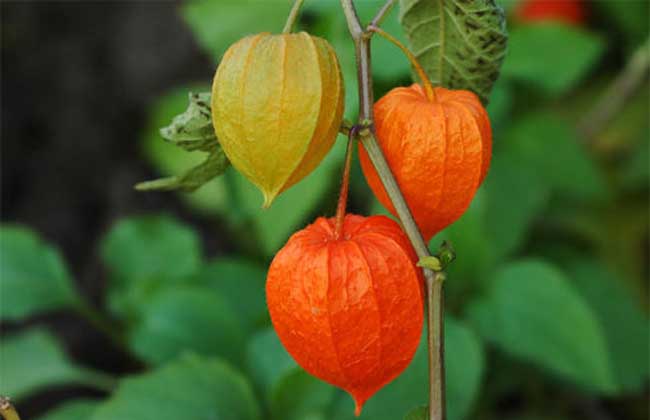
The Chinese lantern fruit, whose scientific name is Physalis alkekengi, is a perennial upright herbaceous plant of the genus Physalis in the Solanaceae family. It is mainly produced in Northeast China and the Guangdong area. After it entered the market, some fruit vendors disliked its name, so based on its unique "appearance" they vividly renamed it "Chinese lantern fruit" to attract consumers' attention and drum up business. Now let us take a look at what happens if you eat too much Chinese lantern fruit!
What happens if you eat too much Chinese lantern fruit?
So far there have been no reports of any adverse effects from eating too much Chinese lantern fruit. Modern pharmacological research has found that the Chinese lantern fruit contains trace amounts of alkaloids, citric acid, oxalic acid, vitamin C and so on. It has effects such as lowering blood pressure and strengthening the heart, can inhibit Staphylococcus aureus and Pseudomonas aeruginosa, can prevent and treat diabetes, tonsillitis, chronic bronchitis and many other conditions, and also has a certain therapeutic effect on aplastic anemia, but it is still recommended to eat it in set amounts at set times.
Where is the Chinese lantern fruit produced?
The Chinese lantern fruit is native to China, with wild resources distributed in both the north and the south. It is mainly produced in Gansu, Shaanxi, Henan, Hubei, Sichuan, Guizhou and Yunnan, among other places. It has a relatively long history of cultivation in China; there is a record of Physalis alkekengi in the Erya from 300 BC. Today it is grown fairly widely in the Northeast region and less so in other regions, and it still counts as a rare specialty vegetable.
The benefits and effects of the Chinese lantern fruit
1. The Chinese lantern fruit is rich in vitamin C, β-carotene, more than 20 mineral elements and 18 amino acids needed by the human body. It has a certain therapeutic effect on aplastic anemia, has the effect of clearing heat and promoting urination, can reduce inflammation when applied externally, and the whole plant can be used to make insecticides.
2. The Chinese lantern fruit can prevent and treat diabetes, tonsillitis, chronic bronchitis and many other conditions, and also has a certain therapeutic effect on aplastic anemia.
3. The Chinese lantern fruit contains trace amounts of alkaloids, citric acid, oxalic acid, vitamin C and so on. It has the effect of lowering blood pressure and strengthening the heart, and can inhibit Staphylococcus aureus and Pseudomonas aeruginosa.
4. The calcium content in the Chinese lantern fruit is 73.1 times that of tomatoes and 13.8 times that of carrots, and its vitamin C content is 6.4 times that of tomatoes and 5.4 times that of carrots. Its unique flavor and rich nutrition make it a good raw material for processing beverages, fruit wine and other drinks.