Detailed explanation of strawberry seedling cultivation techniques, master the key points of seedling raising
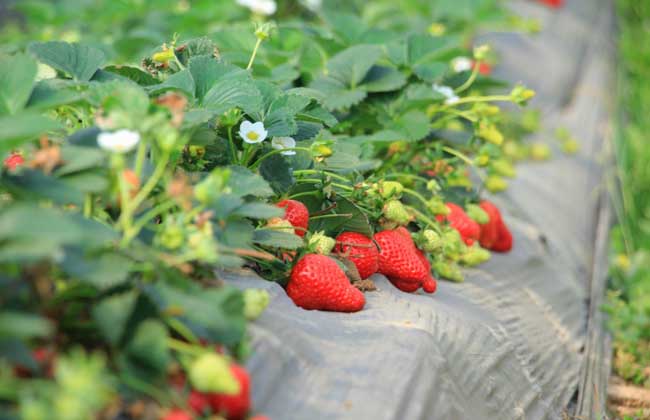
Strawberry is a perennial herbaceous plant of the genus Fragaria in the Rosaceae family. Its propagation methods are divided into two types: sexual reproduction and asexual reproduction. In order to avoid segregation during sexual reproduction that affects yield and quality, asexual reproduction, namely propagation by runners, is generally used in production. Let's take a look at strawberry seedling cultivation techniques together below!
Preparing mother plants
After determining the strawberry variety to be propagated, select runner seedlings that grow robustly and are free of pests and diseases as mother plants for propagation. After the transplanting of the fruit-picking field is completed, the mother plants are temporarily planted in the open field to overwinter. The temporary planting density is 20 cm × 20 cm, or 23 cm × 23 cm, with 10,000 plants per mu being suitable. The number of mother plants to be planted is determined according to the number of seedlings to be raised the following year. Generally, 400 mother plants in the second year can cultivate 1 mu of strawberry seedlings, and by autumn can produce 40,000 to 60,000 runner seedlings to supply seedlings for 8 mu of field use.
Seedbed land preparation
The nursery should be selected from plots with fertile soil, that are not prone to hardening, and that are convenient for drainage and irrigation. Using a young orchard with irrigation facilities as a seedling-picking nursery not only helps to make full use of the land, but also allows the use of fruit trees for shade, reducing the impact of high summer temperatures. After the nursery is selected, spread 30 loads of fully decomposed barnyard manure per mu, and in spring seize fine weather to plow and make beds, with a bed width of 3 m. Before planting, apply 2.5 to 3 kg of urea, 3.5 to 4 kg of potassium chloride, and 5 kg of superphosphate per mu in mixed hole application, and mix the fertilizer thoroughly with the soil.
Planting time
After the spring temperature stabilizes above 15°C, planting can be carried out at the appropriate time, generally in mid-to-late April, striving to complete planting by the end of April. When planting, plant 1 row on each side of the 3 m-wide bed, with a plant spacing of 80 cm, and plant more than 400 plants per mu. When planting mother plants, the depth must be moderate, and it is strictly necessary to prevent soil clods from burying the heart leaves and the rhizome from being exposed and suffering drought. At the same time, the side of the rhizome with the curved protrusion should face the inner side of the bed, because the protruding side is the part that produces runners, which is beneficial to the growth and arrangement of runners.
Nursery management
Immediately after the mother plants are planted, water thoroughly to settle the roots, and then water once a day according to weather conditions for the next 4 to 6 days. After survival, check the seedlings and fill in missing hills in time, and promptly remedy mother plants planted too deep or too shallow. If high temperature and drought occur during the strawberry seedling-raising period, special attention should be paid to water management, adopting multiple furrow irrigations to keep the soil moist frequently. From planting until the strawberry runners cover the entire field takes more than 5 months, and the seedling-picking nursery has a large empty area, so seedlings should be replaced in time. In the season when weeds grow in summer and autumn, and because frequent watering makes the soil prone to hardening, which is unfavorable for runner seedlings to take root, cultivating and weeding should be carried out to keep the bed surface loose and free of weeds. In addition, in early spring the flower clusters of the mother plants should be removed in time, and after runners emerge they should also be arranged frequently so that the runners are evenly distributed and do not overlap each other, supplemented by artificial pressing to ensure uniform and strong seedlings. During the strawberry seedling-raising period, topdressing is generally not needed. If the base fertilizer is insufficient, the plants grow thin and weak, the leaf color turns yellow, and few runners emerge, then in combination with irrigation, 3 to 5 loads of human manure and urine per mu, diluted with 1 load of water, can be splashed on 1 to 2 times.
Pest and disease control
From planting to the early growth stage, strawberries may be damaged by cutworms or white grubs. Check frequently in the early morning. If notched leaves and dead seedlings are found, dig around the plants to find and destroy them, or apply 2.5 kg of 1.5% organophosphorus mixed powder per mu mixed with 15 to 20 kg of fine soil. During the growth period, 2000-fold omethoate or 1000- to 1500-fold dichlorvos emulsifiable concentrate can be used to control aphid damage. The main diseases of strawberry are gray mold and root rot. Remove old leaves, dead leaves, and diseased leaves frequently to reduce the breeding and spread of pathogens. For chemical control, 1000- to 15000-fold 50% thiophanate-methyl solution or an equal-formula 250-fold Bordeaux mixture can be sprayed 1 to 2 times.