Shatian Pomelo Seedling Grafting Propagation Methods and Key Technical Points
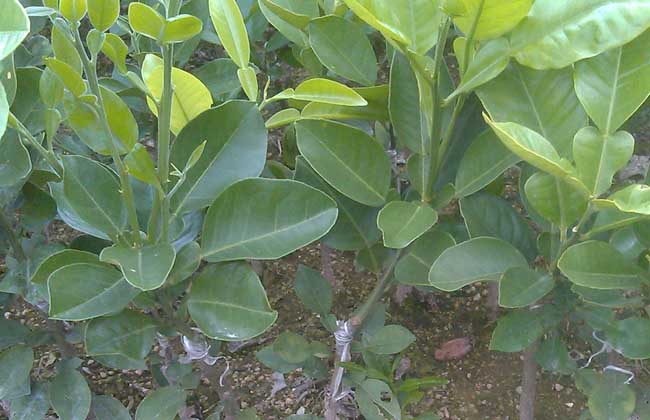
Shatian pomelo is a plant of the Rutaceae family, Citrus genus. Seedling cultivation can be done by grafting, air layering (marcotting), or cutting, but in production practice grafted seedlings are superior to layered and cut seedlings, so in current production practice grafting is mostly used to propagate pomelo seedlings, while air layering and cutting are gradually being phased out. Let us take a look at Shatian pomelo seedling grafting propagation below!
Rootstock Seed Collection
The rootstock for Shatian pomelo should be selected from sour pomelo trees (either red-fleshed pomelo or white-fleshed pomelo will do). By the Frost's Descent season the pomelos are already ripe. After harvesting the fruit, take out the seeds and process them promptly to prevent pile-up and mold, which would affect germination. First wash off the gelatinous coating on the outside of the seeds with wood ash water, then rinse with clean water, and then place them in a diluted solution of one part formalin to fifty parts clean water (or one part copper sulfate to one hundred and sixty parts clean water), soak and wash for ten minutes, take them out and leave for five minutes, then rinse clean with water, dry them in the shade in a ventilated place, and they are ready for sowing.
Rootstock Nursery Site Selection
Before early autumn, the nursery site should be selected in advance. The nursery land should be chosen facing south or southeast, with good ventilation and light transmission, a slope of less than 10 degrees, a relatively thick soil layer (over 20 cm), good water retention and drainage, convenient irrigation, medium fertility sandy loam or sandy yellow loam, few wind hazards, and no pests or diseases. Places that are too heavy and clayey, barren, arid, poorly drained, or have a high groundwater level (above 1 m) are all unsuitable as nursery land.
Rootstock Nursery Site Preparation
Reasonable deep plowing and fine land preparation of the rootstock nursery can promote the growth of the seedling root system and increase the emergence rate per unit area and the quality of the seedlings. Before sowing, the nursery land should be deep plowed and the soil sunned so that the soil is fully weathered. Drainage ditches should be opened around the nursery to facilitate drainage and irrigation. The nursery beds should be arranged in an east-west direction, generally 1.2 m wide, 15-20 cm high, with a ditch width of 40 cm; the bed length depends on the terrain, the bed surface should be level, and the soil clods should be fine and crumbly. A few days before sowing, apply grass fertilizer (about 1800 kg of farmyard manure per mu, 150 kg of wood ash, mixed evenly with the topsoil), and then sow.
Rootstock Nursery Sowing
Sow the treated seeds immediately after collection in late October. When sowing, first open small horizontal furrows on the bed surface, with a row spacing of 10 cm, and use about 15-18 kg of seed per mu, which can produce about 60,000 seedlings. After sowing, cover with about 10 cm of fine soil, then cover the bed surface with bracken fern, rice straw, or other weeds, and water to keep it moist. Where irrigation is convenient, one run of “horse-running water” can also be let in to soak the ground. In dry conditions, pay attention to watering (or irrigating) to keep the nursery land moist at all times and promote seed germination. After the seedlings emerge, remove the covering grass.
Rootstock Nursery Management
After the rootstock seedlings emerge, the seedbed should be kept moist at all times, but not waterlogged. When the seedlings grow two true leaves and the leaves turn dark green, begin fertilizing. In the early stage, apply thin fertilizer frequently, once every ten days to half a month, for six or seven consecutive times. In the later stage, fertilize appropriately according to the growth of the seedlings. The fertilizer should mainly be human and animal manure or nitrogen fertilizers such as ammonium sulfate, with appropriate application of some phosphorus and potassium fertilizers such as wood ash or superphosphate.
Shatian Pomelo Seedling Grafting
In order to speed up the propagation of seedlings to meet the needs of developing Shatian pomelo production, grafting should be done on the smallest possible rootstock seedlings. The grafting methods include the small-bud cut grafting method, the branch cut grafting method, and the “T”-shaped bud grafting method. The small-bud cut grafting method is more suitable for small rootstocks and can allow earlier grafting and earlier release from the nursery. The small-bud cut grafting method and the “T”-shaped bud grafting method are best carried out from late March to late June (at a temperature of 15-20°C), when the survival rate of grafted seedlings is highest. Climate conditions differ among regions, and the timing of young bud sprouting on branches also differs, so this should be handled flexibly according to phenological changes.