Detailed Explanation of Avocado Cultivation Techniques and Planting Management Key Points
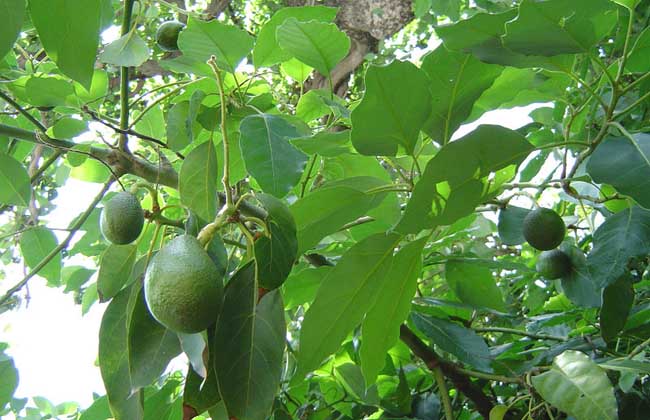
Avocado is a rare fruit of tropical regions, also known as alligator pear, avocado, butter fruit, etc. The fruit is a highly nutritious fruit, containing multiple vitamins, rich fats and proteins, and also high levels of sodium, potassium, magnesium, calcium, etc. Besides being eaten as a fresh fruit, it can also be used in dishes and canned products. It has high cultivation value. Let us take a look at avocado cultivation techniques together below!
Avocado Cultivation Conditions
Avocado prefers light and a warm, humid climate, and is not cold-tolerant. Only a few varieties can tolerate short-term low temperatures of 0 degrees. It is cultivated between 40°S and 40°N in the world. The suitable average annual temperature is 20-25℃. Cold resistance varies by variety (the Mexican race has relatively strong cold resistance, while the Guatemalan race and West Indian race have weaker cold resistance). Cold-resistant varieties can tolerate -6℃ low temperatures, while varieties with low cold resistance wither and dry up when encountering 0℃ low temperatures. It requires annual rainfall of more than 1000 mm. The roots are shallow, the branches are fragile, and it cannot tolerate strong winds. Strong winds can lead to reduced yield. It has strong adaptability to soil.
Avocado Propagation Methods
Avocado is mostly propagated by seeds, and can also be propagated by grafting. When sowing, the seed coat should be peeled off and the seeds germinated in a sand bed. Choose a planting site with deep soil, good drainage, and shelter from wind. A spacing of 5*(6-7) m between plants and rows is relatively suitable. Mixed planting of varieties can ensure pollination. For grafting, container seedling cultivation is best. When the seedling diameter is 0.8-1 cm thick, grafting can be done. Bud grafting or side grafting is mostly used. Seedlings can be planted out at 50-60 cm. The planting spacing between plants and rows is 5-6 m. Grafted seedlings take 3-4 years after planting, or seedling trees take 4-6 years, to flower and bear fruit. Mature trees yield 25-50 kg per tree, with high-yielding trees producing 100-150 kg.
Avocado Fertilization Techniques
1. Apply nitrogen fertilizer conventionally more than 4 times per year, usually by broadcast application or through the irrigation system. For adult trees during the young fruit stage, apply 50 kg of organic fertilizer per tree and 50 g of compound fertilizer. Apply once more after harvest, with the amount doubled.
2. Apply phosphorus and potassium fertilizers when leaf analysis indicates low phosphorus and potassium content. On certain soil types, zinc can be applied through zinc-containing fertilizers or foliar spraying of zinc. Spraying is most effective when new leaves unfold in spring. For crops growing on calcareous soil or soil with low oxygen content, the most effective method is to inject chelated iron solution into the root zone.
3. When nitrogen is present in certain soils and irrigation water, the amount of nitrogen used should be reduced. When few new leaves are seen growing on the tree and the leaf color is grayish-white, or when there is heavy fruiting, increase nitrogen fertilizer application.
Avocado Pest and Disease Control
1. Anthracnose
[Damage] Anthracnose is an important disease of avocado. It mainly damages ripe fruit, and can also infect leaves, tender branches, flowers, and young fruit, causing fruit drop and fruit rot, and shortening shelf life. Generally, disease occurs after the fruit ripens. Before the fruit ripens, lesions do not exceed 5 mm in diameter, are round, slightly sunken, and brown or black. When conditions are suitable, the lesions expand quickly, the sunken areas become obvious, radial cracking appears in the center of the lesions, and finally the lesions merge into patches, producing pink masses of conidia. As the fruit gradually ripens, the pathogen can invade the flesh, causing dark green dry rot.
[Control] Remove diseased branches in the orchard, prune diseased leaves, and eliminate sources of infection. After harvest, carry out low-temperature pretreatment and low-temperature storage as early as possible. Almost all avocado varieties are sensitive to this pathogen. The key to control is to minimize the occurrence of other fruit diseases (especially Cercospora spot) and avoid mechanical damage to fruit during transport.
2. Scab
[Damage] On affected fruit, slight round brown scab-like protrusions initially appear, later turning brown to light purple. After the fruit ripens, the lesions merge, the centers become sunken, and the rind becomes rough. After this disease infects fruit, it does not affect flavor quality, but appearance quality is seriously reduced. During the young fruit stage, if cold, overcast, and humid weather occurs, this disease can be severe. It can also damage leaves. Affected leaves develop brown spots and become wrinkled. The lesions further develop into a star shape with a hole in the center. Leaf damage often occurs at the top of the canopy, and the lesions are mostly within the leaf vein texture on the underside of the leaf. The lesions are small, discrete, discontinuous, and not easy to observe. Lesions on petioles and small branches are oval and easily confused with spots caused by scale insects.
[Control] Prune diseased branches to reduce pathogens, and spray Bordeaux mixture or other copper-based fungicides.
3. Cercospora Spot
[Damage] It can damage leaves, stems, and fruit. When it infects fruit, it forms blighted spots on the surface or causes the epidermis to crack, and the cracks can lead to infection by Colletotrichum. When it infects leaves, 2-5 mm blighted spots first appear on the leaf surface, initially brown, later turning purple. The spots expand to both sides of the leaf, are irregular in shape, and in severe cases the blighted spots merge to form larger blighted patches.
[Control] Use chemical control, spraying copper-based fungicides and pyrimethanil on branches and fruit.
4. Dothiorella Fruit Rot
[Damage] Symptoms on infected fruit before harvest are not obvious. The lesions are small and shallow, and symptoms become obvious during the process of softening and ripening after harvest. Initially, small irregular brown to red lesions appear on the rind. Because the pathogen invades the vascular bundles, after peeling the rind, brown streaks can be seen in the flesh. Subsequently, purple-brown irregular lesions appear at the stem end. As the fruit ripens, the epidermal lesions gradually lengthen, darken, and become sunken. The brown rind is covered with a layer of grayish-brown mycelium and spores, exuding brown flesh and juice and emitting an unpleasant odor.