Pistachio Tree Pest and Disease Control Techniques and Methods
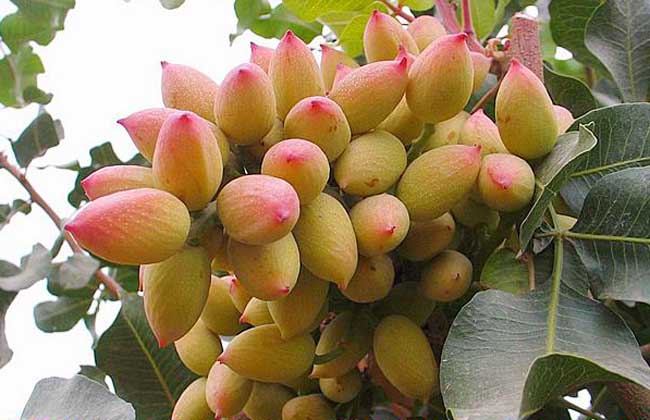
The pistachio tree is not a native nursery stock of China. In countries such as Syria, pistachio trees are very commonly planted, and they have also been widely cultivated in ** and other places. It is an ancient species of the arid subtropics. The main diseases include gummosis, leaf spot disease, and root rot, while the main pests include brown scale insects, small head worms, and weevils. Let us take a look together at pistachio tree pest and disease control techniques below!
Pistachio Tree Gummosis
[Damage characteristics] Gummosis mainly occurs on branches and fruit. On branches with severe gummosis, the bark cracks and is covered with gummy masses, causing the tree to weaken and eventually dry up and die.
[Control methods] 1. Scrape off the gum in time, clean up the scraped gum thoroughly, and burn it in a concentrated manner. After scraping, apply 0.2% methyl violet solution to the diseased spots. 2. Spray lime sulfur mixture before the tree buds.
Pistachio Tree Leaf Spot Disease
[Damage characteristics] Leaf spot disease begins to harm the leaves and parts of the fruit every year when the rainy season starts, turning them brown, causing early leaf drop and affecting pistachio fruit development, resulting in severe yield reduction or crop failure.
[Control methods] 1. Sweep up fallen pistachio leaves, prune diseased leaves, and burn them in a concentrated manner. 2. During the disease period, promptly spray the whole plant with Bordeaux mixture.
Pistachio Tree Root Rot
[Damage characteristics] Root rot is a root-decay disease that harms pistachios. In severe cases, it causes pistachio plants to grow weak and then wither and die.
[Control methods] 1. Strengthen orchard management and apply more organic fertilizer so that the pistachio tree grows robustly, thereby enhancing disease resistance. 2. For diseased trees and surrounding plants that may be infected, use a 300-fold copper sulfate solution to irrigate the roots.
Pistachio Tree Brown Scale Insect
[Damage characteristics] After overwintering, the nymphs and female adults of the brown scale insect fix themselves on pistachio branches to cause damage. After being damaged, growth and development weaken, causing severe yield reduction.
[Control methods] 1. Before the adults lay eggs, manually wipe off the female insect shells on the branches with a cloth. 2. Before pistachio budding, spray with lime sulfur mixture.
Pistachio Tree Small Head Worm
[Damage characteristics] The small head worm causes damage by having its larvae chew and eat leaves. In severe cases, it can eat all the leaves clean within 4-5 days.
[Control methods] 1. Manually dig for pupae: in the pistachio orchard, dig around the tree base to find and collect pupae. 2. Use electric lights to trap moths: take advantage of the adults' strong phototaxis by lighting lamps to trap and kill adults.
Pistachio Tree Weevil
[Damage characteristics] Adult weevils overwinter in fallen dead branches and leaves under the trees in winter. When pistachio plants bloom in spring, they gnaw on tender buds and inflorescences, seriously affecting pistachio yield.
[Control methods] 1. Manual capture: catch them before sunrise. The method is to first spread plastic film under the tree, then shake the branches so they fall, and then capture and kill them. 2. Deep plow the tree base in autumn and winter. The method is to turn the surface soil where they lie dormant at 3-6 cm into below 28 cm, so they cannot emerge and are eliminated. 3. When adults emerge after overwintering, apply poisonous soil in the tree base. 2% trichlorfon powder can be used, scattering 155 grams of powder per mature tree, and then lightly raking after scattering.