When do hawthorns generally ripen? A guide to the harvest time
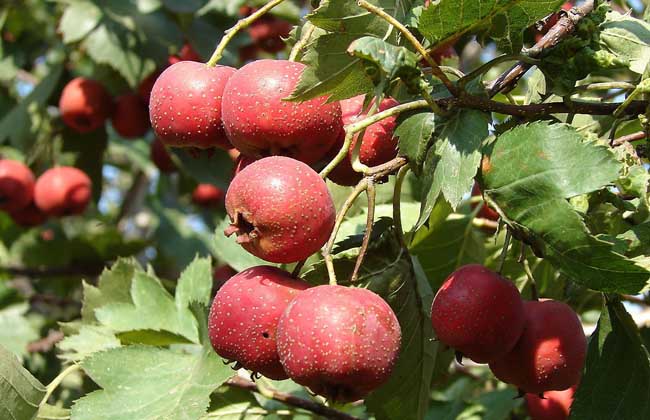
Hawthorn, also known as shanliguo, shanlihong, suanlihong, shanlihongguo, suanzao, hongguo, hongguozi, shanlinguo and so on, is a deciduous tree of the genus Crataegus in the rose family (Rosaceae). It usually blooms in May-June and its fruit ripens in September-October, but because varieties differ, the ripening time also varies. Let us take a look below at what month hawthorns ripen!
What month do hawthorns ripen
Hawthorn is the dried ripe fruit of the rose family plant shanlihong (Crataegus pinnatifida var. major) or hawthorn (Crataegus pinnatifida). It usually flowers from May to June and fruits from August to October. In autumn, when the fruit is ripe, it is harvested, sliced and dried. It ripens in October.
Variety classification of hawthorn
1. Waibahong: Waibahong has a slight bulge at the fruit stalk, which makes the stalk look crooked, hence the name. Its individual fruit is larger than normal hawthorn, and it is mainly used as the raw material for candied haws (tanghulu) on the market. The fruit ripens in early to mid-October and has good storability.
2. Dajinxing: The individual fruit of Dajinxing is somewhat larger than Waibahong, and when ripe it has small dots on it, hence the name Dajinxing. It has the strongest flavor and is a particularly sour type, of top quality. The fruit ripens in mid to late October, stores well, and is large, with 72-82 fruits per kilogram.
3. Damianqiu: The Damianqiu tree has moderate vigor and a strong ability to bear fruit continuously on the same branches. It begins fruiting 3-4 years after planting. Its individual fruit is the largest, and when ripe it is soft and cottony with moderate acidity. It has a short storage life. The fruit ripens in late September and is suitable for fresh eating and processing.
4. American giant large hawthorn: The American giant large hawthorn is a rare foreign variety. It ripens in late October. The individual fruit weighs 40 grams, with a maximum of 60 grams. The fruit is tall and round in shape, bright red, with fine, dense flesh that is firm and crisp, very juicy, sweet and sour in a balanced way, with a fragrant aroma and delicious taste. It stores and ships extremely well and can be kept until May of the following year.
5. Dawuleng: Dawuleng hawthorn usually ripens in late September. The average individual fruit weighs 25 grams, with a maximum fruit weight of 45 grams. The fruit is purplish-red with five prominent ridges, resembling a small apple. It has strong self-pollination ability and stores and ships extremely well. It tastes sour with a hint of sweetness, has few seeds, and is extremely resistant.
Dietary contraindications for hawthorn
1. Hawthorn should not be eaten with pork liver. Hawthorn is rich in vitamin C, while pork liver contains trace metals such as copper, iron and zinc. Eating the two together causes vitamin C to oxidize rapidly and be destroyed, reducing its nutritional value, so hawthorn and pork liver should not be eaten together.
2. Hawthorn should not be eaten with fruits and vegetables that contain vitamin C decomposing enzymes. Cucumber, pumpkin, carrot and other fruits and vegetables all contain vitamin C decomposing enzymes. Eating them with hawthorn will destroy and break down the vitamin C in hawthorn, reducing its nutritional value, so they should not be eaten together.
3. Hawthorn should not be eaten with seafood. Seafood all contains abundant minerals such as calcium, iron, carbon and iodine as well as protein, while hawthorn contains tannic acid. If eaten with seafood, it will form tannic acid protein, a substance that causes constipation and triggers symptoms such as nausea, vomiting and abdominal pain, so they should not be eaten together.
4. Hawthorn is incompatible with vitamin K3. Vitamin K3 is a hemostatic drug, while hawthorn is a blood-activating drug, and the vitamin C it contains is not conducive to the hemostatic effect of vitamin K3.
5. Children in the tooth-changing period should not eat too much hawthorn, as it will damage the teeth and have an adverse effect on the growth and development of children's teeth.
6. Hawthorn has the effect of promoting uterine contractions in women. Pregnant women who eat too much hawthorn may trigger miscarriage, so it should not be eaten in large amounts.