Detailed Explanation of Plum Tree Grafting Techniques, Methods and Key Points
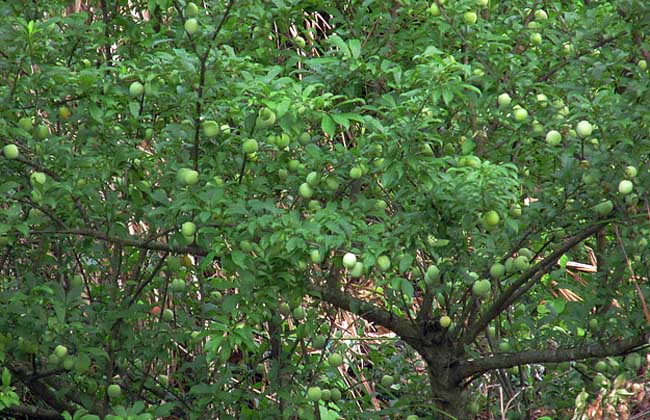
The propagation methods of plum trees include grafting, cuttings and division, among which grafting is usually used in actual production, as this helps improve the cultivation benefits of plum trees. In grafting operations, the grafting time, rootstock selection and grafted varieties vary according to actual conditions, and attention must be paid to these in production. Below let us take a look at plum tree grafting techniques together!
The Growing Environment of Plum Trees
Plum trees have strong adaptability to climate. As for soil, as long as the soil layer is relatively deep and has a certain fertility, they can be planted in any type of soil. They have relatively high requirements for air and soil humidity and are extremely intolerant of waterlogging. Poor drainage in the orchard often causes root rot, poor growth or susceptibility to various diseases. It is advisable to choose a place with loose soil, good soil aeration and drainage, deep soil layer and a low groundwater level to establish the orchard.
The Grafting Time of Plum Trees
Plum tree grafting is best done around July. 7-10 days before grafting, select strong-growing outer branches and pinch off the growing tips to promote early maturity of the scions. In addition to selecting plump buds when grafting, the grafting position should be 5-8 cm above the ground, which is conducive to early sprouting of the grafted buds.
The Variety Selection of Plum Trees
1. Rootstock selection: Use dwarfing rootstocks, which have strong compatibility with the grafted varieties. It is advisable to choose varieties with bright fruit color, high yield and slightly weaker growth vigor.
2. Grafted varieties: There are very rich varieties of plums. Traditional excellent Chinese varieties include “Furen Li, Jiaqing Li, Xieli, Hongxiang Li, Yuhuang Li, Mi Li, Wuyue Li”, etc. At present, the domestic and introduced foreign plum varieties mainly promoted and applied in production include Oishiwase, Japanese Li Wang, Methley, Rose Queen, Black Gem, American Large Plum, Changle Niuxin Li, Xianfeng Li, etc.
The Grafting Techniques of Plum Trees
1. Rootstock treatment: After transplanting wild peach, plum, cherry and other tree stumps and having them survive, cut or saw them off at 6-10 cm above the ground (also according to tree shape) as the rootstock.
2. Scion treatment: Select well-developed 1-year-old, thick, plump-budded, pest-free semi-lignified branches as scion wood, take segments about 7 cm long, and keep 5-7 buds as the scion. Wrap the collected scions in a wet cloth and use them as they are collected.
3. Method selection: Generally carried out before the rootstock buds sprout or when they begin to sprout but have not yet unfolded leaves. The cleft grafting method is commonly used, mainly suitable for thicker rootstocks. This method is easy to master, and the joint heals quickly and firmly with a high survival rate.
4. Grafting method: Water the rootstock once the day before grafting. When grafting, trim the cut surface of the rootstock flat with a knife, then use a grafting knife or blade to make a straight cleft about 3 cm long. Shape the lower end of the prepared scion into a wedge-shaped cut about 3 cm long with one side slightly thicker and the other thinner, keeping only 2-3 buds. Then insert the scion into the cleft with the slightly thicker side facing outward and the thin side facing inward, align the cambium, and bind tightly and wrap completely with a wide plastic strip. Bind the upper cut end of the scion firmly with plastic film to prevent water evaporation and pest damage. In dry and windy weather, a transparent plastic bag must be used, with a small cotton ball fully soaked in water placed inside, then cover the part above the joint and tie the bag opening tightly.
5. Post-grafting management: Generally, cutting the rootstock promotes sprouting earlier than bending the rootstock. But in summer, when cutting the rootstock, it must be cut 3-5 cm away from the grafted bud, leaving a few leaves on the rootstock. After the grafted bud sprouts, then cut the rootstock 1 cm above the grafted bud. After cutting the rootstock, buds should be removed in time, removing all buds sprouting from the rootstock and keeping only the grafted bud. The seedlings should be watered in a timely manner in the later stage. At the end of September, when the grafted buds grow to 70-100 cm, pinch off all growing tips and stop watering to promote thickening growth of the seedlings and make them mature, so as to improve the overwintering ability of the seedlings.