How to prevent and control pests and diseases of plum trees? Detailed explanation of key technical points
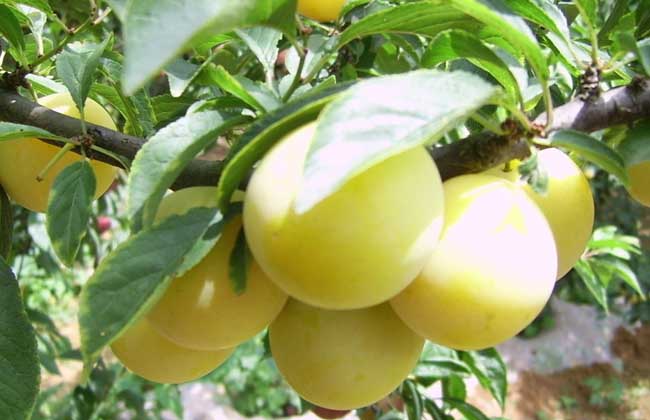
Plum trees are prone to pest and disease infections when management conditions are poor. In mild cases, this affects tree development, resulting in poor fruit quality and low yield; in severe cases, it causes tree decline and shortened lifespan, and the fruit becomes inedible. The main pests and diseases include the plum fruit sawfly, fruit borers, aphids, red spider mites, red spot disease, and gummosis. Let us now take a look at the pest and disease control techniques for plum trees!
Plum red spot disease
[Damage characteristics] Plum red spot disease mainly damages leaves and also infects fruit. In the early stage of leaf infection, orange-yellow, slightly raised, nearly circular lesions with clear edges appear on the leaf surface. As the disease expands, the color deepens, and the mesophyll in the affected area thickens accordingly, producing many small red granules on the surface, which are the fungal spore chambers. By late autumn, diseased leaves turn red-black, with the upper surface sunken and the lower surface protruding, and the leaves curl, with small black granules appearing, leading to early defoliation. When fruit is affected, orange-red round lesions appear, eventually turning red-black, with many dark red small granules on the lesions. The fruit becomes deformed, inedible, and easily drops.
[Control methods] ① Thoroughly clean up diseased leaves and fruit in the orchard and burn them in a centralized manner. Pay attention to drainage to reduce orchard humidity. ② Before bud break, spray 3~5 degrees Baume lime sulfur mixture. During the growing season, spray 50% carbendazim 600 times or 70% thiophanate-methyl 800 times, or 70% mancozeb 600 times every 10~15 days.
Plum fruit sawfly
[Damage characteristics] One generation occurs per year, and mature larvae cocoon in the surface soil layer under the tree to overwinter and oversummer. When plum trees bloom the following year, they emerge as adults, fly and mate during the high temperatures at midday, and rest in flowers or under the calyx in the early morning, evening, and on cloudy and rainy days. Eggs are laid within the calyx tissue, generally one egg per flower, rarely 2. After the larvae hatch, they mostly bore in from the fruit surface and go straight to the pit after entering the fruit. One larva damages only one fruit. When the kernel is eaten up, the larva also becomes mature and leaves the fruit to oversummer and overwinter. Once the young fruit kernel is eaten, development stops and the fruit drops.
[Agricultural control] In early winter, turn over the soil around the tree crown so that larvae in the soil are turned to the surface and killed by freezing.
[Chemical control] ① During the period when larvae leave the fruit, spray the ground with 25% phoxim microcapsule formulation, or 48% chlorpyrifos 200~300 times. After spraying, lightly rake the soil so that the pesticide and soil are evenly mixed. ② When 80~90% of plum flowers have fallen, spray 5% beta-cypermethrin 2000 times, fenpropathrin 2000~3000 times, or 2.5% deltamethrin 3000 times.
Plum fruit borer
[Damage characteristics] The plum fruit borer is a pest of the Lepidoptera family Tortricidae (more common in areas at 40—50° north latitude), and is the most serious pest damaging plum fruit, with a damage rate as high as 80%—90%. Affected fruit often exudes teardrop-shaped pectin at the insect hole, cannot continue normal development, and gradually turns purplish red and drops. Because the insect tunnel is filled with red frass, it is also vividly called “red bean paste filling.”
[Control methods] The key periods for controlling the plum fruit borer are the peak adult stage and peak egg-laying stage of each generation, and the period when the first-generation mature larvae enter the soil. Spray 90% trichlorfon 0.8% solution, 50% malathion 1% solution, or 50% dichlorvos. Before physiological fruit drop of plum trees, apply 50% phoxim 1%~1.5% solution broadly to the soil under the canopy. At the end of flowering (95% petal fall), when young fruit are the size of wheat grains, spray the first application. Dichlorvos, deltamethrin, fenvalerate, or bifenthrin may all be used, spraying once every 7~10 d. From the perspective of integrated control, biological agents such as Beauveria bassiana may also be used to treat the soil under the canopy. After autumn, all fallen fruit should be swept up clean to reduce the source of insects the following year.
Aphids
[Damage characteristics] Aphids mainly damage the new shoot leaves of plum trees. When new shoots are severely damaged, they curl, grow poorly, and photosynthesis is affected, leading to defoliation, which affects fruit tree yield and flower bud formation and greatly weakens tree vigor.
[Control methods] ① In early spring, combine with pruning, cut off damaged branches, and destroy them in a centralized manner. ② Spray the tree: during the peak damage period, spray 50% dichlorvos emulsifiable concentrate 1%~1.5% solution, or 40% dimethoate emulsifiable concentrate 1%~2% solution, 50% malathion 1% solution, 50% phoxim emulsifiable concentrate 2% solution, or 50% menazon wettable powder 1.5% solution. ③ Rationally protect or introduce natural enemies.
Red spider mite
[Damage characteristics] The red spider mite damaging plum trees is mainly the adult and nymph of the hawthorn spider mite, which sucks the sap of leaves and newly sprouting buds, causing new buds to fail to continue sprouting. After leaves are severely damaged, the entire leaf turns scorched yellow and drops. In outbreak years, most leaves drop in July-August, sometimes causing a second blooming. Severely damaged plum trees not only fail to mature fruit that year, but also greatly affect flower bud formation that year and the yield of the following year.
[Agricultural control] According to the living habits of the hawthorn spider mite, in field management, rational intercropping should be carried out, the soil around the tree crown should be deeply turned or buried in time, pruning should be rational, and fertilizer and irrigation should be applied appropriately. Traditional methods may also be used for control, such as spraying garlic juice or mixing washing powder with lime sulfur mixture. At the same time, natural enemies should be protected so as to give play to their natural control of pests.