What to Do When Orchid Leaves Turn Yellow and Withered? Two Key Points to Help Beginners Make an Accurate Diagnosis
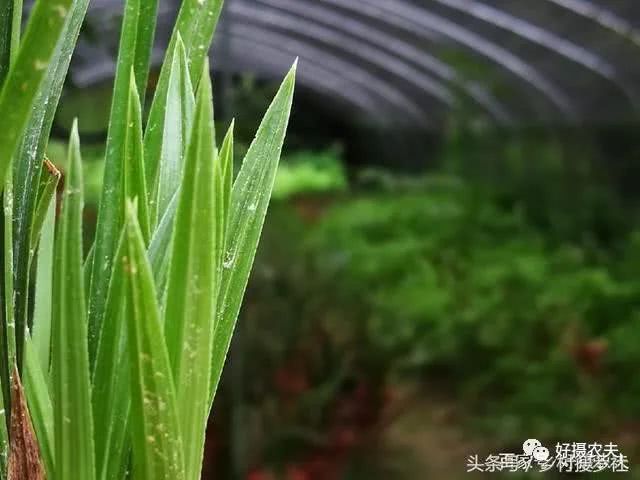
Orchids are the easiest to keep alive, yet also the hardest to keep thriving. This is because they require special care not only during the flowering period, but also when they are not in bloom you cannot afford to be careless, otherwise the leaves can easily develop scorched yellow patches, black spots and so on, greatly reducing their ornamental value. Especially during the plum rain season, orchid leaves often develop yellowing and withering, which makes orchid growers very anxious. Today, Haoshe Farmer will teach you two methods.
There are two situations when orchid leaves turn yellow and withered. One is physiological. Wild-collected orchids (shanxia lan) are mostly potted around March. When their root system has not yet produced new growth and cannot absorb nutrients from the soil, the plant's growth relies mainly on stored nutrients from the mother seedling. So during the plum rain season, the mother seedling (especially the oldest seedling) will gradually show yellowing and withering.
The characteristics of physiologically yellowed and withered leaves are: the yellowing starts from the leaf tip and slowly moves downward, and the speed is not fast. In addition, the yellowed and withered leaves develop gradually from the oldest seedling and the outermost leaves moving inward. This situation is what we commonly call "retiring old grass" (tui lao cao).
The second type is pathological. The high-temperature and high-humidity weather of the plum rain season is most suitable for the breeding of fungi and bacterial viruses. If the environment is poorly ventilated and the mother seedling itself carries pathogens, then pathological yellowing and withering of leaves is easily triggered. This situation requires timely treatment, otherwise it will spread within a short time.
The characteristics of pathologically yellowed and withered leaves are easy to distinguish clearly. Its yellowing extends from the bottom upward, from the leaf stalk all the way up, and often the leaf stalk has already rotted while the upper half of the leaf tip is still glossy green. Another characteristic is that it goes from the inside out: the rot starts from the heart leaf of the orchid seedling, and sometimes the heart leaf has completely rotted away while the outermost leaves are still green. So this kind of yellowed and withered leaf is very deceptive, and once discovered it must be treated promptly.
For the first type, the physiological yellowing and withering of leaves, Haoshe Farmer tipped out the pot of Cymbidium goeringii shown in the picture below, and you can see that its orchid roots are growing very robustly, and the buds are also very good. This shows that it has gradually adapted to the environment after transplanting. We can just ignore the yellowed and withered leaves on this orchid, simply cut them off and it will be fine, then proceed with normal management.
Haoshe Farmer also tipped out the pot of the pathologically affected orchid shown in the picture below. Its roots have completely lost their vitality, and the chance of saving such an orchid is not great. For the rescue method, you can refer to an earlier article by Haoshe Farmer (Treating Soft Rot).
Actually, no matter which type of rot it is, root rot, soft rot, stem rot, black rot and so on, they all share one common characteristic: the pathogens like high-temperature and high-humidity environments. Haoshe Farmer does not have professional knowledge, and I think the best way to treat pathogens is: what they like, do not give them; what they dislike, create it. So when Haoshe Farmer encounters this situation, I first control water (at the longest, more than a month without rain exposure or watering), absolutely prohibit fertilizer, strengthen ventilation, and dry-sprinkle fungicide powder.
Friends, do you have any other clever tips? You are welcome to share them in the comments section.