New rose leaves are either pale yellow or tender red, but never green
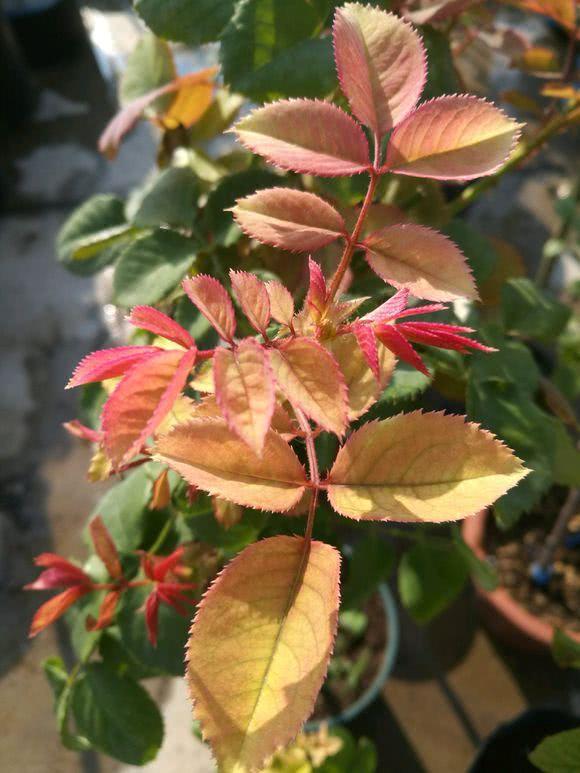
I planted several pots of roses, and the leaves are never green. But they don't look like the yellow of withered leaves either; instead they turn pale yellow or tender red. Of course, they aren't blooming either. What's causing this?
Iron deficiency
If, while growing roses, the potting soil doesn't have enough iron and you don't promptly supplement with fertilizer containing iron, the roses will easily become iron-deficient after a period of time. Usually, you can use an organic nutrient solution rich in balanced nitrogen, phosphorus and potassium, with various organic matter, minerals and amino acids added, to promote vigorous plant growth, lush green leaves, abundant blooming and strong, healthy plants.
Overwatering
If you water roses too much, it easily leads to poor root respiration and a lack of oxygen. The rose plant grows poorly and cannot absorb the nutrients in the potting soil, causing abnormal leaf growth, which easily leads to abnormal photosynthesis, a lack of chlorophyll in the leaves, and a yellowed, tender red state.
Lack of light
Roses are light-loving plants. During the growing period they need enough light for green leaves and red flowers, so at least 6 hours of full sun per day must be guaranteed. Otherwise, it easily leads to poor rose growth, either yellow leaves due to lack of light, or easy breeding of bacteria leading to pests and diseases, or roses failing to bloom, small flowers and other problems.
Solutions:
When caring for roses, you must choose an environment with sufficient light that can receive full sun. If planted in the ground, they can still be exposed to the sun in summer, but it's best if the plants are relatively large; small seedlings should still be properly shaded.
During the growing period of roses, you must choose an organic nutrient solution relatively rich in balanced nitrogen, phosphorus and potassium, and also rich in iron, amino acids, humus and so on, to promote vigorous plant growth, lush green leaves and more flower buds.
When watering roses, you must control it to some degree, especially in summer. Watering every day doesn't cool them down, unless they are planted in the ground with good drainage. Watering should be judged by whether the potting soil is dry or wet, not by how many days you think it should be watered, or by completely following someone else's watering frequency.